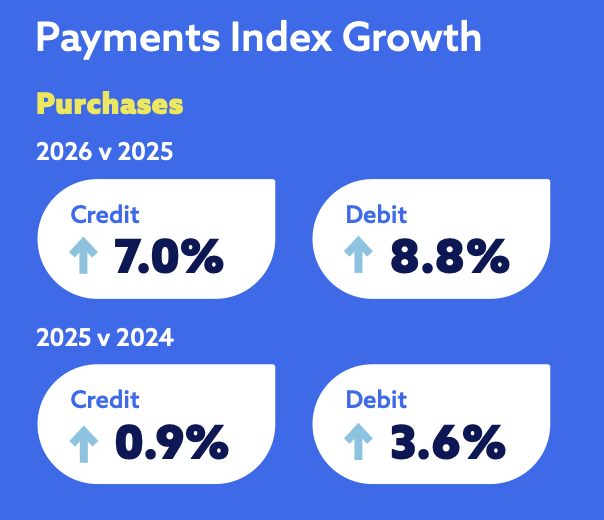
TAMPA, Fla.– June year-over-year growth in transactions and purchases were the strongest since 2022 for both credit and debit card activity, according to new data released by Velera in the July edition of its Payments Index.
The company reported debit purchases increased by 8.8%, with the Money Services and Goods sectors accounting for over 60% of the June growth, while credit purchases were up 7%, with the Goods sector accounting for over 40% of the increase.
In June, debit and credit transactions each were up 5.4%, Velera added.
“While consumers have posted the largest increase in monthly purchasing activity in the past four years, and gasoline prices, though still high, have receded from their April peaks, consumer sentiment has shown signs of improvement. However, tensions with Iran have re-escalated after President Trump declared the ceasefire is off,” the company said. “As of July 14, the average price for a gallon of gasoline was $3.86 — 23% higher than one year ago and 31% (or $0.92) higher than when the war with Iran began on Feb. 28. Gasoline prices increased $0.08 in the last week amid reports that the Strait of Hormuz is not yet fully open.”
Consumer Sentiment Increases
Veera noted that for June 2026, the University of Michigan Index of Consumer Sentiment increased to 49.5, a 10% jump from May’s 44.8. The increase was identified across income, wealth and political affiliation segments. Inflation remains a top concern, with over half of consumers surveyed citing the impact of high prices on their budgets.
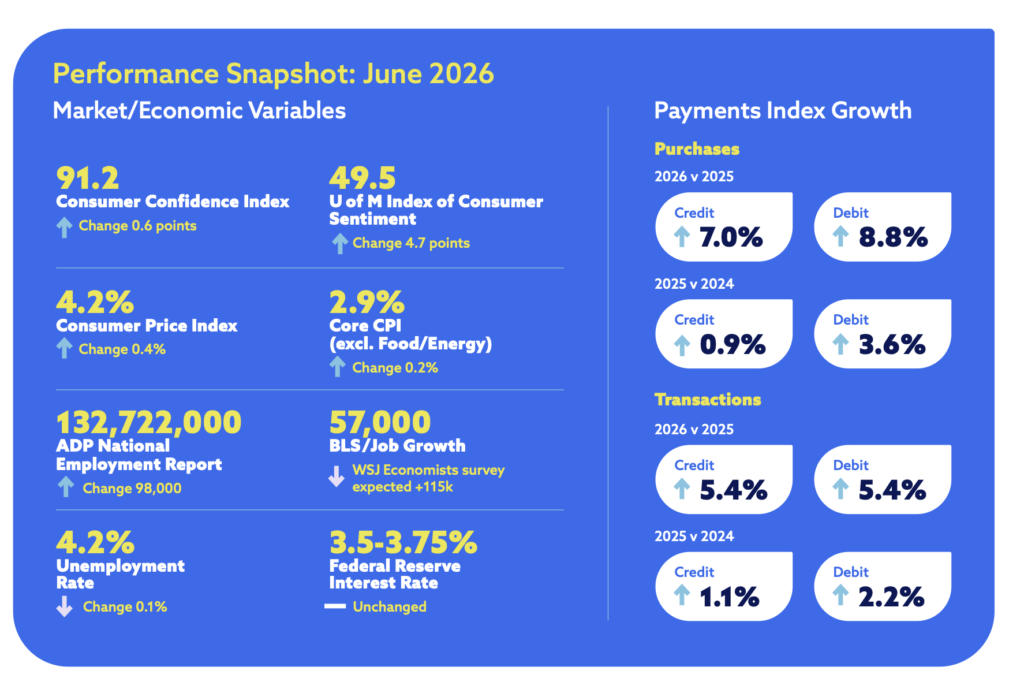
It further noted that for June, the Conference Board reported that consumer sentiment in the Consumer Confidence Index increased slightly by 0.6 points to 91.2 from a downwardly revised May result of 90.6. The slight increase in confidence is attributed to dropping oil prices, with the expectation that inflation could ease in the coming weeks.
Ongoing Disconnect
According to Velera, the ongoing disconnect of how consumers feel and how they spend is ever-present in the June updates. Year-over-year growth reached its strongest level in 2026, led by activity in the Goods Sector, influenced by Amazon Prime Day, related big-box retailer sales in late June and the economic impact of the World Cup events in North America (including activity in the prediction markets).
“Yet, despite this spending strength, a growing number of consumers are considered financially unhealthy,” Velera said. “Could the late summer/early fall period bring a post-World Cup slowdown in consumer spending?”
“Consumer spending remains resilient and is expected to stay strong, yet inflation-adjusted growth has been modest,” Ryan Myers, SVP, Advisors Plus, said in a statement. “This mix of spending is shifting toward essential expenses such as gas, energy, housing, goods and healthcare while reducing discretionary spending on categories like travel. Consumers expect inflation to remain elevated, which drives them to make purchases ahead of anticipated increases and actively seek value and discounts. Amazon Prime Day was a great demonstration: U.S. online sales reached a record $26.4 billion, up 9.3% year over year, yet average household spending fell 9%, and most purchases were apparel and household essentials.”
Key Takeaways
In addition to the data reported above, Velera said key takeaways for June include:
- June year-over-year growth in transactions and purchases were the strongest since 2022 for both credit and debit card activity. Debit purchases increased by 8.8%, with the Money Services and Goods sectors accounting for over 60% of the June growth. Credit purchases were up 7%, with the Goods sector accounting for over 40% of the increase. In June, debit and credit transactions each were up 5.4%.
- The Consumer Price Index fell more than WSJ industry analysts expected, down 0.4% in June, taking the 12-month inflation rate to 3.5%. This was the largest single-month reduction in the CPI since April 2020. Lower gasoline prices were the primary driver, offsetting increases in shelter and food for the month. Core CPI was unchanged at 2.6% for June.
- Prediction markets are moving from niche products to mass-market consumer finance products. Driven primarily by World Cup contracts, the highest monthly volumes ever were reported for the various platforms in June — demonstrating that global sports can drive equal or greater liquidity than political events, which previously dominated prediction markets. Kalshi appears to be benefiting disproportionately in the U.S. due to its regulated structure, while Polymarket continues to lead globally with deep liquidity and market variety.
The full report is available for download here.