

By Frank J. Diekmann

What if all those hundreds of millions of dollars of members’ money that credit unions are spending to emblaze their names and brands on sports stadiums, opera houses, athletic jerseys, and playgrounds, not to mention quarterbacks, point guards, gymnasts and pretty much anything and anyone else that/who has room for a logo is, ultimately, just a waste of money?
We may very well be getting there. Not yet, but soon. And probably sooner than you think (or want to think). As one person told CU leaders recently, we are moving toward a world of “ruthless” decision-making when it comes to consumers’ and their finances in which your logo on a theater marquee just isn’t the blockbuster it once was.
Stick with me here, because as we are entering an astounding, unparalleled (existential?) new “age” in human history that is flipping upside down and inside out every assumption you have and everything you “know” about how consumers and members make decisions in their lives, and that includes financial services. Especially financial services.
An Indicator Doing a Lot of Indicating
I’m speaking, of course, about agentic AI, and am pointing to the naming rights deals credit unions have embraced like free deposits as one of those “indicators” of pending change, even if most folks don’t yet realize just what’s being indicated.
Naming rights deals have their foundation in what every credit union leader learned in college and their post-grad credit union management courses—to be the consumer’s choice, the consumer has to be “aware” of you—that’s why any business invests in marketing. And why the Marketing Department invests in “awareness” campaigns and promotions and tie-ins.
And that has always been an unquestionable truism—until it isn’t.
Agentic AI doesn’t care that’s your name is on a stadium. Or that the local amphitheater is emblazoned with your logo. Or…Or any of that “awareness” stuff that works with the humans.
‘Not Thinking About Enough’
In remarks to Catalyst Corporate’s recent Strategic Summit, Dr. Lamont Black told CU leaders they need to recognize the “age of consumer agents” has arrived.
“This is something many credit unions are not thinking about enough,” he said. “Think about what this means to changing the nature of shopping. Typically, buying online begins with the shopping experience. The trend you should be focused on is what happens when the agents are paying on behalf of the consumer. This is not people buying stuff.”
In other words, your member isn’t buying something online and defaulting to their credit union’s payment card because they like you—the AI agent is shopping on behalf of the member and making the payment using whatever means is most advantageous to the member.
Black compared where money is headed to self-driving cars. Driving is a means to an end, he said, and so is money. “Welcome to self-driving money,” Black stated. “It is not me managing my money; it is an agent managing it on my behalf.”
Two Things to Know
How will agents pay? “Optimally,” according to Black, and this is where the naming rights deals and age-old assumptions around marketing come into play.
As Black pointed out, there are two things to know when Agentic AI buys something:
- One: Agentic AI has no habits and no loyalty
- Two: Cheapest and fastest wins. “Agents will be ruthless in that respect,” he said.
And there’s actually a three:
- Being “optimal” means Agentic AI may pay using a stablecoin from a merchant, such as Walmart or Amazon, that offers a discount for using that stablecoin rather than a payment card in order to save the interchange fee. You know, the interchange fee you collect and is likely a big part of your non-interest income.
Damsel in Distress? Not Feeling It

You’ve no doubt seen more than once that old silent movie scene of the damsel in distress tied to the railroad tracks as a train is approaching and her life is in danger, only to be saved at the very last split-second by the hero in the white cowboy hat? Credit unions are the damsel, the tracks are the payment rails, and the hero in the white hat isn’t coming because agentic AI doesn’t wear hats. (For the heck of it, I asked ChatGPT what kind of hat agentic AI would wear if it wore hats, and it answered, “A hard hat—because agentic AI doesn’t just offer advice; it picks up tools and gets to work.” So, now you know.)
Other Bell Ringers
It isn’t just Dr. Black giving the church bell ropes a strong pull. Credit unions were recently warned to begin preparing their payment and risk frameworks for transactions initiated by artificial intelligence agents in a new report from the Filene Research Institute, FiLAB and Money20/20. The potential risks, the organizations stated, go beyond loss of the member’s payment and extend to risks related to identity, authorization, authentication, fraud, transaction controls and accountability.
Those governance issues could become as important as the technology itself as the ecosystem develops, the report said.
And there’s another risk to consider.
Apollo Global Management recently cautioned all financial institutions that agentic AI assistants could soon sweep household cash automatically into accounts paying 3.3% to 5.0%, instead of the 0.1% national average on checking accounts.
“If every household used AI agents to optimize the return on their cash balances, banks could lose a large share of the cheap deposits they rely on to make loans, which would be a problem for the entire financial system,” Apollo cautioned in its analysis.
Something Else to Muse Upon
And here’s something else for credit union leaders to muse upon. As the CU Daily reported here, Meta’s new AI agent, Muse, can review spending, hunt for unused subscriptions and negotiate bills on a consumer’s behalf. Meta has put personal finances at the center of its pitch for Muse, raising a host of questions for credit unions in how to grow membership in a world in which consumers are increasingly outsourcing to agentic AI their decision making, rather than being influenced by increasingly old-fashioned word of mouth (we’re in a “word-of-bot” world now) or marketing efforts.
What Muse Can Do With Money
Meta says consumers can connect bank accounts through Plaid so Muse can identify spending patterns, build visual breakdowns, and suggest steps toward financial goals. Yahoo Finance reported that the agent can also monitor subscriptions, flag recurring charges and help users decide which services to cancel.
That sounds a lot like the kinds of services a certain not-for-profit, financial co-ops used to be known for.
Meta Chief AI Officer Alexandr Wang recently challenged users to try to save $1,000 with the agent under the hashtag #MuseMoneyChallenge. How are CUs—and you—responding? I sincerely hope it’s not #WaitingToSeeWhatHappens.
For credit unions, there is a parallel to this new frontier of a challenge presented by agentic AI, and that is with retailers, where many of the so-called “mom and pop” shops similar to small and medium-size CUs are being confronted by behemoth retailers that are “ruthless” in their pricing and payments options. These smaller, Main Street retailers have always counted on personal relationships, on “knowing” their customers, as their differentiators. Sound familiar? Agentic AI isn’t in the personal relationship business.
And if you’re thinking this trend means a merger may be the only answer, don’t forget that the $200-billion Navy FCU is a mom-and-pop shop in this business.
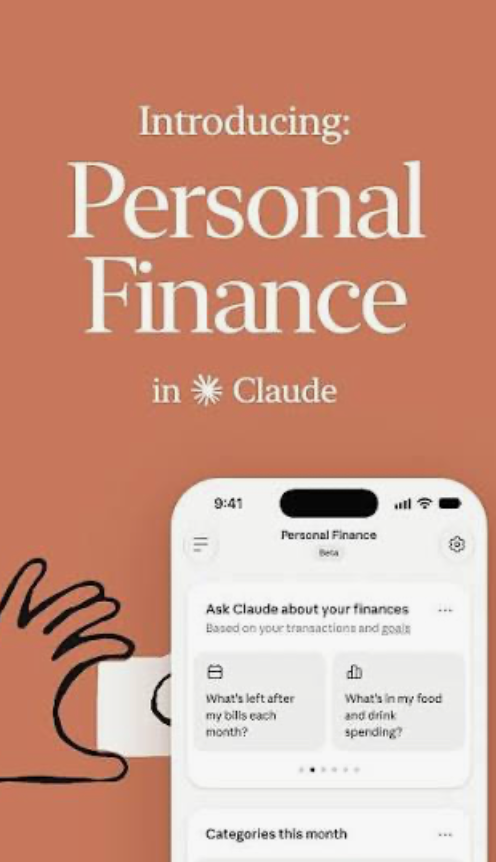
Meta isn’t dancing alone. It’s a rave. Anthropic is rolling out a personal finance feature that lets users connect bank and credit card accounts to its Claude artificial intelligence chatbot, while seeking input from financial services firms on how the tool could work alongside licensed professionals.
Not in the Game
Aviv Shamny, the co-founder and chief executive of Limy, a “AI search platform” backed by the venture capital firm Andreessen Horowitz, recently observed to the New York Times, “When you advertise to humans, you target eyeballs, emotions and dopamine. But when you advertise to agents, you advertise to logic; a very mathematical logic.”
For a member’s or consumer’s AI agent, your name on a venue or stadium or a quarterback appearing in your marketing probably doesn’t seem very mathematical or logical at all. Not that the AI or any of its buddies at the data center are going to see it.
Frank J. Diekmann is cooperator-in-chief at the CU Daily and can be reached at [email protected].




