WASHINGTON–Three issues are going to dominate what’s left of the lame duck session of Congress, while a lot of what’s old will be new again when the 120th session of Congress adjourns in January, according to a forecast and analysis from America’s Credit Unions.
Looking to the next 100 days and the lame duck session of Congress, Greg Mesack SVP-advocacy with the trade group, expects three issues will dominate what little time is left: funding the government (funding is set to expire Dec. 11), the National Defense Authorization Act, and pushing through Republican-backed nominations.
Mesack, who joked this this session will be among the “lamest of lame ducks,” said the “tremendous night” Democrats had in the recent midterm elections and what will be their strong majority in the new Congress means they are unlikely to cut many deals with Republicans, many of whom are on their way out.

“But there are things that need to get done,” he said, referring to the three specific issues above.
No ‘Big Desire’ for Shutdown, But…
“There’s not a big desire for a shutdown. If you had asked me a few weeks ago, I would have said the chances are zero,” Mesack said. Now, however, he noted there is a “little more discussion” about tying any vote on funding the government to the war in Iran, with some progressive Democrats suggesting they will oppose any funding bill until the U.S. exits that war, or puts forth a plan for exiting the war.
Mesack explained it’s most likely a continuing resolution (CR) will be needed that acts as a bridge to another funding bill in the new Congress. “There is an increasing risk of a short shutdown of the government, which would be a shame,” he said. “I think everyone kind of learned their lessons from the last lengthy shutdown…There’s not a lot of appetite on the Republican side, but there’s also no appetite to give in to demands on riders…”
He added any so-called “Reconciliation 3.0” measure is “not going to happen” in the lame duck, given the massive size of a government funding bill (approximately $350 billion, the GOP’s current narrow margin in the House, and the fact “attendance problems” could mean the Republicans even fall into the minority should a vote take place.
‘Strong Desire’ for NDAA
More positively, Mesack said there is a “strong desire” to get the National Defense Authorization Act passed, and will likely once again carry other non-defense-related provisions, those are likely to be non-controversial, with provisions such as the Terrorism Risk Insurance Act and the Defense Production Act being included.
Credit unions have been wary of the Credit Card Competition Act, which CUs and other financials oppose, being included in the NDAA, but that seems less likely given that narrow GOP majority. Mesack noted the NDAA has been passed 63 straight years and that’s likely to continue.
The other big focus for Republicans in the lame duck Senate is what Mesack referred to as the “massive nominations package, which includes Republican nominees for judges, seats at the SEC and CFTC and more, whom the GOP wants to get in place before Democrats take control.
The New Congress
Looking to the 120th Congress, which will take office in January of 2027, Mesack said Rep. Maxine Waters (D-CA) remains the favorite to become chair of the House Committee on Financial Services.
Waters has previously served as chair of the committee, so credit unions largely know what to expect, which will be a rolling back of deregulatory efforts the Republicans have championed, and more focus on consumer protection issues, including fees such as NSFs and OD fees.
There has been some speculation that Rep. Sean Casten (D-IL) could challenge Waters for the post, Mesack said, and the largest freshmen class in Congress since the New Deal could give Casten a boost.
“A lot of the people who chair committees and senior members of committees have been around a long time,” Mesack observed. “You have young people who don’t owe anything to those elder statesmen of the party and who want change. They want younger faces.
There has been a similar call in the Senate for new blood, but Mesack said he expects Sen. Charles Schumer (D-NY) will ultimately be elected Senate Majority leader.
The First 100 Days
When it comes to the agenda of the first 100 days of the new Congress, Mesack said America’s Credit Unions expects a focus on financial services will be a priority, regardless of who ultimately chairs the House committee. That’s because “affordability” was a key issue many of those who have been newly elected or reelected campaigned on, and it remains a critical issue with voters.
“You’re going to see Democrats leaning heavily into those messages,” he forecast.
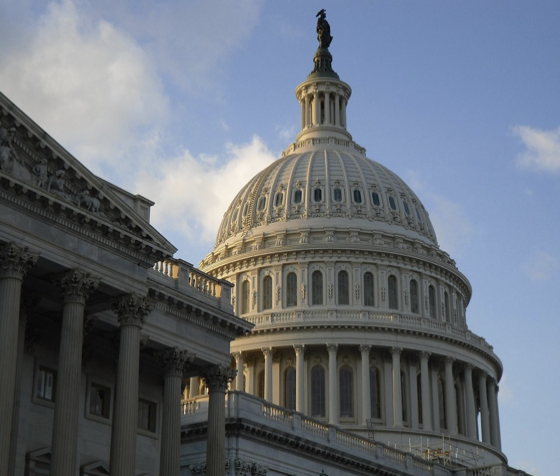
For credit unions, Mesack expects what that will mean a focus on an issue that has been popular with both Republican and Democrats, and that’s housing affordability, which Maxine Waters has often prioritized.
“Waters cares deeply about affordable public housing and high quality public housing,” he said.
In the Senate, Sen. Elizabeth Warren is expected to chair that institution’s committee on Banking, Housing and Urban Affairs. Warren’s track record and concerns are well-known, and that includes a focus on fees and the cost of financial services. Mesack said he expects the agenda will be similar to that seen under the CFPB—largely created by Warren—under former director Rohit Chopra. Credit unions were not immune from scrutiny over fees by Warren, who challenged fees charged by Navy Federal and Frontwave Credit Union, among others.
Mesack said he expects to see a “lot of discussion” around OD and NSF fees, for example
New Attention to Rate Caps
Similarly, he expects new attention on a potential loan interest cap, for which Democrats and President Trump have both expressed support, especially on credit cards.
“We could see committee votes on rate caps,” said Mesack, observing, “That’s one of the interesting areas of the affordability agenda and financial services. Republicans have gone from the typical classic conservatives to populist conservatives, and some of that populist agenda is around price controls. The populism part of the Republican Party kind of dovetails a little bit with the affordability agenda.”
Mesack said that for some credit unions their overdraft programs are “incredibly important the members love them They’re incredibly popular. Other credit unions have gotten rid of overdraft. So, it’s real discussion we have to have it in our industry about how we want to have that discussion with lawmakers should these things come up.”
Mesack said another discussion credit unions will want to have is around how CUs and banks compare when it comes to affordability.
“Affordability is something we’ve made our name on. Our fees are lower, our rates are lower and we don’t have that profit motivation that banks do,” Mesack said. “We can lean in on affordability. We are the original affordability institutions.”
‘Part of the Solution Discussion’
Mesack said credit unions will need to work with the new Congress on ways they can be empowered to offer more affordable products and services and be “part of the solution discussion.”
Mesack added he also expects the crypto industry to get new scrutiny from the Democrats, especially given President Trump’s family’s involvement in the industry.
While there has been considerable focus on legislation in the new Congress that may challenge CUs or add new burdens, when asked by the CU Daily what legislation has died in the current Congress that could be resurrected in the new Congress and which credit unions favor, Mesack pointed to legislation related to loan maturities (which could aid mortgage and student lending, for example); legislation that would help small credit unions join the Home Loan Banks and CDFI-related legislation as examples.
While the balance of power in Congress is shifting strongly from red to blue in 2027, Mesack said it will not require any sort of “pivot” by the trade group, as it has always been bipartisan (its PAC had a roughly 50/50 split in spending in the most recent elections between the two parties) and has also sought to build connections on both sides of the aisle.
Been Down This Road Before
“The good news is we already have a very strong (relationship) of Democrats,” Mesack said. “We lobbied both sides equally, because we’ve seen Congress come and go. I’ve been in DC for 27 years. I’ve been here for the ‘06 election, the 2010 election, the ‘18 election, and for America’s Credit Unions, we’ve spent just as much time with the Democrats. So, we don’t have to pivot. We already have a relationship with Ms. Waters. We already have a relationship with Mr. Caston. We already have a relationship with Ms. Warren. From my perspective, we keep doing the same thing we’ve been doing, which is talking to legislators…to tell our story. And our leagues are doing the same thing.
“It’s not a pivot in relationship building, it’s more a pivot in how we react to their legislative agenda and how we can make sure that the credit union story is part of that agenda, because obviously Ms. Waters will have a very different agenda than Mr. (French) Hill (R-AR),” he continued. “But we also believe that credit unions can fit just as well into her agenda as we did in Mr. Hill’s agenda. We have had a long relationship with her. Our staff knows her and her staff.”
Mesack said the same holds true with Sen. Warren.
The New Congress, NCUA & the CFPB
Mesack said he does expect the Democrats and Warren in particular to bring “greater scrutiny” to the deregulatory efforts taking place at NCUA, as well as other financial regulators.
When it comes to the NCUA board itself, which remains at one member with Republican John Crews as its chairman and two fired board members continuing to challenge in court their dismissal by President Trump. Mesack said it’s possible the Trump administration could look to nominate two people, one Republican, one Democrat, for seats on the board.
Mesack added he believes Crews, who comes to the agency from Capitol Hill, and NCUA are well aware of what the change in control of Congress will mean.
He expects there will be a tougher road for CFPB Director nominee Brian Johnson, whose nomination remains before the Senate, especially given Warren’s ties to the Bureau.
Mesack said the new Democratic Congress could make for a “ very long two years for the CFPB.”
Support for New House Leaders
Separately, America’s Credit Unions has issued statements in response to recent moves by House Democrats.
House Dems have nominated Rep. Hakeem Jeffries of New York to become Speaker of the House in the next Congress, setting up a historic vote in January that could make him the first Black lawmaker to hold the position.
Jeffries, the current House minority leader, received 251 votes in a closed-door Democratic caucus election, with 11 members voting against him, according to reporting by The Associated Press and Reuters. He ran unopposed for the nomination.
The nomination does not make Jeffries speaker. He must win a separate vote of the full House when the 120th Congress convenes Jan. 3, 2027. Democrats are expected to hold at least 257 seats following their victories in the November midterm elections.
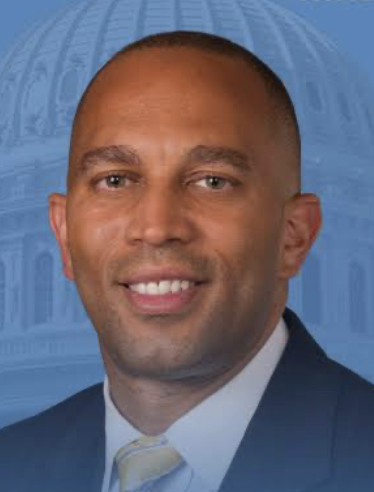
America’s Credit Unions welcomed the nomination and urged cooperation on policies aimed at easing financial pressures on consumers.
‘Incredible Opportunity’
“America’s Credit Unions congratulates Rep. Hakeem Jefferies on receiving Democrats’ nomination to serve as Speaker of the House for the 120th Congress. With a historic majority and voter mandate to make life more affordable for everyone, his tenure if elected in January will oversee an incredible opportunity to pursue bipartisan policies that provide relief for consumers. As proven partners for affordability and financial freedom, credit unions look forward to working alongside Speaker-designate Jeffries this coming Congress to ensure all Americans benefit,” said Kathleen Coulombe, chief advocacy officer of America’s Credit Unions.
Jeffries’ nomination comes amid pressure from some progressive Democrats seeking commitments on policy priorities and the party’s direction. Seven incoming progressive lawmakers said they voted against him while continuing discussions about the agenda they want Democratic leaders to pursue, Reuters reported.
The incoming Democratic leadership team also includes Rep. Katherine Clark of Massachusetts, who is in line to become the first woman to serve as House majority leader, and Rep. Pete Aguilar of California, who would become the first Latino majority whip, according to the AP.
Jeffries has led House Democrats since 2023. If elected by the full chamber, he would succeed Republican Speaker Mike Johnson.
Clark to be Majority Leader
Separately, House Democrats on Wednesday selected Rep. Katherine Clark of Massachusetts as their next majority leader, making her the first woman chosen for the position as the party prepares to take control of the House in January.
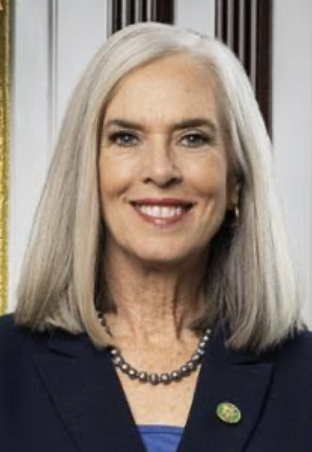
Clark, 63, currently the House minority whip, ran unopposed in the Democratic leadership elections, according to The Associated Press. She will become the second-ranking House Democrat when the 120th Congress convenes Jan. 3.
The selection came as Democrats nominated Rep. Hakeem Jeffries of New York to become House speaker and chose Rep. Pete Aguilar of California as majority whip.
Clark will help manage the House legislative agenda, coordinate floor activities and advance Democratic priorities.
‘A Friend to Credit Unions’
“America’s Credit Unions congratulates Rep. Katherine Clark on being selected House Majority Leader.” Coulombe said in a statement. “A friend to the credit union movement, Clark shares our belief that the economy should empower consumers and has recognized the opportunities credit unions create. We look forward to continuing to work with Leader Clark on policies that support access, affordability, and a robust credit union industry.”
Following her election, Clark emphasized the importance of addressing the financial pressures facing American families.
“Families are being pushed off a financial cliff, and our job is to deliver the change they just voted for,” Clark said in remarks released by her office.
Democrats regained control of the House in the November midterm elections, positioning Clark and the party’s new leadership team to shape the legislative agenda in the next Congress.