

WASHINGTON–Saying its members do “not need another inbox full of headlines,” the Defense Credit Unoin Council (DCUC) says that when it comes to strategic planning, it isn’t just looking to 2027 but five, 10 and even 20 years out–and so should credit unions.
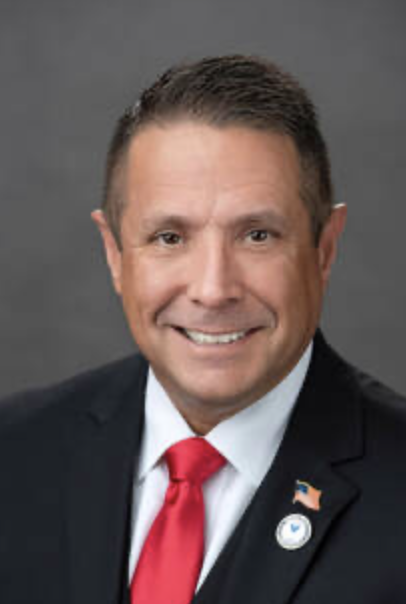
Anthony “Tony” Hernandez, president and CEO of the Defense Credit Union Council (DCUC), thinks it is vital to address and propose solutions to issues affecting credit unions before rules and bills are written. DCUC strives to play that role on CUs’ behalf, and in 2027, aims to expand its influence and ramp up its proactive, results-oriented advocacy, according to Hernandez.

Hernandez related the DCUC’s goals and plans as part of the CU Daily’s series, “The Growth Imperative,” with an emphasis on strategic planning for 2027. His insights are shared below.
The CU Daily: What will DCUC focus on in Q4 2026 and in 2027?
Hernadez: Our focus is straightforward: give credit unions more room to serve their members—and stop Washington from making that job harder than it needs to be.
In Q4, that means pressing Congress to finish work that can still get done. We have asked congressional leaders to create a financial-services section in the FY2027 National Defense Authorization Act that could advance permanent Central Liquidity Facility enhancements, modernize federal credit union loan-maturity authority, and include the Veterans Member Business Loan Act. Those priorities address practical needs, including dependable access to liquidity, financing terms that fit members’ lives, and fewer unnecessary barriers between qualified veterans and business capital.
We will also keep defending credit unions’ tax status, protecting interchange and a strong dual-charter system, and opposing sweeping third-party vendor examination authority. We want risk-based supervision, meaningful CFPB reform, modernized reporting requirements, and a workable path for responsible digital-asset innovation. Credit unions should not have to choose between remaining competitive and remaining true to their mission.
For 2027, the goal is to get ahead of the next set of challenges, not simply react faster to the last one. That starts with listening to our members, identifying operational problems early, and putting solutions in front of policymakers before the decisions are made.
The CU Daily: What has changed in the association’s focus in the last couple of years? What are your members increasingly seeking?
Hernandez: Our mission has not changed; the scope, speed, and expectations of our work have. Members do not need another inbox full of headlines. They need someone who can tell them what a development means for their credit union, what it could cost, what they should do next, and who is making their case in Washington.
That has pushed us toward a more proactive, operationally grounded approach. We want to understand the problem while it is still happening in a branch, a compliance office, or a boardroom—not discover it after Washington has written the rule.
Our recent designated-beneficiary membership proposal is a good example. We asked the NCUA to examine a path that would allow a member’s designated beneficiary to become eligible to join the same credit union, including people who do not already qualify through another connection.
That is a request for review, not an approved change, and eligibility would not mean automatic membership. But it starts with a human question of “How can the credit union remain a trusted option for someone navigating a loved one’s death?” That is the direction members are asking us to take: identify the real-world problem, bring forward a practical solution, and stay with it.
The CU Daily: If you could put one item on the agenda for strategic planning meetings this fall, what would it be and why?
Hernandez: We are asking what our members will need from us five years from now, and what we have to change today to deliver it. At our recent staff strategy meeting, we encouraged our team to think beyond the next legislative session and look five, ten, even twenty years ahead.
Will our members be able to compete as technology changes? Will smaller institutions have access to the expertise and tools they need? Are we preparing for changing expectations, new fraud threats, workforce pressures, and the financial needs of the next generation of military families? And are we delivering information in a way that helps leaders make decisions rather than adding to their workload?
Those questions should force choices. We cannot make everything a priority, and we recognize that. We need clear ownership, meaningful milestones, and an honest test of member value. The objective is to keep our members prepared, relevant, and able to serve.
The CU Daily: What were some of DCUC’s successes in 2026? How will you build on those in 2027?
Hernandez: I would point to three areas: direct access, practical advocacy tools, and bringing specific member concerns into the policy process.
On Sept. 10, our Military Advocacy Committee (MAC) hosted the NCUA chairman for a direct discussion and Q&A. Members had an opportunity to engage on supervision, innovation, and the needs of defense credit unions. There is no substitute for policymakers hearing directly from the institutions that have to put their decisions into practice.
We also launched our 2026 Advocacy Priorities Toolkit, giving credit unions messaging, talking points, and handouts they can use in their own advocacy. And we brought concrete requests to NCUA on beneficiary membership eligibility and a clear digital-asset roadmap. Those efforts are ongoing, but they show how we are moving from identifying concerns to proposing solutions.
Just as important, we continued putting credit unions themselves at the center of the conversation through CU Unplugged, our Annual Conference, regional gatherings, and DCUC ALERT. Our members are not simply an audience. They are the people doing the work, testing ideas, solving problems, and living the mission.
There were tangible community results, too. Our 2026 Conference with a Purpose raised $25,000 for the USO. That is a direct expression of the service commitment across the defense credit union movement, our members, and our advocacy.
In 2027, the standard should be what comes next: stronger policy outcomes, more useful regulatory guidance, and more members equipped to advocate effectively.
The CU Daily: Does DCUC have anything new planned for 2027?
Hernandez: Yes! Our direction is deeper member engagement, more useful policy intelligence, and more ways to turn member priorities into action.
We want to build on resources such as our Weekly Watch, DCUC ALERT, and advocacy toolkit so a busy credit union leader can quickly answer questions like:
- What changed?
- Why does it matter to us?
- What should we do next?
Practical explanations, timely context, and material leaders can use with their boards and teams—those are some of the things we are really prioritizing as we look ahead.

We also want to deepen participation in the Military Advocacy Committee and create more opportunities for credit unions to bring forward examples, identify emerging problems, and help shape our priorities. An association’s agenda should be informed by its members’ experience, not handed down from Washington.
One announced item on the calendar is our 2027 Annual Conference, scheduled for August 2–5 at the Westin Bayshore Vancouver. Our aim is to keep building the kind of peer exchange that turns a good conversation into something a credit union can actually put to work.
The common thread is value. Whether it is a conference, a policy resource, or a conversation with a regulator, we want members to come away better equipped than when they arrived.
The CU Daily: Has there been a particular program or offering that has really grown and proven popular? How will you build on that in the next year?
Hernandez: Our advocacy and policy engagement stand out, especially with our Military Advocacy Committee. Members are looking for a way to participate in the conversation, not just receive a summary of it.
The MAC is a member-led forum that helps inform DCUC’s advocacy priorities. It creates a place to raise an operational concern, compare experiences, and help us explain the consequences to policymakers. That connection is especially important when a proposal that sounds straightforward in Washington creates significant work for the people running a credit union.
The September discussion with the NCUA chairman illustrates the value. Instead of hearing about regulatory priorities secondhand, members could engage directly and bring their own questions into the discussion.
Next year, we want to make that engagement even more practical. We’ll identify issues earlier, give members useful preparation, and show how their input informs our follow-up. We should be able to tell a member, “You raised this concern. Here is how we addressed it. Here is what still needs to happen.”
We do not simply want more names on a distribution list. We want more credit union leaders helping shape the decisions that affect their institution’s mission and members’ future.
The CU Daily: What do credit unions want from their associations?
Hernandez: They want an association that earns its dues every day—through competence, candor, courage, and follow-through. Answer the phone. Understand the problem. Explain the options. Make the case. And be honest about what has been accomplished and what still needs work.
Credit unions do not need Washington theater. They need someone who will challenge a bad proposal, help improve a workable one, and build relationships that produce results. They also need an association that understands that a policy victory on paper means very little if the implementation creates another operational headache.
For DCUC, there is another essential dimension: we understand the military and veteran communities our members serve. A permanent change of station, an overseas assignment, a deployment, or a transition out of the military is not background detail. It changes how a family needs to access and manage its money.
Our job is to translate that reality into policy discussions and practical support. Members should never have to spend the first half of a conversation teaching their association why their mission is different. Ultimately, they want a partner that makes them stronger.
The CU Daily: Are credit unions focusing on growth, and if so, what kind of growth?
Hernandez: Yes, but a larger balance sheet is only part of the answer. The more important question is whether a credit union is becoming more useful to the people it serves.
For a defense credit union, meaningful growth might mean earning a young servicemember’s trust and keeping that relationship through deployments, a first home, a growing family, and the transition to civilian life. It might mean making digital services easier to use without losing the personal connection that brought the member in. Or it might mean becoming the lender a veteran entrepreneur turns to when it is time to build something of their own.
We are also challenging proposed rules that treat credit union bank buyers differently. Transactions should be evaluated on their actual risks, community effects, and benefits, not on a presumption that a member-owned buyer deserves an extra hurdle.
Growth should strengthen a credit union’s ability to deliver on its mission. More members served well, more lasting relationships, and more financial opportunity—that is growth worth pursuing.
The CU Daily: Is DCUC focusing on growth as well? If so, what kind, and what are your strategies for pursuing it?
Hernandez: Absolutely. We intend to grow our reach, influence, and value. All credit unions are eligible to join DCUC. And our unique defense heritage is an added strength we bring to the broader movement. A credit union does not need a branch behind an installation gate to care about veterans’ access to capital, military families’ financial security, or policies that protect the cooperative model.
Our strategy is to make the value clear: competitive dues, responsive advocacy, timely insight, practical resources, and access to people who can help members solve problems. Then we have to deliver consistently. Growth follows credibility, and credibility has to be earned.
We also want deeper collaboration with leagues, credit unions, CUSOs, and system partners. Our Defending Credit Unions PAC and National Advocacy Fund provide distinct avenues for strengthening political engagement and public-policy advocacy. Those tools should support a larger purpose in ensuring credit union priorities are heard and understood.
We do not need to choose between honoring our roots and expanding our impact. The more effectively we advocate for the cooperative model, the stronger our members can be for the military, veteran, and community populations they serve.
For us, meaningful growth is more credit unions saying, “DCUC understands our mission, and having them in our corner makes a difference.”
Hernandez: AI is moving from a broad technology discussion to a practical question: where can it help members and employees, and how do we control the risks?
The areas credit unions are examining include fraud detection, cybersecurity, member service, internal processes, data analysis, marketing, and employee productivity. But interest is not the same as readiness, and not every institution needs to move at the same pace.
The starting point should be the problem you are trying to solve not the product a vendor wants to sell. What information will the system access? How will its output be checked? Who is accountable when it is wrong? Can the credit union explain and defend how the tool is being used? Those are leadership questions, not simply technology questions.
On the policy side, DCUC has supported responsible innovation tools, stronger fraud prevention, and community-scaled access to emerging technology. Smaller institutions should not be priced out of useful innovation, and consumer protection should not be treated as an obstacle to it.
Within DCUC, we are evaluating where AI could improve efficiency and help us deliver timely, useful information. We are still in the evaluation stage. Any deployment should begin with defined use cases, protection of sensitive information, human review, and a clear measure of member value.
A tool is not a strategic plan. Our approach is to determine where it serves the mission, establish the safeguards, and keep people accountable for the result. Innovation should strengthen judgment, not replace it.
The CU Daily: Payment fraud, especially AI-driven fraud, is a growing threat. How is DCUC addressing it? What are credit unions doing to combat it? What should they do?
Hernandez: For the member who loses a paycheck or a lifetime of savings, fraud is not an emerging trend; it is a personal crisis. We need to approach it with that level of urgency.
Credit unions are already using account monitoring, suspicious-transaction detection, employee training, member education, and partnerships with law enforcement and community organizations. Those efforts matter, but no single institution can solve a problem that crosses financial, telecommunications, technology, and law-enforcement systems.
DCUC is pressing for a coordinated response. We have supported the TRAPS Act and a meaningful credit union role in payment-scam prevention. We also recently backed an outcome-based FCC robocall scorecard focused on whether providers actually prevent illegal spoofed calls from getting through. The objective should be stopping fraud, not generating more compliance paperwork after the damage is done.
For credit unions, the practical priority is layered protection through strong authentication, timely monitoring, clear escalation procedures, and employees who know what to do when something looks wrong.
Member education must address the new reality that a familiar voice or convincing message may be fabricated. Teach members to pause, verify urgent requests through a trusted channel, and report suspicious activity quickly. A polished scam is still a scam.
For defense credit unions, controls must also work for someone stationed overseas, moving on military orders, or communicating across time zones. Protecting a member should not mean cutting that person off from legitimate access to their own money.
We will continue advocating for stronger information-sharing, useful fraud-prevention tools, and policies that target criminal actors without simply shifting losses onto credit unions. Everyone in the chain has a responsibility to help prevent the crime.
Payment security is financial readiness, and financial readiness is military readiness. That is why this work belongs at the center of our agenda.
Reporting by Anne Battle Schultz
Other Reporting in this Series
Other Reporting in this Growth Imperative/Strategic Planning Series to Date:
- As CUs Plot Plans for Growing in 2027, One Person Urges Them Not to Overlook the Unicorns
- In Planning for 2027, Don’t Overlook the Value of a Clear, Consistent Brand: A CU Daily Series
- Two Paths to Growth in 2027 & What Should be on the 2027 Planning Agenda: A CU Daily Series
- As CUs Prepare 2027 Strategic Plans, a Reminder of the Value of Offering PMI
- The Members to be Targeting in 2027–And How to Know Who They Are: A CU Daily Series
- In the Great Race to Keep Up With Payments, AI, Why it Pays to Take a More Measured Approach: A CU Daily Series
- The Missing Element for Many CUs When it Comes to Growing in 2027 and Beyond
- The Need for Speed: The One Thing Every CU Leader Must Recognize in Planning for What’s Ahead: A CU Daily Series
- How a Credit Union Can Avoid Becoming a ‘Casualty of the Current Evolution of Money’
- The Forces Reshaping the Market are Also Reshaping Planning, Leadership and Measurement: How Leaders Should Respond
- The Dual Challenges Facing CUs in Their 2027 Planning: Where to Begin and How to Respond: A CU Daily Series