

ROCKY HILL, Conn.—As digital assets and blockchain networks move into the mainstream, an industry expert is concerned that lagging credit unions could miss out on a major opportunity and is urging CU leaders to make the rapidly emerging technology part of their 2027 strategic planning process–or risk becoming a “casualty of the current evolution of money.”
Jon Ungerland, CIO and chief of staff at DaLand CUSO, which provides digital asset infrastructure for credit unions and community banks, thinks that credit unions’ cautious approach to distributed ledger technology (DLT) and digital assets has the potential to cost them. These technologies are the future of money, he said, adding that credit unions risk losing deposits, loans, customer relationships, and more if they outsource this future to someone else.
Ungerland shared his thoughts as part of the CU Daily’s series, “The Growth Imperative,” which is focusing on strategic planning for 2027.
His insights are below.
The CU Daily: DaLand offers a broad range of tech services. Which services generated the most interest this year? Which are likely to be in demand next year?
Ungerland: 1) Education, specifically around digital assets; 2) strategic planning, specifically around digital asset markets and strategies; 3) project management—core conversions, mergers, “convergers,” and system migrations; 4) optimization projects—core automations, core data cleanup, and retail automation; and 5) software licenses (CODE Engine, Coin2Core).
The CU Daily: What have credit unions learned or rethought in 2026 when it comes to digital infrastructure and stablecoins?
Ungerland: We hope that credit unions are learning and have learned that stablecoins were never the terminus of the current digital metamorphosis of money; stablecoins were always only the first “sandbox” made permissible by regulators and legislative clarity. As we entered into 2026, we focused our education and consulting efforts on pointing clients and the industry toward the broader evolution of money and emergence of new money networks.
We forecasted that big banks, clearing houses, Wall Street firms, etc., would reveal by Q4 2026 their efforts on critical projects like Bitcoin custody, Bitcoin banking (and lending), tokenized deposits, and crypto on balance sheet. We’ve seen these forecasts come to fruition, and we remain focused on teaching institutions that the path forward can only be through owning data, capital, and consumer relationships. Outsourcing digital asset strategies or servicing or putting members and money on an “omnibus” solution is the road to irrelevance.
The CU Daily: What has DaLand itself learned in 2026 that it will apply in 2027?
Ungerland: First, large banks, merchants, and neo-banks are implementing and integrating into new money networks (Bitcoin, USDC, Solana, XRP, Ethereum, Tether, XLM, etc.) as fast as we had anticipated—but faster than most of our clients and industry contacts are aware.
When we step outside the CU conference circuit, we constantly encounter bankers and tech builders that are focused on the future of money, whereas inside the CU movement we find a problematic faith in the electronic dollar. The CU industry is going to need a cooperatively owned and production-ready infrastructure provider to ensure that community FIs have turnkey access to all emerging digital asset networks and new money rails.

We continue to refine and focus our strategy on finding the right partners and co-owners to ensure that the community financial services industry owns an integration path into these new networks, and that it has a cooperative architecture and technical path—as well as an assembly of brilliant and innovative human resources and operational experience.
We’re more concerned than ever that institutions could easily outsource their consumer relationships and capital to “wallet” solutions and “omnibus” exchanges, and that community financial sovereignty could be the intended casualty of the current evolution of money.
The CU Daily: Beyond stablecoins and other digital ASSSET infrastructure, where has DaLand focused this year?
Ungerland: We remain focused on helping credit unions pick core solutions and vendors that prioritize local, cooperative ownership of data and catalyzing of capital in community economies.
The CU Daily: What do you most often hear from credit unions in terms of what they are seeking? How do you respond?
Ungerland: Most CU leaders at this point are fascinated by stablecoin mania, as we call it, or they’re outsourcing a vendor decision to operational teams to pick a “crypto wallet” or an “exchange” partner. The current digital evolution of money requires a new approach to technology strategy decisions. Prior vendor selection matrices and systems won’t suffice, because the substrate of this new era is entirely separated from the electronic dollar and its expansive network (the Fed, ACH, SWIFT, compliance systems, regulations, etc.).
In the new era, owning the data equals owning the money. Outsourcing the data processing means surrendering consumer wallet share and capital—liquidity, lending fuel, payments revenues, etc. Custody is the key, and the big banks aren’t waiting for regulatory or legislative clarity. They’re building the custody and crypto banking infrastructure now, which is why DaLand has done the same for local FIs.
The CU Daily: What do credit unions not know they don’t know and therefore aren’t asking about?
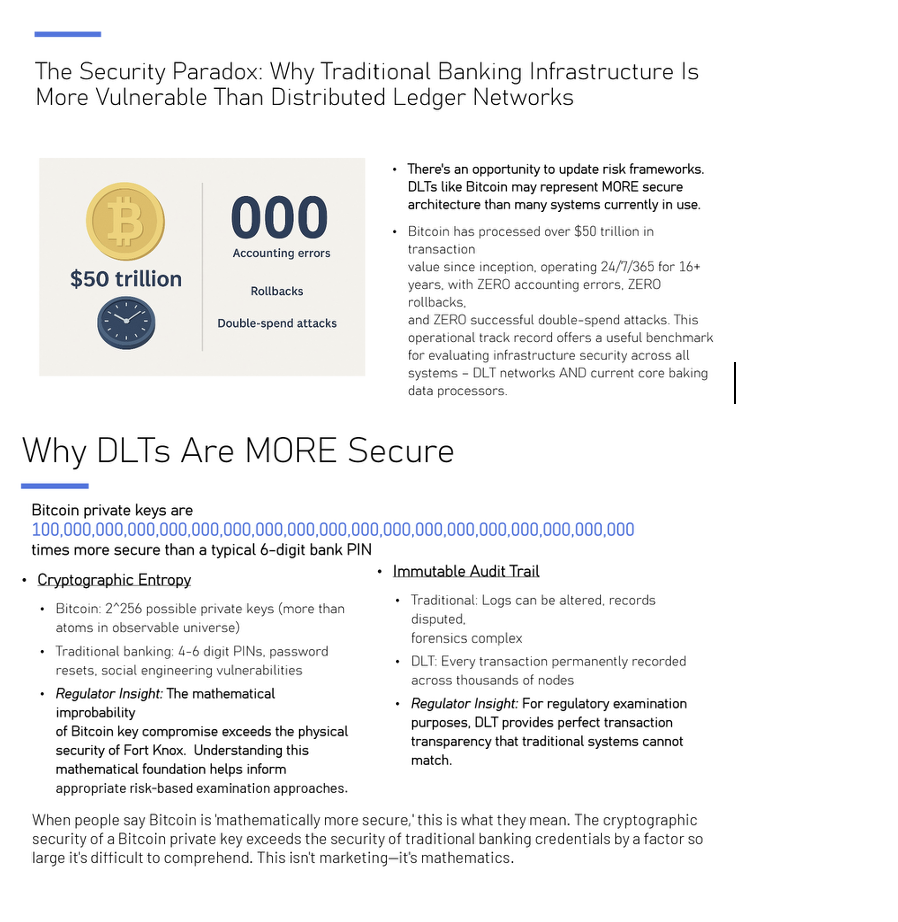
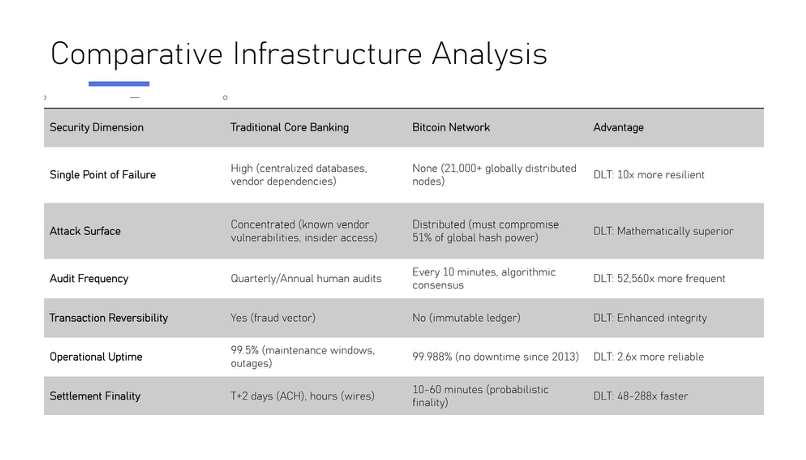
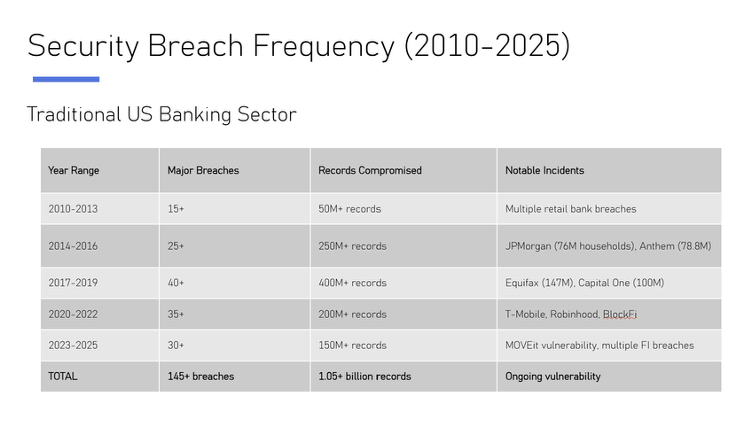
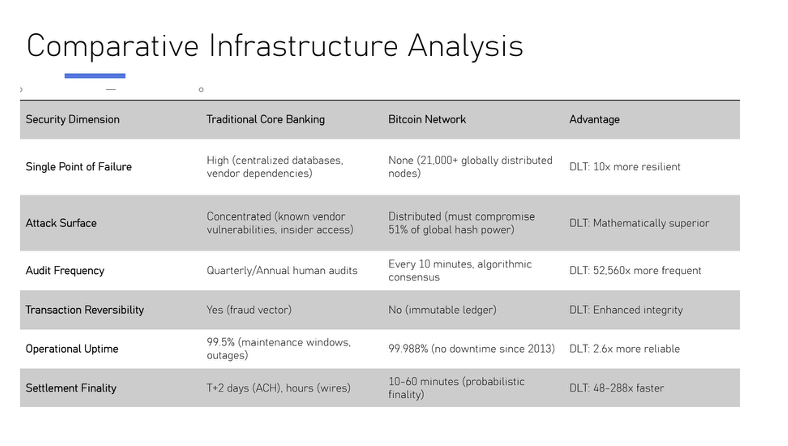
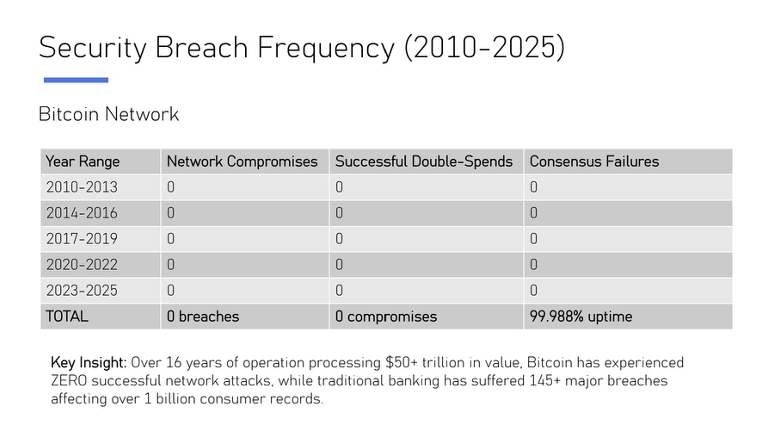
Ungerland: Most—more than nine out of ten contacts we have in the industry—believe that distributed ledger technology is less secure than their legacy systems and networks. They’re shocked, baffled, gob smacked, dumbfounded, and sadly in denial when we show them facts like the ones below[AS1] .
This fact-based thought experiment opens up new conversations about the economic inevitabilities of competing against networks that can store, move, and produce capital faster, more cheaply, and exponentially more securely than current networks. Basic unit economics indicate that these new networks are the future of money—not the money of fringe elements.
the CU Daily: What is DaLand focusing on in terms of growth? What are clients focusing on?
Ungerland: Building the industry’s only, leading cooperative for digital asset infrastructure and servicing. Clients are focused on remaining relevant and profitable, but most aren’t aware of the risk of deposit outflows and lending/payments revenue losses associated with the emergence of digital assets.
The CU Daily: How has DaLand used AI this year? What are your plans for next year?
Ungerland: DaLand adopted a corporate AI strategy in 2024 and began incorporating AI into our daily operations, client engagements, and development disciplines. In 2026, we implemented new corporate policies and procedures formally recognizing “Silicon FTE,” virtual (AI) coworkers designed to serve alongside and augment our “carbon” (human) resources.
We continue to build out our core integrations and operational automations using Claude and globally leading AI toolsets. Check out “Donnie” (860-200-7349) and “Danielle” (860-200-7029) as examples of innovations in AI from within DaLand—tech that can be used by our CU clients and connected directly to their core data.
The CU Daily: How have credit unions been using AI, and how do they plan to use it?
Ungerland: What we’ve seen as a general trend and encountered “in the wild” is that CUs are primarily using AI for single workflow “automation” and bots for “call center” or “lending” or “customer service.” CUs will benefit greatly from expanding thought processes around AI adoption and acquisition beyond workflow replacement and automation. Leaders have an opportunity to look beyond the simple proposition of replacing human operations with silicone; augmenting human operations—expanding what’s possible in a day, week, month, or year—for their existing human talent and expertise is where the real ROI resides.
From what we can tell, CUs are planning to limit the potential of AI due to the fragmented or siloed data structures atop which they are installing it. CUs are also missing the reality of AI payments and agentic commerce; if they fail to build integration to digital assets via infrastructure like Coin2Core now, they’ll lose out on banking growth and services for agentic commerce and AI payments/financial services.
Reporting by Anne Battle Schultz
Other Reporting in This Series
Other Reporting in this Growth Imperative/Strategic Planning Series to Date:
- As CUs Plot Plans for Growing in 2027, One Person Urges Them Not to Overlook the Unicorns
- In Planning for 2027, Don’t Overlook the Value of a Clear, Consistent Brand: A CU Daily Series
- Two Paths to Growth in 2027 & What Should be on the 2027 Planning Agenda: A CU Daily Series
- As CUs Prepare 2027 Strategic Plans, a Reminder of the Value of Offering PMI
- The Members to be Targeting in 2027–And How to Know Who They Are: A CU Daily Series
- In the Great Race to Keep Up With Payments, AI, Why it Pays to Take a More Measured Approach: A CU Daily Series
- The Missing Element for Many CUs When it Comes to Growing in 2027 and Beyond
- The Need for Speed: The One Thing Every CU Leader Must Recognize in Planning for What’s Ahead: A CU Daily Series