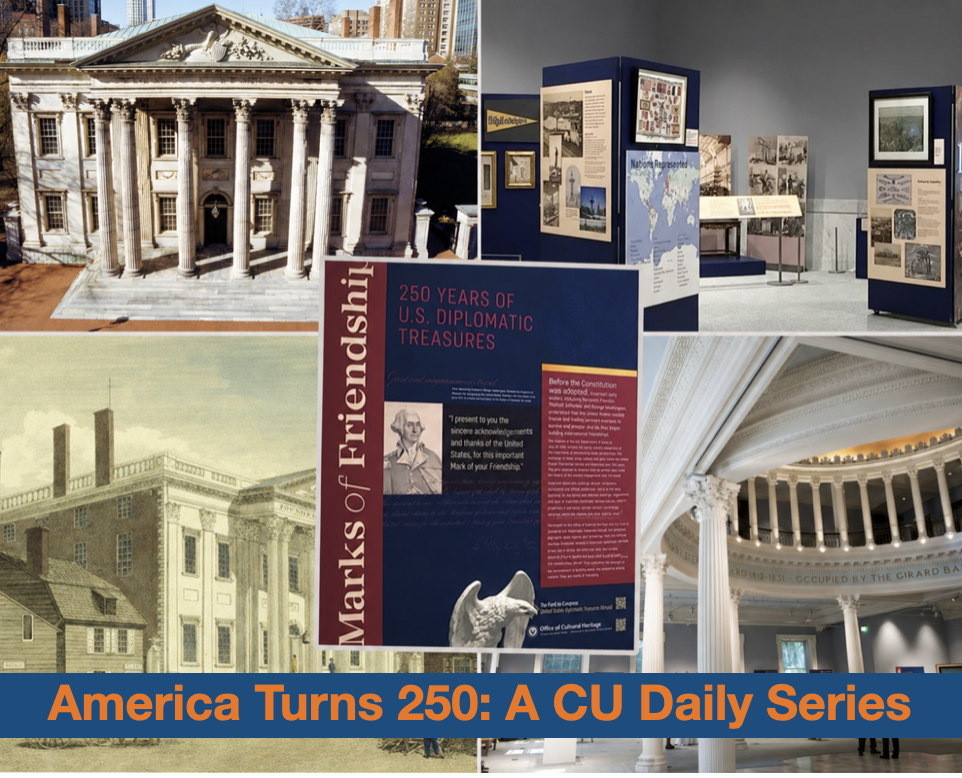
PHILADELPHIA — The historic First Bank of the United States, one of Alexander Hamilton’s signature achievements and a cornerstone of the nation’s early financial system, is reopening to the public today following a $43 million renovation, marking its first public access in more than two decades.
The bank opened in 1791 and closed in 1811. The first credit union in the United States opened a century later in 1909.
The ribbon-cutting ceremony at the landmark on the west side of Third Street near Chestnut Street comes just ahead of the 250th anniversary of the signing of the United States Declaration of Independence in Philadelphia.
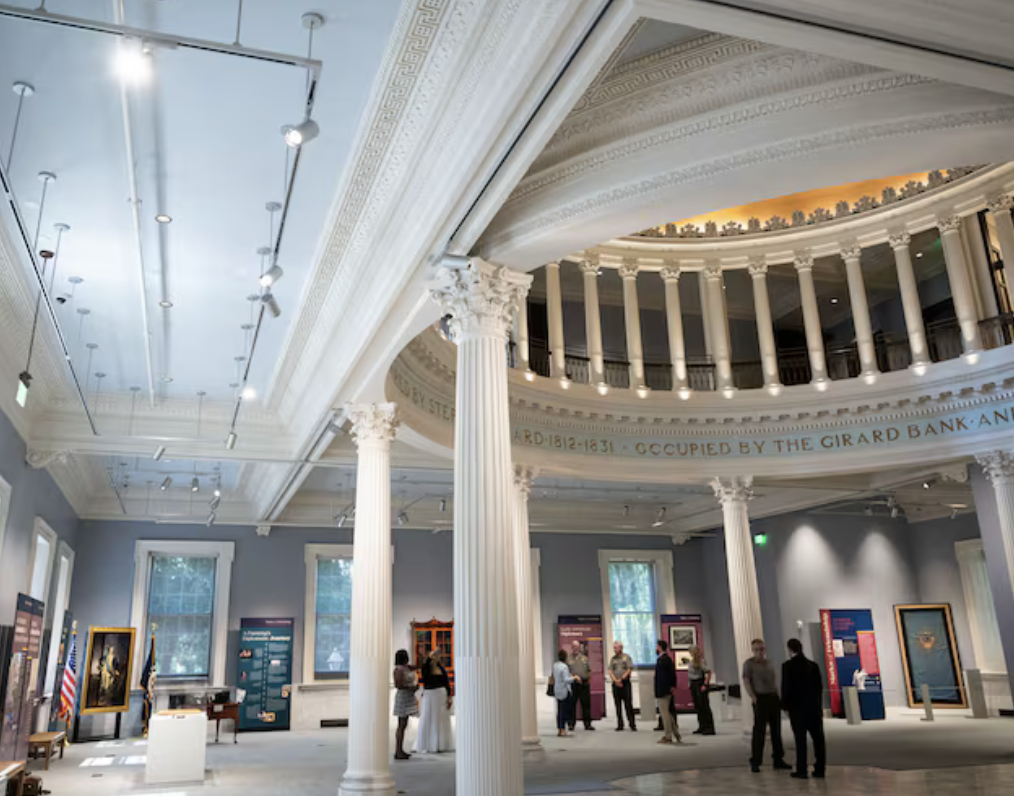
Visitors will be able to enter the restored grand rotunda and view the building’s barrel-vaulted golden ceiling, illuminated by 240 painstakingly cleaned panes of glass surrounding a central skylight.
‘What Really Matters’
“I’m excited to see how visitors connect to the space,” Steve Sims, superintendent of Independence National Historical Park, told The Philadelphia Inquirer. “The National Park Service can talk about what’s important all day long, but what really matters is what’s relevant to our visitors.”
Sims said the building’s interior had become dark and worn before the renovation, with carpeting covering the original marble floor. The restoration included repainting the interior, restoring the ceiling and replacing outdated air-conditioning, electrical and lighting systems while bringing the building into compliance with modern building codes, according to the Inquirer.
The National Park Service also constructed a rear addition that serves as the building’s public entrance. The addition includes an elevator and accessible restrooms to comply with the Americans with Disabilities Act.
Asbestos Had to be Removed
According to The Philadelphia Inquirer, the project’s original budget of approximately $30 million increased because of higher-than-expected asbestos remediation, soil issues and the installation of a stormwater management system to filter roof drainage.
Funding included $39.3 million from the federal Great American Outdoors Act Legacy Restoration Fund and a $4.5 million contribution from the Independence Historical Trust, the Inquirer reported.
Jonathan Burton, the trust’s director of development, said John Milner Architects of Chadds Ford redesigned the interior to more closely reflect the vision of Philadelphia merchant Stephen Girard, who acquired the bank in 1812. West Chester-based Bedwell Co. served as the general contractor.
“This national historic landmark is now pristine,” Burton told the newspaper. “It’s completely updated, with all new mechanical systems. It’s absolutely gorgeous.”
Two Temporary Exhibitions
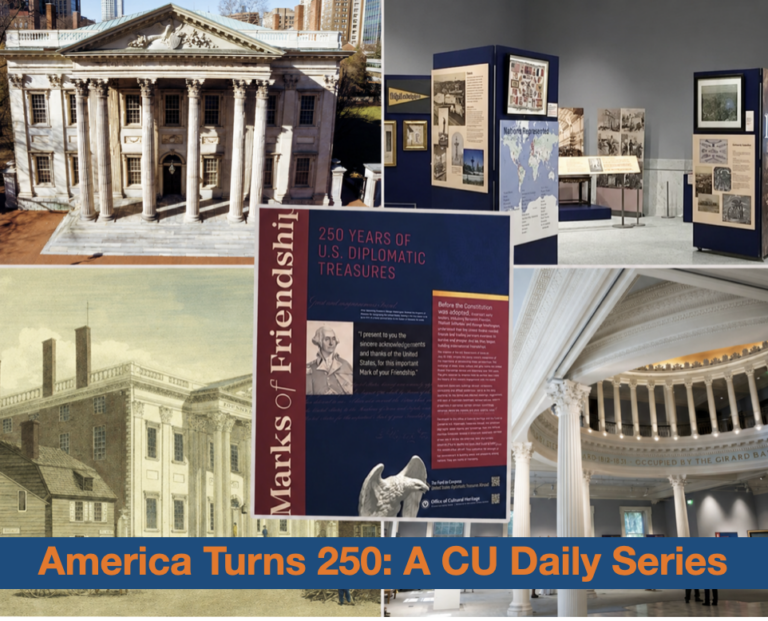
The reopened building will initially feature two temporary exhibitions while a permanent exhibit detailing the bank’s role in establishing the nation’s financial system is completed.
According to The Philadelphia Inquirer, one exhibit, curated from the Atwater Kent Collection at Drexel University, highlights souvenirs and artwork from Philadelphia’s 1876 Centennial Exposition and the nation’s Bicentennial celebration. Among the items on display are two chairs from the Chinese Pavilion at the Centennial Exposition and a Bicentennial-era lamp featuring glass panels depicting the American flag and the Liberty Bell.
A second exhibit, “Marks of Friendship,” showcases diplomatic gifts spanning 250 years of U.S. history. Glyn Davies, a retired U.S. ambassador and consultant to the State Department, told the newspaper the collection includes an ornate Louis XVI-style gilded bronze mantel clock from the U.S. Embassy in Paris dating to about 1725 and Charles Willson Peale’s 1779 portrait of George Washington at Princeton.
Reflecting Greece and Rome
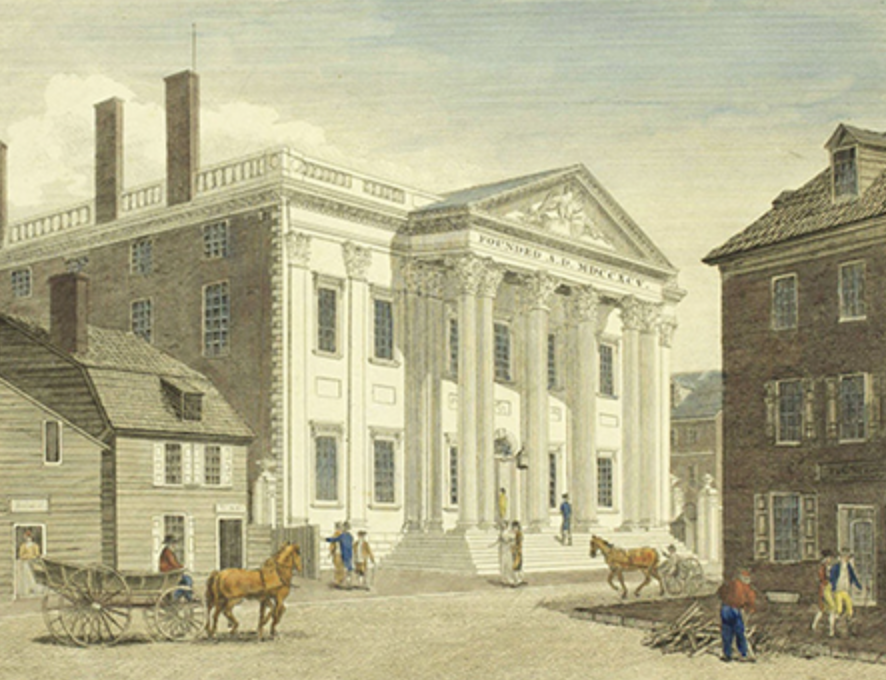
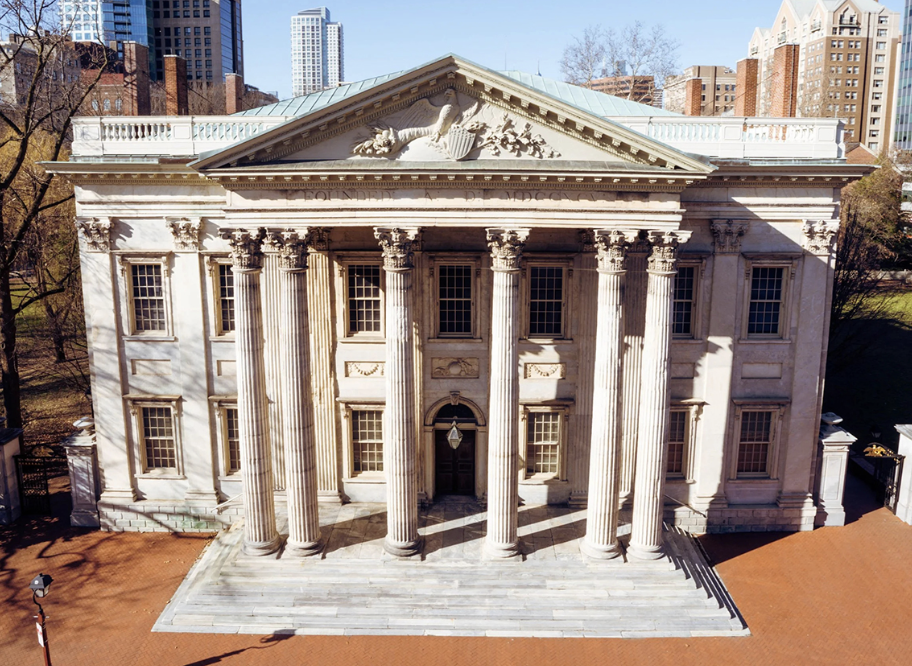
After the bank initially operated out of Carpenter’s Hall, it moved to the three-story brick structure with a marble facade in 1797. The building is considered one of the nation’s earliest examples of monumental Classical architecture, reflecting the proportions and geometry of ancient Greece and Rome, the report stated.
According to The Philadelphia Inquirer, the building features a seven-bay marble facade built with Pennsylvania blue marble quarried in Montgomery County. Its elaborate entrance, restored in 1983, includes mahogany carvings of an eagle holding a shield bearing 13 stars and stripes while standing atop a globe decorated with an olive branch. Above the doorway is a marble keystone depicting Mercury, the Roman god of commerce and finance.
As part of the latest restoration, workers repointed the exterior masonry, repaired damaged stonework and restored the eagle sculpture.
Inside, the building is centered around a circular Corinthian-columned rotunda spanning the first and second floors. The original cellar retains its 1795 stone walls, brick-vaulted rooms and several original sheet-iron vault doors.
Central Place in U.S. Financial History
The bank occupies a central place in American financial history. Hamilton championed its creation as a way to stabilize the fledgling nation’s finances at a time when the United States had no national currency and state-chartered banks issued their own notes.
The proposal sparked fierce political debate. Thomas Jefferson initially opposed the creation of a national bank but later relied on it to finance the Louisiana Purchase. The bank’s original 20-year charter expired in 1811, the Inquirer reported.
Girard purchased the building in 1812, and after his death another institution acquired it in 1832, adopting the Girard Bank name to capitalize on his reputation.
Remodeled in Early 1900s
In 1902, architect James Windrim remodeled the interior, removing the original barrel-vaulted ceiling and installing a skylight above a glass-paneled dome to improve lighting for bank employees.
The bank ceased operations in 1929 and remained vacant until the National Park Service acquired it in 1955 as part of Independence National Historical Park.
The building later served as the park’s visitor center and underwent restoration before reopening for the nation’s Bicentennial in 1976. It remained open intermittently until closing in 2002, according to The Philadelphia Inquirer.