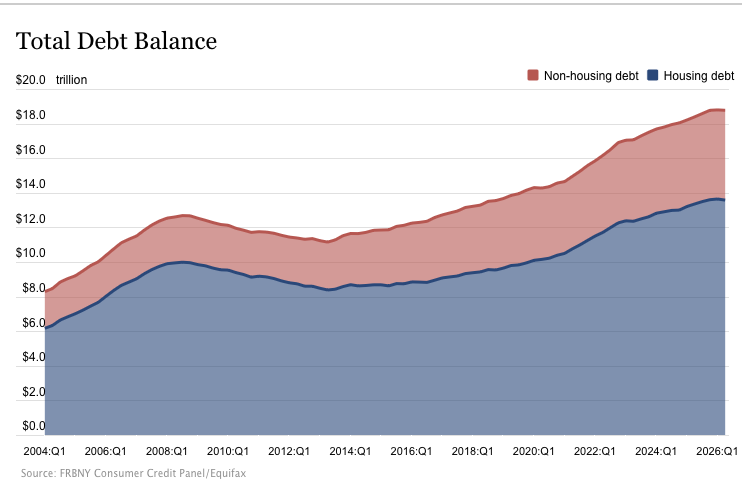
NEW YORK — U.S. credit card balances climbed by $21 billion during the second quarter to $1.26 trillion, approaching their record high as some measures of serious delinquency increased sharply, according to Federal Reserve Bank of New York data.
Credit card balances increased 1.7% from the first quarter and are nearing the record $1.28 trillion reached last year, according to the New York Fed’s latest new quarterly report on household debt.
The percentage of credit card balances in “late-stage delinquency,” defined as more than 90 days past due, jumped to 12.8% from 7.6%, raising concerns about the financial health of some consumers.
New York Fed researchers cautioned, however, that the measure is a lagging indicator reflecting previously charged-off debts that remain on consumers’ credit reports, according to CNBC.
‘Elevated’ Levels
New credit card delinquencies, meanwhile, have remained relatively stable, although at elevated levels. The New York Fed reported 6.97% of credit card balances transitioned into delinquency over the past year.
“To us it reflects this K-shaped economy,” New York Fed researchers said, according to CNBC. “There are a lot of households that live paycheck to paycheck.”
About 175 million Americans have credit cards, according to the New York Fed. While some pay their balances in full each month, roughly 60% carry revolving debt, making them more vulnerable to high interest charges and financial shocks.
Increases in Borrowing
Other forms of consumer borrowing also have been increasing.
“The rise in credit card debt, HELOC debt and other debts, which include personal loans, clearly show that people are looking for ways to extend their budget in the face of stubborn inflation,” Matt Schulz, chief credit analyst at LendingTree, told CNBC.
Separate research from debt management company Achieve found 55% of consumers with credit card balances said they use the debt to cover essential expenses.
Among 2,000 consumers surveyed by Achieve in June, 56% of borrowers said it would take them six months or longer to pay off all their credit card debt.
Temporary Stop-Gaps
“Short-term debts often start off as a temporary stop-gap solution to household budget gaps,” Achieve co-founder and co-CEO Brad Stroh said. But elevated living costs and compounding interest can turn those debts into sustained pressure on household finances, he said.