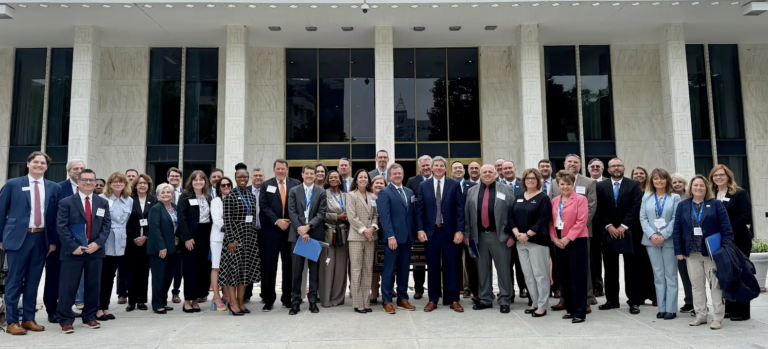
RALEIGH, N.C.–Credit union leaders from across North Carolina gathered in Raleigh for State House Day, the Carolinas Credit Union League’s opportunity to connect lawmakers and staff with the cooperative financial institutions serving communities statewide.
More than 50 attendees, including League representatives, met with elected officials to share how credit unions support working families, small businesses, and local economies—and to discuss priorities shaping the future of member-owned finance in North Carolina.
Hosted by the Carolinas Credit Union League (CCUL), the event brought together CEOs and senior leaders for a full day of engagement at the North Carolina General Assembly. The discussions focused on strengthening partnerships with policymakers and highlighting how credit unions deliver safe, affordable financial services to members in every corner of the state.
“For our first North Carolina State House Day, we made a point to show up and engage in Raleigh, recognizing that the conversations happening here play just as meaningful a role in shaping our movement as those in Washington,” said CCUL Chief Advocacy Officer Billy Boylston.
Champions of proposed legislation to modernize North Carolina’s state credit union charter—Reps. Julia Howard (R, NC-Dist. 77) and Jennifer Balkcom (R, NC-Dist. 117)—were among the elected officials who greeted participants during the legislative briefing hosted at Civic Federal Credit Union’s Quorum Center, according to the Carolinas league. Balkcom, who has worked in the credit union industry, spoke from firsthand experience about the credit union difference. Howard, the lead co-sponsor of the charter modernization proposal, has a long history of support for the industry.
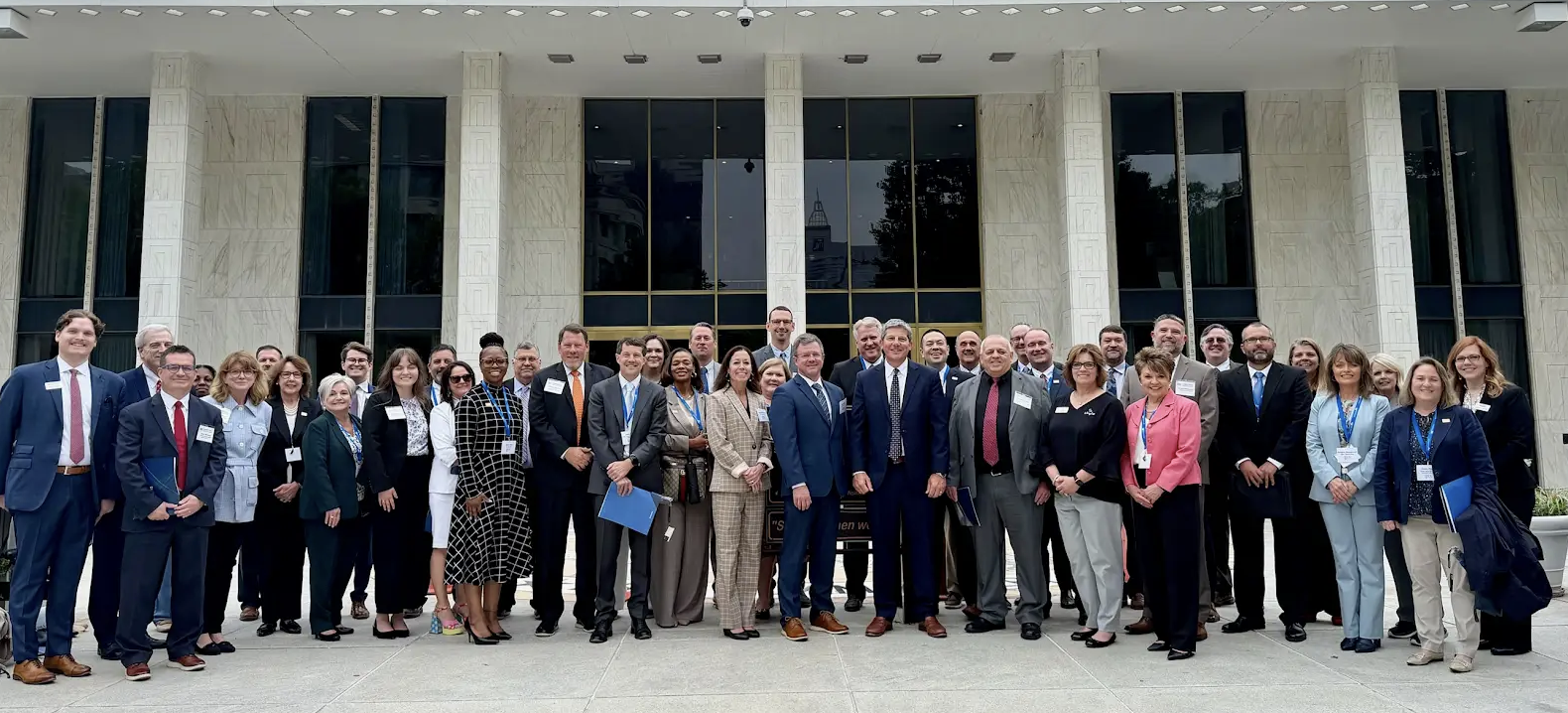
State Sen. Mike Lazzara (R, NC-Dist. 06), a vocal credit union supporter in the Senate, and State Treasurer Brad Briner, a leading voice on financial stewardship and economic stability, also shared remarks with attendees.
Among the top issues discussed in meetings with officials was the need to update the state credit union charter so cooperative financial institutions can more readily serve people in rural communities and financial deserts. Credit union leaders emphasized that modernizing the charter would help ensure more North Carolinians can access responsible, relationship-based financial services, especially in areas where choices are limited.
CCUL organized the day’s schedule of briefings and lawmaker meetings to help legislators connect directly with the credit union leaders serving their districts. Credit unions in North Carolina are not-for-profit, member-owned financial cooperatives, and together they serve more than 5.7 million North Carolinians.
“People at banks have a job. You have a mission,” Howard said when speaking to event participants.
Briner noted the role credit unions play in serving North Carolinians statewide. “We are often referred to as the bank of the state, but as you well know, we are not the bank but the credit union of the state.”
“We’re grateful to the elected officials who took the time to meet with us and to the credit unions who showed up and made the day a success,” added Boylston.
More than 50 people attended the event, representing: Acclaim Federal Credit Union, Allegacy Financial, Bragg Mutual Federal Credit Union, Carolinas Credit Union League, Champion Credit Union, Coastal Credit Union, ElecTel Cooperative Federal Credit Union, First Flight Federal Credit Union, Marine Federal Credit Union, Members Credit Union, Piedmont Advantage Credit Union, REV Federal Credit Union, Skyla Credit Union, State Employees’ Credit Union, Summit Credit Union, Telco Community Credit Union, and Truliant Federal Credit Union.
CCUL said it will continue convening credit union leaders and policymakers to discuss priorities impacting access to affordable financial services, including efforts to modernize the North Carolina credit union charter to better meet the needs of underserved communities.