MADISON, Wis.–The “critical role” regulated Savings and Credit Cooperative Organizations (SACCOs) can play in expanding financial inclusion for refugees and migrants in Kenya is examined in a new report from the World Council of Credit Unions (WOCCU).
The report, developed in partnership with the African Confederation of Cooperative Savings and Credit Associations (ACCOSCA), also outlines key regulatory and operational barriers that must be addressed to unlock that potential.
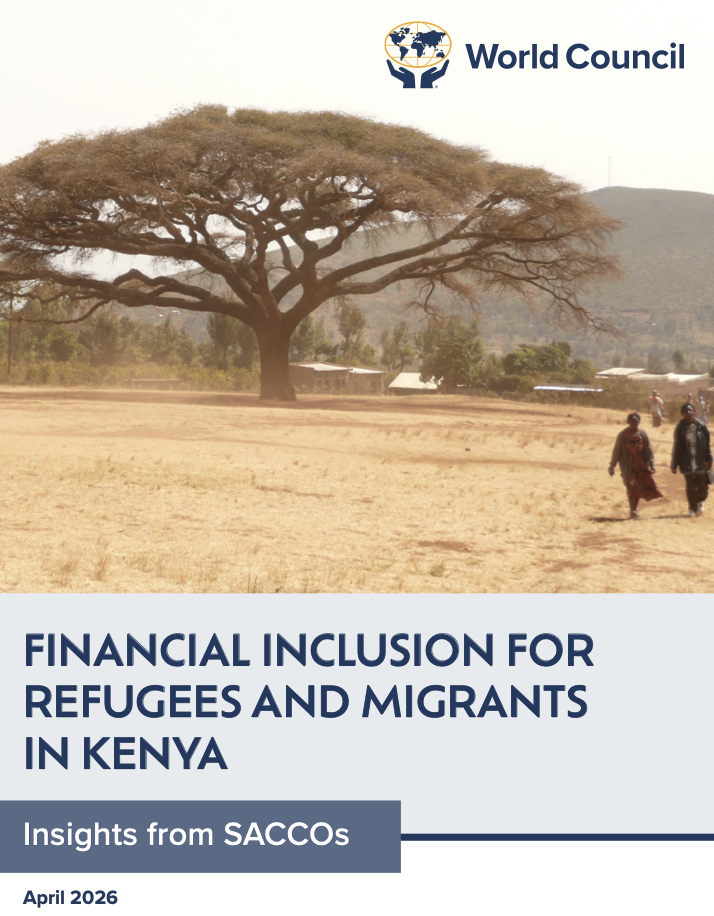
Based on qualitative research conducted with SACCO leaders and refugees, the report Financial Inclusion for Refugees and Migrants in Kenya: Insights from SACCOs finds that while demand for financial services is strong, access remains inconsistent due to documentation challenges, regulatory uncertainty and product misalignment with the realities of refugee livelihoods, according to WOCCU.
‘Uniquely Positioned’
WOCCU stated that SACCOs, as member-owned financial cooperatives rooted in community trust, are uniquely positioned to serve this population. The report explains that in several cases institutions are already adapting by introducing flexible savings products, adjusting credit models and partnering with local organizations to better meet the needs of underserved communities.
“Expanding financial inclusion requires practical solutions and strong partnerships,” Angelina Tracy, VP-strategic growth and global programs at WOCCU, said in a statement. “What this report shows is that SACCOs are already adapting to meet the realities of the communities they serve. With greater regulatory clarity and continued collaboration, their impact can grow even further, supporting financial stability and long-term economic resilience.”
Importance of Policy Alignment
The report also underscores the importance of policy alignment, noting that while Kenya has made progress in advancing refugee inclusion through national strategies and legal frameworks, implementation remains uneven, according to WOCU.
“Clearer guidance on identity requirements and risk-based approaches to compliance could help expand access while maintaining financial system integrity,” the organization added.