
MADISON, Wis.–Credit unions working with the Filene Research Institute are struggling to turn fragmented member data, competing financial well-being scores and an array of technology tools into a reliable picture of members’ financial health, according to an update from Filene’s Center for Member Well-Being.
Early findings from the center’s Financial Well-Being Measurement Working Group suggest participating institutions first need to establish how their members are doing financially before they can determine whether coaching, education, products and other initiatives improve their lives, Filene said.
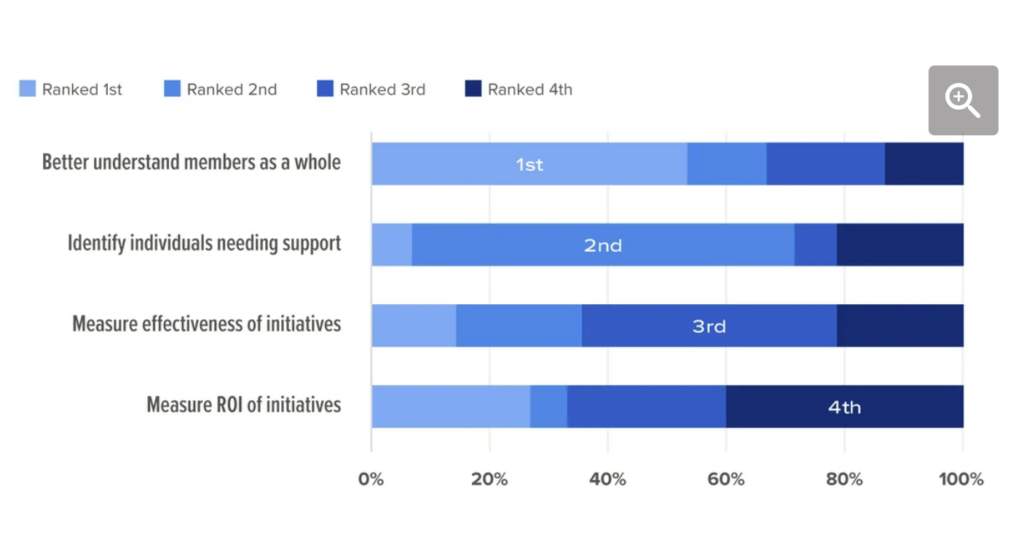
In a poll during the group’s first session, 53% of participants identified understanding financial well-being across their membership as their top measurement priority, Filene reported in a blog post.

The working group, led by Filene fellow Mat Despard, brings together 27 participants from 12 credit unions. Across six sessions, it is examining measurement practices, data sources and the capabilities needed to assess results and demonstrate a return on investments in member financial well-being.
The blog post is the first in a series following the group’s progress toward practical measurement and evaluation practices. Its findings reflect the participating institutions’ experiences during a 90-minute kickoff session, according to Filene.
Establishing A Baseline
Most participating credit unions are focused on establishing a baseline for member financial well-being, according to Filene. Some use established measures, including the FinHealth Score or Savvy Wellness Score, while others have developed proprietary scores to combine more self-reported information with transaction data.
Filene reported participants saw value in financial well-being scores but did not agree that any existing approach was sufficient. Recurring concerns included:
- Competing scoring models.
- Heavy reliance on self-reported information.
- Difficulty connecting scores to outcomes.
- The absence of a shared measurement framework across institutions.
Survey-based scores can illuminate how members perceive their financial lives, but participating credit unions lack a shared standard for combining those responses with transaction activity, credit information and behavioral indicators, Filene said.
Filene said developing a score also leaves another question: What decisions, outreach or assistance should follow?
Fragmented Data Limits Understanding
According to Filene, participating credit unions described using three broad types of information to assess financial well-being and the results of their initiatives:
- Engagement measures, including website traffic, digital banking activity and participation in events or financial coaching.
- Financial indicators, including credit scores, deposit growth, savings balances and delinquency trends.
- Members’ assessments of their financial confidence, stress and peace of mind.
Many institutions have substantial engagement and financial data but considerably less information about members’ perceptions, Filene reported. Account activity can show what is happening financially without explaining how secure or confident a member feels.
Filene added that much of the available information also sits in disconnected systems. Coaching records, digital banking activity and survey responses may be stored separately, while obtaining usable information from vendors can be a persistent burden competing with other organizational priorities.
‘Incomplete Picture’
Even well-integrated internal information provides an incomplete picture because members may hold accounts and conduct financial business at other institutions, Filene said.
Personal financial management and account aggregation tools could help address that gap. However, several participating credit unions reported low adoption and members’ reluctance to share aggregated account information.
Survey fatigue presents another obstacle. Small initial samples and even lower participation in follow-up surveys make it difficult to measure change over time, according to the update.
Choosing Tools And Partners
Participants described using combinations of services to measure financial well-being, collect feedback, provide counseling, support money management and analyze results.
According to Filene, the tools and partners discussed included:
- Measurement and scoring: Financial Health Network/Attune, Ovation, SavvyMoney and Money Habitudes.
- Financial well-being and member experience surveys: Gallup-Callahan, Medallia and MemberXP.
- Counseling, coaching and debt support: GreenPath, Navicore Solutions, Balance and America’s Credit Unions’ FiCEP program.
- Budgeting and money management: MX, Monarch, YNAB, Yodlee, Greenlight and Alkami.
- Analytics and internal data infrastructure: Lumin analytics, SavvyMoney/Savvy, Yodlee and Ovation.
Selecting and evaluating those services can become a project of its own, Filene said. Credit unions must assess what each tool does, whether it duplicates existing capabilities, how its information integrates with internal systems and whether members know it is available.
Implementation can create additional data silos when survey results and vendor reports fail to reach an institution’s broader analytics systems, the analysis added.
Filene said participants described shifting their attention from choosing a tool to evaluating whether they can retrieve its data, integrate it with their data warehouse or lake house, connect its results to measurable outcomes and justify its continuing cost.
The strongest consensus concerned the operational challenge of managing multiple solutions and turning their information into action across the organization, Filene reported.
Segmentation Shows Promise
A small number of participating credit unions have developed member segments based on financial well-being stages or psychological and behavioral characteristics. For most, segmentation remains an aspiration, according to Filene.
One institution described using Gallup’s financial well-being stages to place members in three groups: Thriving, Struggling or Suffering. The approach allows it to monitor membership trends and assess whether members’ perceptions and well-being improve over time, Filene said.
The blog post noted that another developed six member segments from a large survey combining generational characteristics with financial literacy, budgeting behavior and understanding of net worth. The model also incorporated comfort with technology, financial goals and satisfaction with personal finances.
That institution later condensed the model into a six-question tool to make segmentation more scalable, Filene reported.
Although these approaches have produced detailed insights into member needs, translating them into individualized assistance and tracking outcomes for individual members has been difficult and resource intensive, Filene said. Participants also cited survey participation bias and challenges incorporating segmentation findings into operational decisions.
The Next Steps
According to Filene, at the session’s conclusion, participants identified three leading challenges for the working group:
- Agreeing on a shared definition of what to measure.
- Connecting data to outcomes.
- Bringing together fragmented information across systems and partners.
The second session will examine surveys, but Filene plans to devote more of the remaining sessions to transaction and behavioral data.
A potential approach would combine survey responses with account and product information to assess both members’ financial circumstances and their perceptions on an ongoing basis. Over time, such a model could reduce reliance on direct member input that is difficult and time-consuming to obtain, Filene said.
A few participating credit unions are already pursuing that approach. Later sessions also will explore how advances in artificial intelligence could contribute to the analysis, according to Filene.