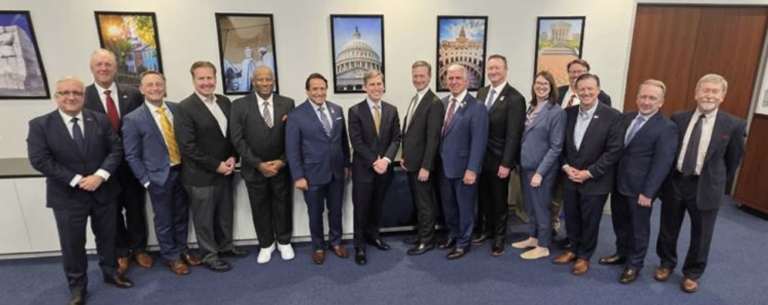
WASHINGTON — The Defense Credit Union Council leaders and member credit union CEOs met with senior Pentagon and National Credit Union Administration officials to discuss military financial services and seek regulatory changes involving payment stablecoins, investment authority and liquidity, the council said.
The delegation, which also included credit union system partners, urged the NCUA to provide a clear, practical framework for credit union participation in payment stablecoins under the GENIUS Act. It also sought support for investment opportunities that would help credit unions compete and adopt new technologies responsibly.
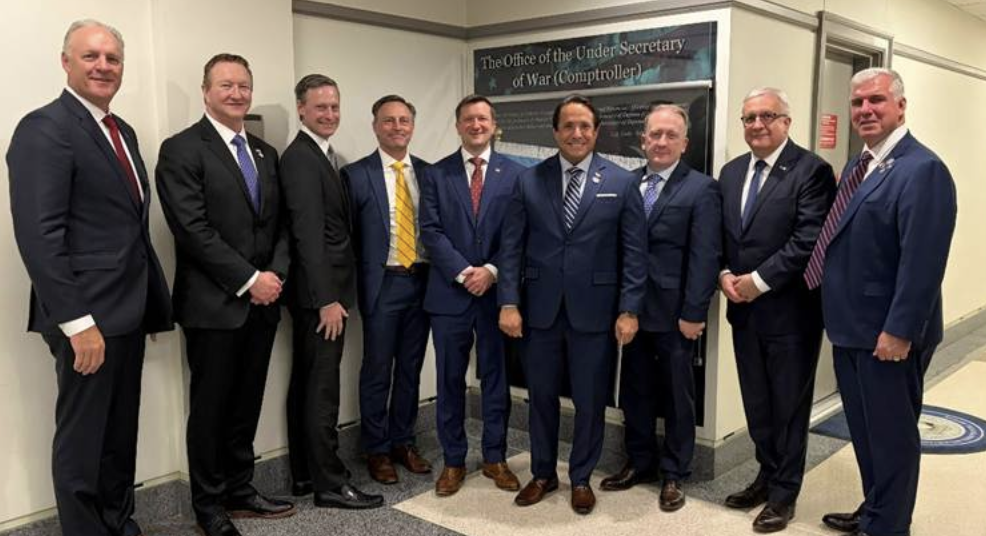
At the Pentagon, the group met with Lara Sayer, principal deputy assistant secretary of the Air Force for financial management and comptroller, and Jules “Jay” Hurst III, undersecretary of war for comptroller matters and chief financial officer, according to DCUC.
The discussions focused on collaboration and financial services for service members, veterans and their families.
‘Always Ready to Speak Up’
“While DCUC is always ready to speak on their behalf, our member credit unions are the ones directly serving those who serve our country,” DCUC President and CEO Anthony Hernandez, a retired Air Force colonel, said in a statement.
The delegation subsequently met with NCUA Chairman John Crews, who outlined his priorities and heard the group’s regulatory concerns, DCUC said.
Those priorities included preserving federal preemption of state interchange restrictions for federal credit unions, expanding membership eligibility to designated beneficiaries and modernizing the Central Liquidity Facility, the system’s federal liquidity backstop.
DCUC also urged the agency to reduce duplicative requirements, update consumer disclosures for digital banking and address operational concerns involving vehicle loan interest reporting.
Participants called for practical approaches to technology adoption, stronger cybersecurity education and information sharing, and continued consultation with stakeholders before new requirements take effect.
Q&A Session
Jason Stverak, DCUC’s chief advocacy officer, led a question-and-answer session with Sierra Robinson, director of the NCUA’s Office of External Affairs and Communications, on challenges facing credit unions serving military communities.
“Credit unions need clear, consistent rules that allow them to compete, responsibly embrace new technologies, and devote more resources to serving their members,” Stverak said in a statement.
EvergreenDIRECT Joins DCUC
Separately, EvergreenDIRECT Credit Union, a Washington state institution founded by public assistance employees in 1954, has joined the Defense Credit Union Council, the association announced.
JohnPaul McGee, the credit union’s president and CEO and an Army veteran, said membership will help strengthen its advocacy and expand access to resources for serving members.
“Joining DCUC is an opportunity to strengthen our voice on the issues that matter to our members and connect with credit unions that share our commitment to service,” McGee said.
The credit union was established as SDPA Credit Union by employees of the state Department of Public Assistance. It received a federal charter in 1973 and became Social and Health Services Federal Credit Union, serving employees of the departments of Social and Health Services and Health, along with previously eligible groups.
In 2005, it converted to a state charter and expanded eligibility to people who live, work, worship or attend school in designated Washington school districts. It merged with Evergreen Federal Credit Union in June 2006 and adopted the evergreenDIRECT name Jan. 1, 2007.
“Together, we can strengthen the credit union voice and champion the financial well-being of members, including servicemembers, veterans, and their families,” Hernandez said in a statement.
DCUC said membership is open to all credit unions. The association provides legislative and regulatory advocacy, conferences, financial education resources and training, as well as guidance on military-related operational and compliance issues.