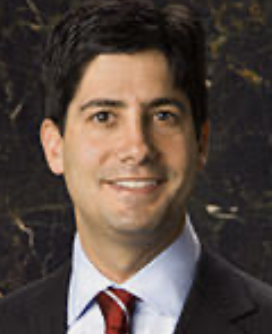
NEW YORK — Federal Reserve Chairman Kevin Warsh’s stronger-than-expected warning about inflation last week has put a potential September interest-rate increase back on the table, sending short-term Treasury yields higher and leaving investors trying to determine how the relatively new Fed leader will approach monetary policy, according to numerous market analysts.
Warsh told the Kansas City Fed’s annual economic symposium in Jackson Hole, Wyoming, on Friday that policymakers might have more “work to do” to combat inflation.
The comments quickly changed market expectations. Interest-rate futures showed traders assigning about a 58% probability to a rate increase at the Fed’s Sept. 16 meeting, up from 35% Thursday, according to CME Group data cited by the Wall Street Journal.
Warsh stopped short of committing to an increase, however, leaving investors uncertain about what the Fed ultimately will do.
Markets Still Trying to Read Warsh
The Journal noted Friday’s reaction reflects a larger challenge confronting financial markets since Warsh became chairman: Investors are still attempting to determine how aggressively he will respond to inflation and how much guidance he intends to provide about future policy.
Warsh has said he does not want to reveal too much about the Fed’s interest-rate outlook.
His appearances following Fed meetings in June and July produced substantially larger stock-market declines. In June, Warsh surprised investors by emphasizing inflation risks. In July, comments from the chairman raised almost the opposite concern, prompting questions about whether he would follow his inflation warnings with tighter monetary policy.
Friday’s comments helped alleviate some concerns that pressure from President Donald Trump could make Warsh reluctant to increase rates, according to the Journal.
But they introduced another risk: Investors could now expect a September increase even if economic data released before the meeting does not support one.
“You’ve essentially signaled to the market that the Fed more or less will deliver rate hikes,” George Catrambone, head of fixed income Americas at DWS, told the Journal. “I’m just not sure that as the data comes in, that’s going to be the case.”
Bond Market Has Been Volatile
The uncertainty has been particularly apparent in the Treasury market.
- The yield on the 30-year Treasury climbed above 5.3% following the Fed’s July meeting, its highest level since 2007, according to the Journal.
- The Treasury Department subsequently announced it would at least double purchases of longer-term Treasurys through an existing buyback program. Treasury Secretary Scott Bessent has argued that elevated long-term yields do not reflect economic fundamentals.
- The 30-year Treasury yield settled Friday at 5.207%, compared with 5.266% shortly before the Treasury announcement, according to Tradeweb data cited by the Journal.
- The 10-year Treasury yield, which is more closely tied to mortgage rates and other consumer borrowing costs, moved in the opposite direction Friday. It rose to 4.721% from 4.671% Thursday.
Warsh’s comments had an even greater effect on shorter-term yields because those securities are particularly sensitive to expectations for Federal Reserve policy.
Stocks Edge Lower
Stocks declined Friday, although the reaction was relatively modest.
The Dow Jones Industrial Average fell less than 0.1%, while the S&P 500 declined 0.2% and the Nasdaq composite dropped 0.5%, according to the Journal.
Economically sensitive stocks suffered larger declines. The Russell 2000 fell 1.4%, while the industrial sector of the S&P 500 declined 1%.
Stocks nevertheless remain near record levels following another strong corporate earnings season. The S&P 500 was about 1% below its all-time high, the Journal reported.
Investors now face a potentially volatile September as they await additional economic data and the Fed’s next decision.
“There’s this element of still trying to figure [Warsh] out,” Kristian Kerr, head of macro strategy for LPL Financial, told the Journal. “That’s going to go on for a while.”