JACKSON, Wyo. — Federal Reserve Chairman Kevin Warsh said Friday that inflation has become the central bank’s more pressing concern but declined to signal where interest rates are headed, reinforcing his push for a less communicative Fed and leaving investors to determine for themselves when policymakers may act.
The U.S. economy is at “full employment,” while inflation readings “are more concerning,” Warsh said in prepared remarks at the Federal Reserve Bank of Kansas City’s annual economic policy symposium in Jackson Hole, according to CNN.
Warsh’s remarks marked a departure from a tradition in which Fed chairs have often used the closely watched gathering of central bankers, finance ministers and economists to provide clues about the direction of monetary policy.
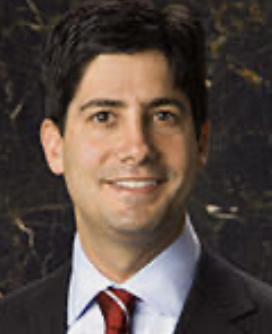
“A quieter Fed, more purposeful in its communications, is better able to meet its objectives,” Warsh said.
Inflation Takes Center Stage
According to CNN, Warsh stopped short of saying whether the Fed should raise interest rates, but his assessment that inflation presents the greater challenge could carry significance as policymakers prepare for their Sept. 15-16 meeting.
Inflation has recently accelerated amid tariffs, war-related pressures and heavy corporate spending on artificial intelligence infrastructure, CNN reported. Some Fed policymakers have already called for higher borrowing costs, which would represent the first rate increase since July 2023.
Investors currently put the probability of a September rate increase at about 34%, according to CME FedWatch data cited by CNN, with greater odds of an increase at subsequent meetings.
A ‘Close Call’
“It’s a close call whether or not they hike at all this year,” Jim Caron, chief investment officer of portfolio solutions at Morgan Stanley Wealth Management, told CNN.
Financial markets are also confronting higher bond yields driven by several factors, including government deficits and increased corporate bond issuance. Long-term Treasury yields rose sharply after Warsh’s post-meeting news conference in July, when he similarly declined to provide guidance about interest rates.
Higher government borrowing costs could add to federal interest expenses as U.S. debt approaches $40 trillion, CNN reported.
Warsh Rejects ‘Reaction Function’
One source of uncertainty for investors is Warsh’s refusal to spell out what economists call the Fed’s “reaction function” — essentially the economic conditions and data that would cause policymakers to change monetary policy.
That differs from forward guidance, in which a central bank more explicitly describes the likely path of interest rates if economic conditions develop as anticipated.
Warsh Defends Decision
Warsh defended his decision not to provide either.
“I wish our understanding of the economy were so precise as to provide a mechanical, tried-and-true answer,” Warsh said. “But our knowledge just doesn’t extend that far — at least not yet — and the factors most relevant to the proper conduct of monetary policy change over time.”
Ian Kresnak, senior investment strategist at Vanguard, told CNN that the lack of clarity is contributing to volatility in interest-rate markets.

“The bond market is really looking to the Fed for clues on their reaction function,” Kresnak told the news outlet. “What’s driving a lot of the volatility in the rates market is uncertainty around how the Fed is going to respond to inflation.”
A CNBC survey of 31 economists, strategists and investors conducted ahead of the Jackson Hole symposium found 80% believed Warsh should explain his economic views in greater detail.
Jobs Data Complicate Fed’s Decision
The Fed must balance its inflation concerns against a labor market that CNN described as having remained in a “low hire, low-fire” environment for much of the past two years.
New government estimates released Friday suggested employment growth may have been somewhat weaker than previously reported.
The Bureau of Labor Statistics’ preliminary annual benchmark review estimated the economy added 79,000 fewer jobs between April 2025 and March 2026 than previously calculated. If the preliminary estimate holds, employment growth during that period would be revised to 194,000 jobs from 273,000.
The preliminary report does not immediately revise previously published employment figures. It is part of the BLS’ annual process of comparing monthly survey estimates with unemployment insurance tax records.
Despite those employment questions, Warsh characterized the economy as being at full employment and made clear that persistent inflation carries consequences beyond financial markets.
‘Who Gets the Worst of It?’
“If the Fed gets inflation wrong and judges the economy wrong, who gets the worst of it? Not the financial high-fliers,” Warsh said. “Hard-working Americans are the ones left to deal with inflation that is too high or jobs that suddenly appear less secure.”
Warsh’s approach leaves investors with a clearer understanding of which economic risk currently concerns him most, CNN reported, but little indication of when that concern might translate into higher interest rates.