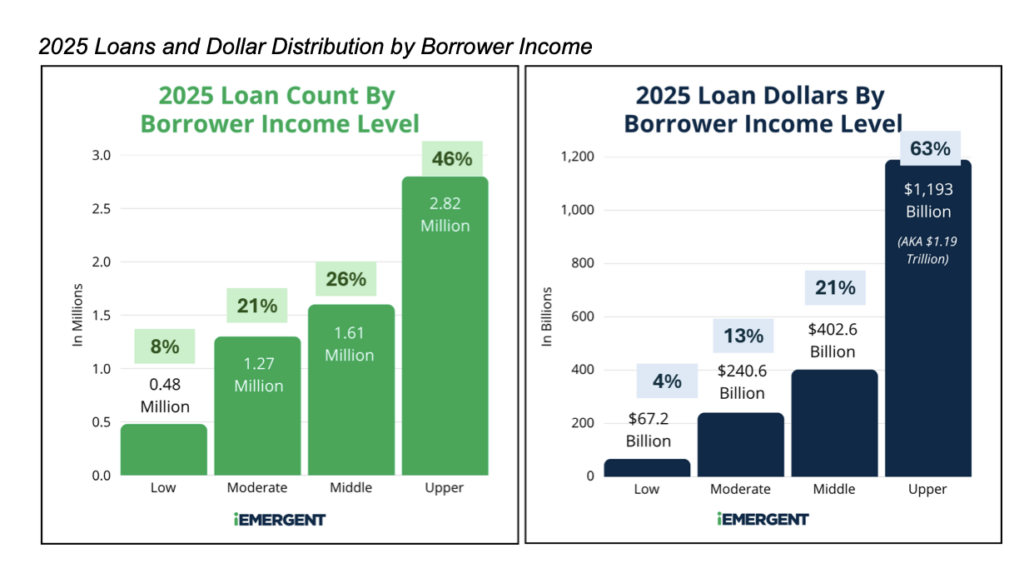
DES MOINES, Iowa — Gaps in mortgage access for low-income households are substantially wider when measured by borrowers’ incomes than by neighborhood income levels, according to a new analysis by forecasting and advisory firm iEmergent.
The company examined five years of Home Mortgage Disclosure Act data, comparing individual applicants’ incomes with the median income of the census tracts where the properties were located. The measures produced different pictures of who applies for mortgages, how often applications become loans and how much borrowers receive, iEmergent said.
“A census tract’s income level is a neighborhood average, and averages smooth over the households facing the steepest barriers,” said iEmergent CEO Laird Nossuli. “If lenders rely only on tract-level data, they can conclude that access for low-income borrowers is better than it actually is and build strategies around the wrong problem.”
Differences In Mortgage Access
Among the findings, according to iEmergent:
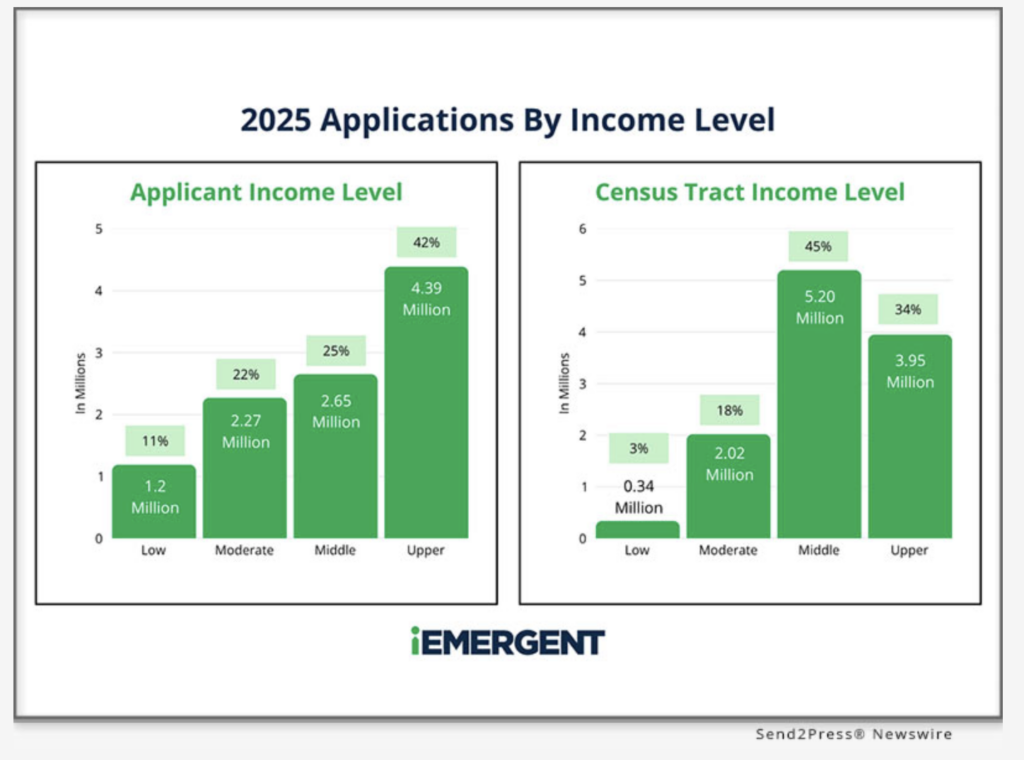
- Applications: Properties in low-income census tracts — those with median family incomes below 50% of the area median family income — account for 3% of all mortgage applications. Low-income borrowers, when identified by applicant income, account for 11%.
- Originations: Between 50% and 56% of applications involving properties in low-income census tracts become originated loans, compared with 39% to 43% of applications from low-income borrowers.
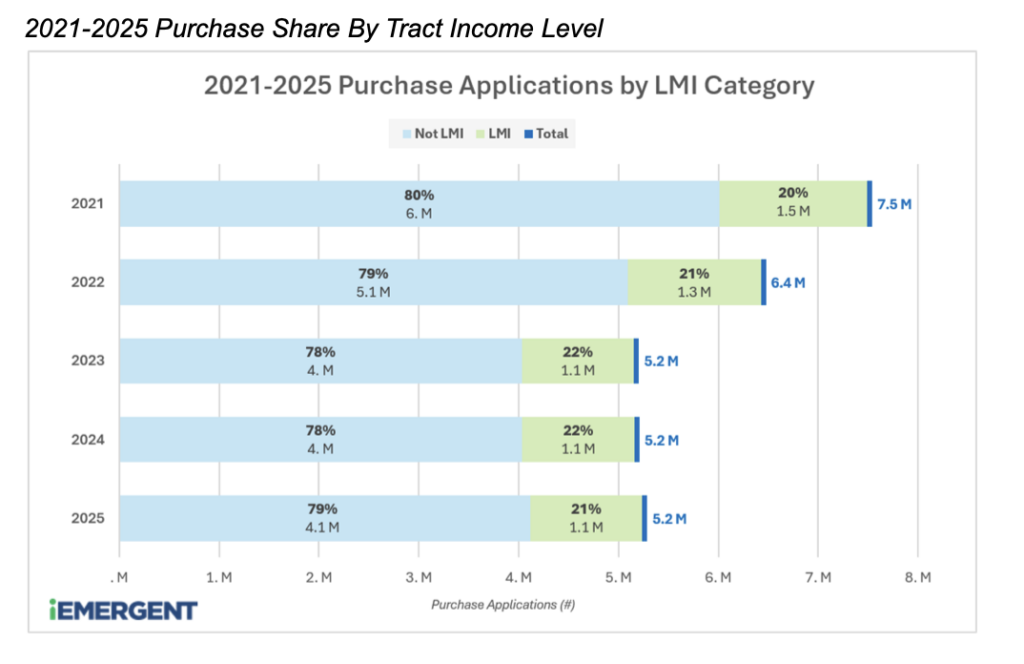
- Loan amounts: Average purchase loans in low- and moderate-income census tracts are 31.6% smaller than those in other tracts. When measured by applicant income, average purchase loans for low- and moderate-income borrowers are 50.7% smaller than those for other borrowers. Low- and moderate-income census tracts have median family incomes below 80% of the area median.
Two Separate Barriers
Income affects mortgage access at two stages: whether a household is financially positioned to apply and whether its application ultimately becomes a loan, iEmergent said.
Application and origination rates do not necessarily move together. Examining borrower income can help lenders determine whether lower-income households are underrepresented among applicants or whether their applications are dropping out before closing, the company said.
“Growing the number of low-income households who apply and getting more existing applicants to closing are different challenges that call for different products, outreach and operational fixes,” said iEmergent Chief Operating Officer Bernard Nossuli. “Analyzing applicant income alongside census tract income gives lenders a more complete view of where access gaps exist, how those gaps vary by market and where there may be opportunities to respond.”
Implications For Lenders
Lenders and regulators use HMDA data to evaluate lending to low- and moderate-income borrowers and neighborhoods, including during fair lending and Community Reinvestment Act examinations, iEmergent said.
Beyond compliance, the company said measuring performance by borrower income as well as geography can influence how lenders identify access gaps, compare their results with peers and assess business opportunities.
The findings are part of iEmergent’s multipart HMDA analysis. The full report is available on its website.
Founded in 2000, iEmergent provides mortgage forecasts and analytics to the lending, housing and real estate industries. Its products include Mortgage MarketSmart, a visualization tool designed to help lenders quantify changes in mortgage markets.