

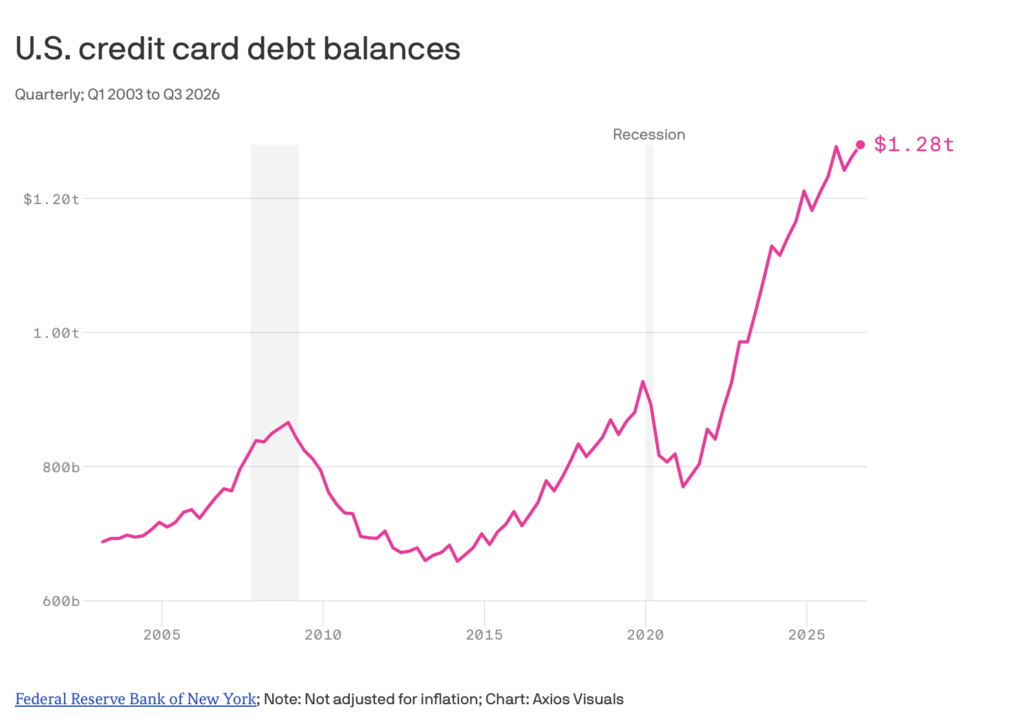
NEW YORK — Americans increased their credit card debt to a record $1.29 trillion in the third quarter as household borrowing continued to rise and financial pressures weighed on consumers, according to new data.
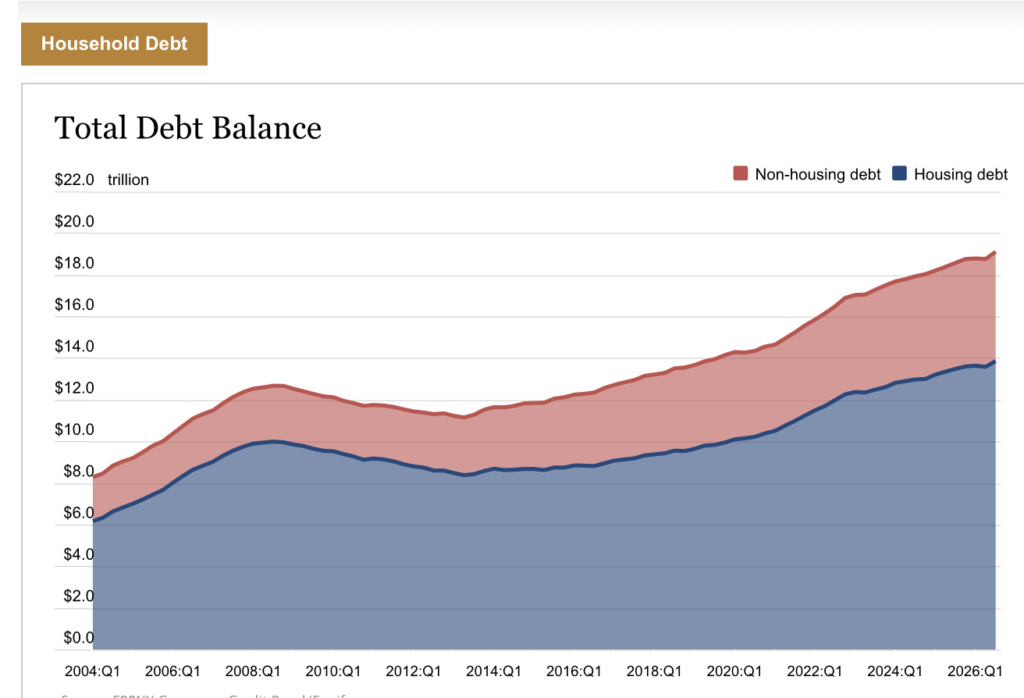
Credit card balances rose $22 billion from the previous quarter and were 4.2% higher than a year earlier, according to the Federal Reserve Bank of New York’squarterly report on household debt. Total household debt, including mortgages, auto loans and student loans, increased $334 billion to a record $19.1 trillion.
“Overall debt has been growing,” New York Fed researchers said during a press call, according to CNBC. “This does reflect financial hardship out there.”
A separate report from TransUnion found that the average credit card balance per consumer reached $6,678, an increase of 2.4% from a year earlier. The number of consumers with credit cards rose 2% to 178 million, from 174.8 million.
Borrowing Expensive on Cards
Borrowing on credit cards remains costly. The average interest rate on a new card offer is about 24%, according to LendingTree data cited by CNBC, although rates vary by issuer, card and borrower creditworthiness.
“Credit cards continue to be one of the most expensive ways to borrow,” Charlie Wise, TransUnion’s senior vice president of global research and consulting, told CNBC.
New York Fed researchers said a growing share of newly issued credit cards had gone to borrowers with lower incomes and credit scores, and those accounts are showing greater signs of financial stress. They also said issuers eased lending standards during the COVID-19 pandemic, with delinquency rates increasing in subsequent years.
The researchers cited inflation and higher borrowing costs as particular challenges for lower-income households, where price increases have outpaced wage growth.
CPI Data Shows Increases
The debt figures were released the same day the Bureau of Labor Statistics reported that consumer prices increased more than expected in October, adding to concerns about the cost of living (a credit union economist’s analysis can be found here).
“Higher prices and higher rates have pushed more people into debt,” Ted Rossman, principal consumer finance analyst at nonprofit credit counseling agency Money Management International, told CNBC.
Rossman said credit card balance growth has slowed but households continue to feel the effects of borrowing accumulated since the pandemic.
Kyle Moore, chief economist at the nonpartisan Century Foundation, linked concerns about household finances to voter dissatisfaction reflected in the recent midterm elections, CNBC reported.