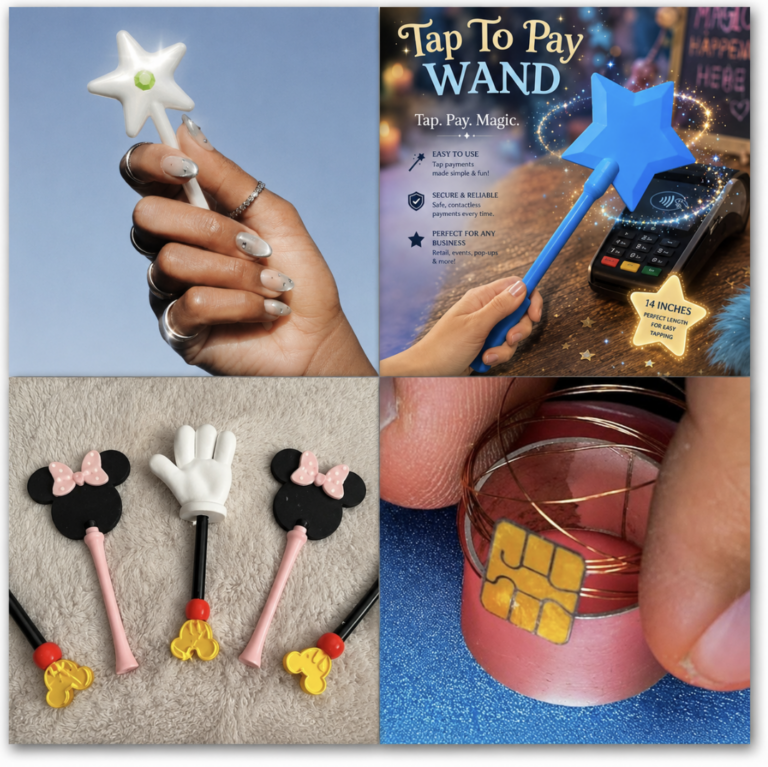
NEW YORK–In a payments trend few saw coming, consumers are increasingly turning routine purchases into social-media content by transforming traditional credit cards into wands, coins and other personalized payment accessories.
The trend has gained traction on TikTok and other platforms, where users have filmed themselves tapping 3D-printed magic wands and other unconventional objects against contactless payment terminals, according to MarketWatch.
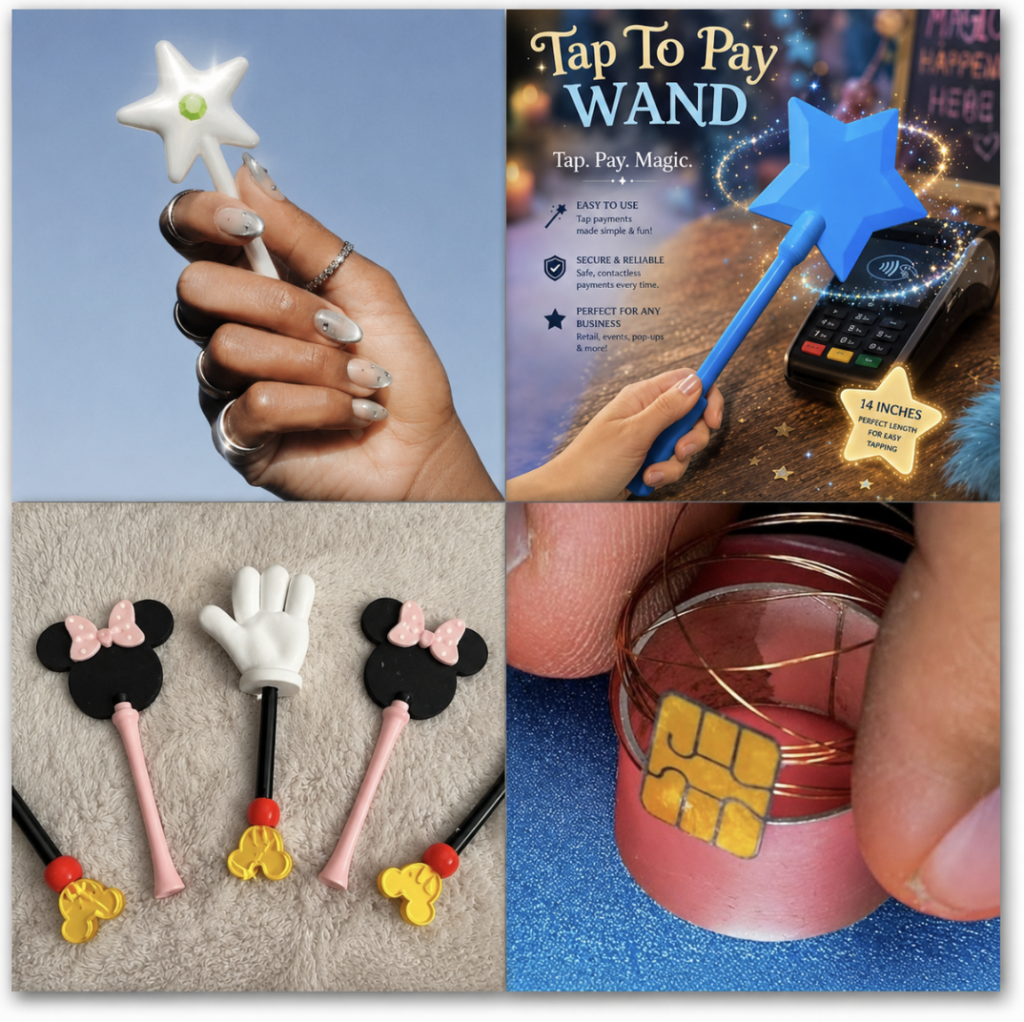
“People are just looking for an excuse to have a little bit more whimsicalness to their day or a little bit more fun,” Doyin Adeyemo, who operates the online payment-accessory brand Printerade, told MarketWatch.
Adeyemo began selling payment accessories through online marketplaces after noticing the trend in January. His 3D-printed wands, coins and other designs, many inspired by video games and cartoons, generally sell for $30 or less. He has since received thousands of orders, according to MarketWatch.
The trend is also attracting interest from larger financial technology companies.
Limited Edition Payment Devices Released
Cash App, a unit of Block, has released limited editions of payment devices called Tags. The devices embed payment credentials in objects shaped like wands, hearts and miniature cards that can be carried on a keychain or in a pocket.
Cash App plans a broader rollout of Tags, increasing the price from $25 to $30 and eliminating a requirement that buyers already have a Cash App debit card, MarketWatch reported.
“There’s no reason why a payment device can’t be fun and social,” Thomas Templeton, Block’s hardware lead, told MarketWatch.
The products capitalize on contactless payment technology, which allows payment credentials to be embedded in objects that bear little resemblance to the rectangular credit and debit cards consumers have used for decades.
‘It’s Kind of Cool to See’
For some consumers, the unusual payment methods have become as much about the experience as the transaction.
Madalynn Medina, a 27-year-old content creator and mother in Fort Worth, Texas, told MarketWatch she bought Cash App Wand and Mini Card accessories partly because of the reactions they generate at checkout.
“It’s kind of cool to see people’s reactions,” Medina said.
Medina told MarketWatch cashiers have questioned whether the devices would work, only to ask where she obtained them after the transactions were approved. She later posted unboxing and demonstration videos on TikTok that generated more than 500,000 views, despite having no partnership with Cash App, the report stated.
Potential Benefits for Payments Company
The trend could also have benefits for payment companies seeking to increase customer engagement. Templeton told MarketWatch Cash App expects the visibility of Tags to help make the service more “top of wallet” among consumers.
Cash App already allows users to personalize debit cards with different colors, illustrations and features such as glow-in-the-dark designs. Templeton said nearly one in five teenagers has a Cash App card.
But even highly customized cards typically remain hidden in wallets, according to MarketWatch. Tags are intended to turn the payment method itself into something consumers can display and use as a form of personal expression.
People already use clothing, jewelry and handbags to express their personalities, Templeton told MarketWatch, and payment devices can serve a similar purpose.
The growing corporate interest has not eliminated opportunities for small businesses offering more elaborate customization.
Lots of Customization
Adeyemo said nearly one-third of his orders now involve customized colors, engravings or shapes. Recent requests have included Mexican peso-inspired designs, medallions and a glitter-covered wand intended as a Sweet 16 gift.
“Someone is not trying to have a mass-produced item to tap and pay,” Adeyemo told MarketWatch. “They’re trying to express who they are.”
Adeyemo said that emphasis on individuality may allow independent sellers to coexist with products from larger payment companies.
“The real spirit of this whole trend, I believe, is the person’s uniqueness,” he told the publication.