

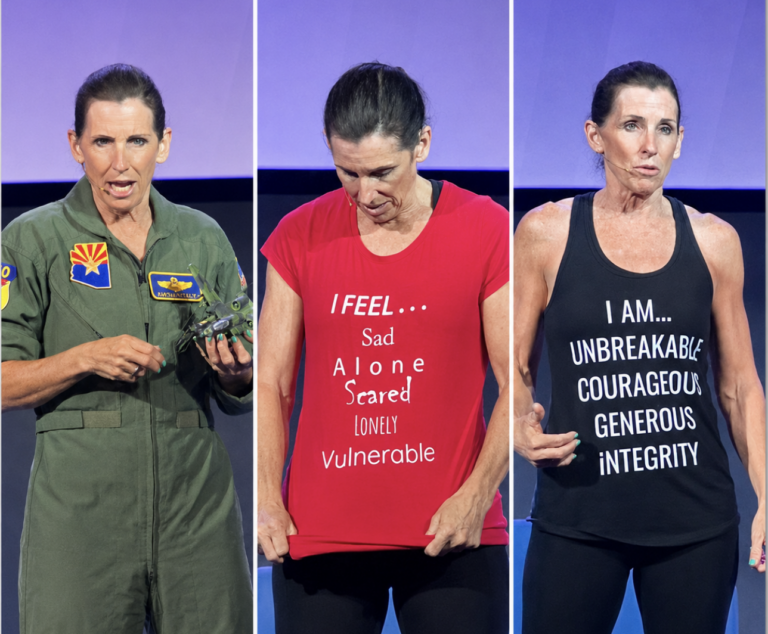
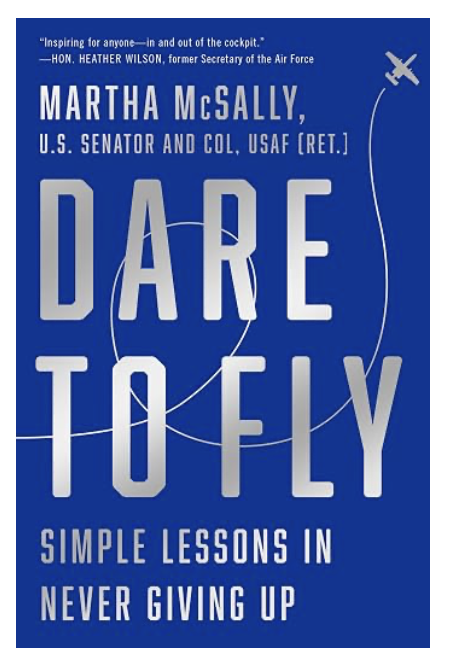
AVENTURA, Fla.–During what were often salty and plainspoken comments, the first female combat pilot in the U.S. Air Force–who would later go on to become a U.S. senator–shared with a CU audience here how a “what the hell” moment, a lonely journey and her father’s words played roles in a life she broke down into Versions 1.0, 2.0 and 3.0, while also advising that while you may love the credit union movement, ultimately, you are not your job
The life story, observations, war stories and advice were shared by Martha McSally during the Defense Credit Union Council’s Annual Conference in remarks themed, “Be Unbreakable: Lead Yourself First in a World That Never Slows Down.”
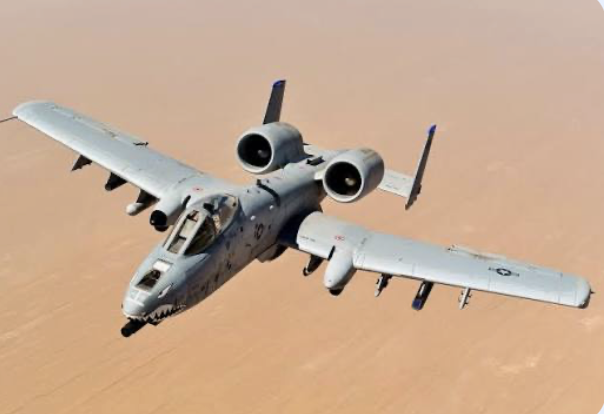
McSally flew the A-10 Thunderbolt II, nicknamed the “Warthog” because it flew “low and slow” and which was introduced in 1977 to provide close air support to ground troops and to fight Soviet tanks. McSally became the first woman to fly an Air Force fighter jet in combat, even though when she joined the military women pilots were banned from such roles. She would participate in combat in both Iraq and Afghanistan and was recognized with a Bronze Star.
The last A-10 has now flown and been retired to what’s known as the “boneyard.” McSally, who made clear during her remarks that she speaks her mind, called retiring the aircraft “stupid.”
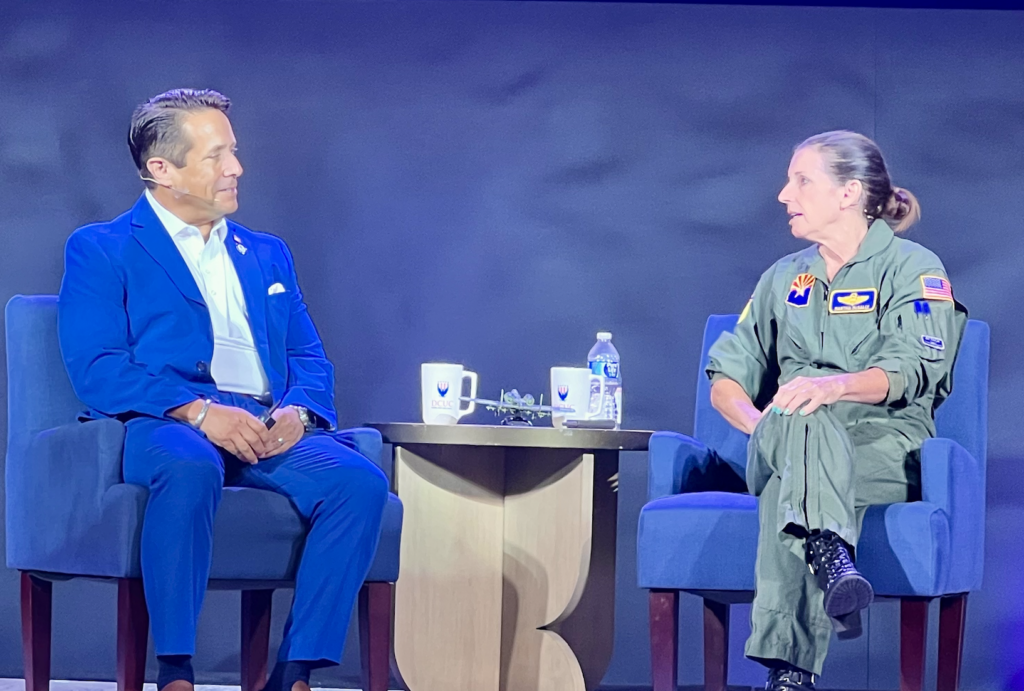
After sharing a story of one combat engagement and how real the dangers are for both pilots and troops on the ground, McSally moved into a Q&A with DCUC President and CEO Tony Hernandez, himself a former Air Force colonel, during which she shared details of her life that she broke down into “Martha 1.0, Martha 2.0 and Martha 3.0,” before closing with inspiring remarks to her audience that challenged them as both credit union leaders and as human beings to rethink what they are getting from their lives.
Hernandez: Tell me about your journey?
McSally: I grew up on a stable, middle class family in Rhode Island. Like many people in my dad’s generation, he started working very young and was working in a gas station out of high school. The manager there saw something in him and helped him get into a work/study program to get into college and he then went into the Navy. I benefitted from his values of hard work, paying it forward, and generosity.
One day when I was 12 my life changed in a day. My dad died. He was 49. He had not felt well and had gone to lie down. We took him to the hospital and they said he had a heart attack and he was stable. But my dad seemed to know he was going to die. I got woken in the middle of the night to go visit with him because he wanted to see us now. He didn’t say, ‘Here are my final words.’ Life is lived in the mundane, delight is really in the small things. We talked about school and other things and somewhere in there he said, ‘Make me proud.’ A few hours later he had another heart attack and passed.
God bless my mom. She was a widow with five kids. She felt the need to go back to school and work and, I say this out of love, but I felt like I lost my mom and dad at the same time. She dealt with grief by staying busy and was emotionally detached. I went from a stable life to what the hell? It’s a tough age to lose a parent. It almost derailed me. There was no counseling. I went on this trajectory of make my dad proud, while screaming for someone to parent me. Thank God for teachers and coaches during this very volatile time I my life. I channeled it into running, but I had a coach who was a predator who abused me. Now I’m suffering from both of these traumas. I knew I needed to get out of here and that I could go either way if left to my own devices.
I’m driven but also volatile. I went to the Air Force Academy and had no idea what I was getting into when I was 17. I didn’t want to be a pilot. I was a motion sick kid. I was in the ninth class of women. For the first time I found out I couldn’t do something because I was a girl. At the time it was against the law for women to be fighter pilots. And that determined it for me. I was going to be a fighter pilot. I refused to dismiss the dream. I accepted a free master’s program at Harvard because I was trying to extend the time. And while I was in pilot training they changed the law.
At first, I was too short to be a pilot. My sitting height was OK but my leg height was too short. They kept delaying my pilot qualifications. I was sitting there with a doctor watching the dream die after I had had hand surgery four times. And this doctor was about to write ‘Not cleared to fly’ when I literally took my fingers and I pinched him on the waist. I said, ‘What do you need me to do with this finger to prove to you I can fly?’ It was just a stupid policy. That guy looked at me and I’m staring at him and he said, ‘You’re crazy.’ I said ‘Yes, I am. I want to be a pilot.’ And he wrote, ‘Cleared to fly.’ And that was just to be a regular pilot.
They told me just because the law changed doesn’t mean the Pentagon will allow it. So, I picked a T-37 instructor position to allow me to keep flying. And the Pentagon called later and said, ‘We’re about to change the policy and we’re going to select seven women.’ And the person responsible for overseeing the training of the women had repeatedly testified against women as fighter pilots. He was an asshole. He either needed to resign or implement it. The irony was he was the one who announced it.
Hernandez: That was Martha 1.0. What was fighter pilot training like and becoming mission qualified?
McSally: I felt like I was on top of my game at that time in my life. Big picture: leaders set the culture. The instructor was ‘In my heart, I’m not for this.’ There were a bunch of Neanderthals who didn’t want us there. When I walked into my fighter leader training, they literally ignored me. It was so childish. I had to put my big girl pants on every day. I knew needed to learn from these people, even though some of them wanted me to fail.
It was a little bit of lonely journey. I felt the weight of every woman in America. I felt tremendous pressure and I had to deal with that daily. You can derail yourself under that kind of pressure. They are cheering for you to lose. I picked the A-10 out of all the fighters that were available and I show up there and the training was hard. This is almost 10 years from when I went to basic training. I took off afraid, but that’s what life is all about. It’s about feeling the fear but doing it anyway.
(She shared an interesting note that there is no flight simulator for the A-10 Warthog, which meant that as a single seat aircraft the first flight is a solo).
Hernandez: When you’re going through that did you remember your father’s words?
McSally: My dad’s words were pushing me all the time, in the toughest, toughest times. Yes, I wanted to make him proud. And every day can be your last. Every day is literally a gift. Every morning I celebrate that I get another day. That loss drove me in many ways.
Often, people who have been through trauma, it drives us to do amazing things in the world. It serves you until it doesn’t. At some point you have to lay that fight down and graduate from that drive. I really graduated from that lesson when I realized, ‘It actually doesn’t matter what he thinks about me. This is between me and my creator.’ There are so many people who are driven to prove someone wrong, to prove our worth to them, even if we’re not aware of it. At some point you have to live the life you are here to live.
Hernandez: What was your call sign?
McSally: It was Wedge. In the fighter pilot community if you are ever in trouble, someone will ‘Wedge’ you out. Part of who I am is I can’t walk by a problem. I wouldn’t wear a burqa in Saudi Arabia and they threatened to court martial me. You can’t make this shit up. My oath is to the Constitution, not to the dumb bureaucrats above me. I did wear the stupid thing. It turned out to be a two-star general’s policy. It also became a lawsuit, Martha McSally vs. Donald Rumsfeld. An amendment was later added to the defense bill and it was signed into law that women didn’t have to wear burqas. In that whole journey I was the ultimate wedge.
Hernandez: You had six deployments total, 325 combat hours. What were your initial combat sorties like in Iraq?
McSally: It was a weird geopolitical situation where we would be shot at and we weren’t allowed to fire back as part of the No Fly Zone. I remember thinking on that first day that this isn’t Arizona anymore. This is real. This is what we trained to do.
Hernandez: Were there any moments when you realized the historical significance of being the first woman to fly in combat?
McSally: I didn’t care at the time that I was the first woman to deploy. I was just, ‘Hey, I’m trying to do my job.’ When I took over command, a woman had also never done that. You don’t understand it until you take over and lives are in your hands. I’m sending people to put their lives on the line. The responsibility is so daunting. It didn’t matter that I’m a woman. Now I’m a commander and everyone is looking at me.
Herandez: What were the guidelines for pilots under your command and for support troops?
McSally: What I learned along the way is that in a fighter squadron there are a lot of egos, a lot of alcohol, a lot of work hard, play hard. It’s Top Gun stuff. It’s dangerous on a daily basis. I realized there are people who are coming to the squadron who are showing up with a personality that isn’t theirs, because they are trying to fit in. I tried, not because I was a women, but because I was a leader, to have them to show up with their personality type and bring what they had to offer to the squadron.
My predecessor had an A team and a B team. Think about what that does to a culture. It created a really toxic environment, and I had to quickly adjust that to being one of meritocracy. Trying to create that environment in a fighter squadron was fun, but we focused on getting the mission done. I was really trying to have the best versions of everyone. I found, generally, most of the guys were really good guys, good husbands, good fathers, good people But there is some dynamic when people get together that they end up being sheep. They will follow one or two bad apples, but don’t really want to They would rather go in the other direction.
Hernandez: How did you get into politics?
McSally: The irony here is I hate politics. I left the military in part because it was so damn political. I retired from the Air Force as a colonel (after 26 years). I was serving as a professor at the Marshall Center in Germany and was teaching a lot of former Soviet country military police and diplomats about international relations. I was living in the German Alps and living the life. And I just had this conviction inside me that I should get my butt in the political arena. I was struck by that Teddy Roosevelt quote, “It is not the critic who counts; not the man who points out how the strong man stumbles, or where the doer of deeds could have done them better. The credit belongs to the man who is actually in the arena…”
I thought what are you going to do, sit and be a bystander or do something? My district was (former Rep.) Gabby Giffords district. After she was shot, she announced in January 2012 that she was stepping down. It prompted a special election. I quit my professorship and went home to Arizona. I had this call to duty that I couldn’t turn off. I didn’t succeed in that primary. I ran again in 2012, six months later for the full term. I thought I had won and I did the freshman orientation, but a recount showed I lost by .8%. I ran again in 2014–that took 43 days to call my race– and I won by 167 votes. I deployed to Washington, D.C., that was my mindset. There is a lot more friendly fire. I get in there and rolled up my sleeves and tried to solve problems. I won in 2016 by 14 points. I was appointed to (Sen.) John McCain’s seat after he passed away, but I didn’t hang into the seat in 2020.

I now have the chair I sat in on the U.S. Senate—they let you buy it—sitting in my living room. I was honored to serve, but it was the most frustrating experience of my life, and I thank God it’s over.
Hernandez: What is Martha 3.0?
McSally: Martha 3.0 is about bringing all of those experiences I’ve had into the private sector. One of my superpowers is I do not get attached to roles and titles and then struggle in the transition to the next thing. I ask people to ask, ‘Who are you? What do you answer to?’ In the West, we usually answer with our job. Those are things you’ve done; they are not who you are. Those things will end. This (uniform) is not who I am. This is something I did.
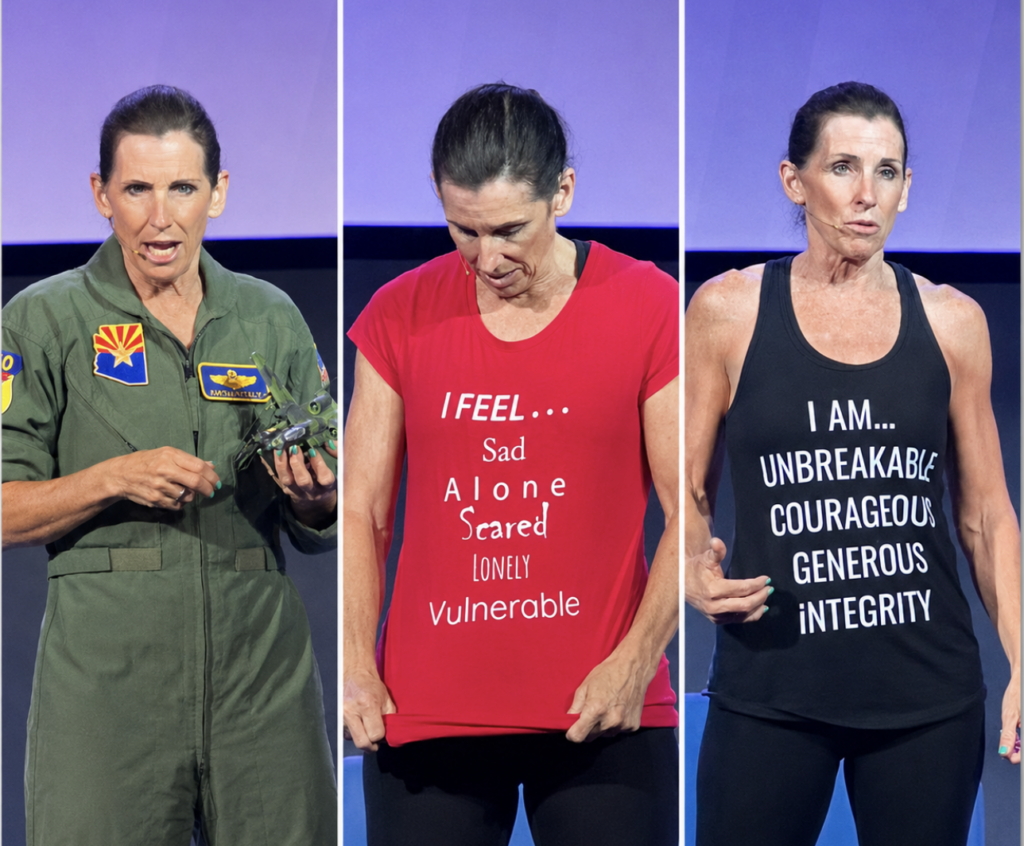
(During her remarks McSally removed her flight uniform to reveal a red T-shirt that read, “I Feel Sad, Alone, Scared, Lonely, Vulnerable.” She then said), “A lot of our servicemembers, they get home from combat but then they get stuck here. They get stuck feeling like there’s no meaning, there’s no purpose or they can’t find their footing anymore. People in all sorts of transitions in life can get stuck here, but this isn’t our identity either. This is how we might feel from time to time, but this is not who we are. I have all these feelings in my transitions, but I don’t let them stick to me. “
(She then removed that white T-shirt to reveal another that read, “I Am Unbreakable, Courageous, Generous, Integrity.”)
“I want to offer something encouraging to all of you. If it were your 80th birthday toast, or a eulogy…what is the unique expression, the little droplet of the divine that you are expressing to the world, through your work, through your relationships, through everything you do through your life. The biggest regret of the dying is that they didn’t authentically live a life aligned with who they truly are. When you say the words, I am, there’s something deeply spiritual about that. You are expressing your identity to the world. How do you want people to describe you? So, as decisions come up, ask, does this align with who I am? It becomes so much more obvious when you’re grounded in that essence.
“My dad didn’t know he wasn’t going to have another day. My friends who died in plane crashes didn’t know they weren’t going to have another day. If you are going to take your last breath tonight, how do you want to be remembered? The biggest regret of the dying is that they didn’t authentically live who they authentically are. Write down how you would like people to describe you. I ask every day, ‘Does this align with who you are?’
“I am expressing myself now through public speaking, I do coaching, I serve on boards. In 3.0 right now I’m trying to take all the things I’ve learned, often the hard way, and pour that into people. There might be a 4.0. I spent 35 years helping people fight from the outside in, and now my mission is to lead that fight from the inside out.”





One Response
A worthwhile read, thank you, CUDaily, for publishing this interview.