

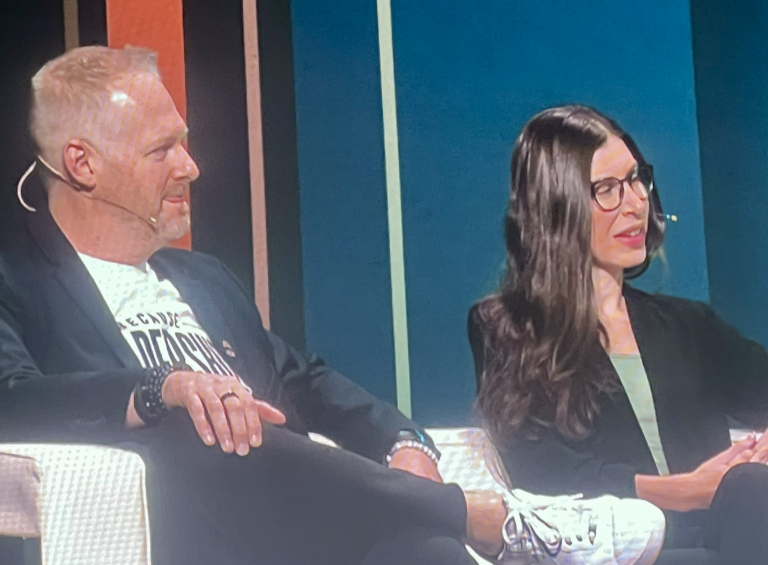
AURORA, Colo.–The definition of leadership, why board/CEO relationships work and don’t work, and one strategic question that can fundamentally shift how an organization operates were the focus of an engaging Q&A discussion here.
The perspectives and insights were shared during the GoWest Credit Union Association’s MAXX Conference here during a session titled, “Destination: The Future,” and featured two experts:
- Miranda Flury, president of Hawkeye Strategies
- Dr. Jeremy Graves, director of Professional and Continuing Education at The Ohio State University
The discussion was moderated by Sharee Adkins, EVP/chief impact officer with the GoWest Association.
Here’s a look at some of what was discussed:
Adkins: What do you mean by ‘Leadership starts with you?’
Graves: I’m not saying leadership is about you, I’m saying it starts with you. What is your why? I think we have a hard time on how do we show up. How do we interact with others? How do you use your influence. We all have influence; it’s how do we use it.
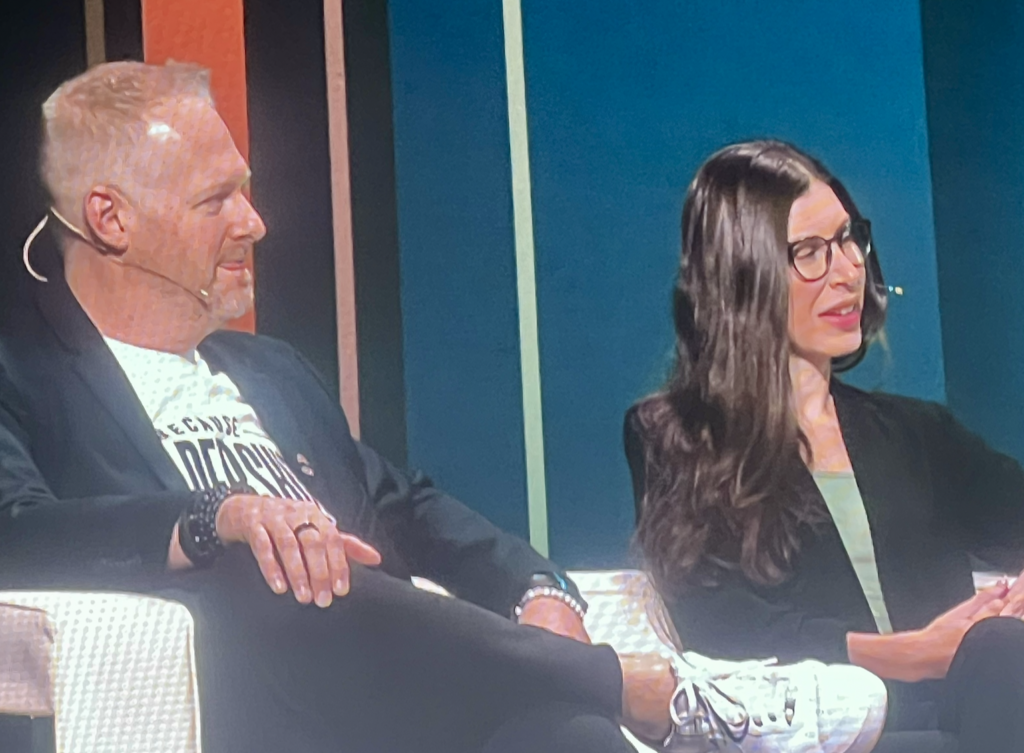
Adkins: Can you reflect on Troy (Stang’s conference-opening) message and how that applies to board members?
Flury: When I was listening to Troy’s presentation (see related story), I was thinking about how the credit union movement is built on trust. He talked about trust over and over again. I think if you want to have trust with your members, with your governors, trust actually starts in the board room with all the directors trusting one another and the CEO, and with the CEO trusting the board. I can’t tell you the number of times I have come in to support strategy sessions where trust is fundamentally broken between the board and the CEO. You can’t develop strategies, much less execute on them, if you don’t have trust. You spend all your time on this unhealthy tension. I spend a lot of time building trust between directors and directors and CEOS.
I want you to reflect on what is trust, what does it look like, what does it feel like. Trust with your significant other, trust with your friends, trust with your family. You have to be able to take what you’re thinking about and built that into a business context. With trust, you notice it when people can speak freely and admit mistakes. If in a boardroom a director or CEO doesn’t have ability to admit a mistake, you don’t have trust.
Another component that tells me you have trust is people ask for feedback. When they do, that’s a sign trust is built. When you don’t have it, it’s incumbent on every single board and CEO to be able to work on trust.
Graves: In our research on trust found these three components.
The first is ability: Can people do what they say can do? The follow through is key. The second thing was integrity was just as important—this is what will do it. The third thing caught me off guard: if you don’t do anything with research, it’s useless. The a-ha moment was discovering that benevolence is the third piece of trust. That means, ‘Do you care? Does the organization care? Does the team care for one another?’ When you have that, you have high levels of trust.
Adkins: What is the question every single one of us should be asking ourselves more often?
Graves: One we miss a lot is ‘what is it like to experience me at work?’ Many of us show up with this idea that we attempt to communicate a certain way and we think we have communicated that way, but the reality is often we have not communicated that way. That leads to these confusing realities around how we communicate. How we show up at work starts to create the culture we are hoping to exemplify in the organization.
Culture isn’t just limited in the boardroom; it’s created in our connections with one another. If I don’t have trust, it’s going to be really hard for others to answer what it’s like to work with me.
The problem is we don’t reflect. This question moves us out of just trying to get information to actually reflecting on what people are saying about what’s it’s like to work with me. The second part of this is how do I change? We may need an executive coach. Sadly, we don’t spend a lot of time reflecting—we spend a lot of time moving from thing to thing. But if you do this just once a week, you will be surprised.
Flury: What I think is interesting about that question, there is a bit of a chicken and egg debate around how to you build trust. One argument is if you start asking questions like that, you build trust. But the caveat is if you ask powerful questions like that and you don’t do anything with it, people will stop giving you feedback.
Adkins: What is one strategic question to fundamentally shift how an organization operates?
Flury: This is actually a preface for you in front of any question if you want to be strategic. And the question is, ‘If you had no constraints, blank…” How would you complete it. This allows you to open up and remove any assumptions you have and allows you to think in a new way. The idea of just removing the constraints helps you to think differently.
Adkins: We have board members, CEO and staff here, all responsible for the future of credit unions. What are practical ways people can stay focused on what matters?
Flury: Two examples come to mind. I’ll start with board members and CEOs. If you want to focus on what matters, then what is in your board packet matters the most. The information being fed into the board packet makes a big difference. That will stimulate the conversations you are having. This is an opportunity to step back and redesign your board packet in a way that elicits higher level strategic conversation.
The other piece is to think about the frameworks in which you are thinking. Those frameworks influence the way you think. Think about the information being fed into agendas.
Graves: I lead a team at the university. And one of the things I will do at times is a rough estimate of what that meeting is costing us. If we’re not going to knock it out of the park, we are wasting resources.
I think I would answer this question with this swag (he shared a t-shirt that read, ‘Because Leadership Matters.’) Often, we put this thing out there that leadership is far off. But the truth is that anyone can lead. It’s about showing up in the space and bringing yourself to that space and bring our best selves. It matters in everything we do. It matters in conversations we have in the office.






One Response
Did anyone in the room get honest about retiring cu ceos going onto boards, or being a consultant to the board Now that’d be a session!