WASHINGTON — Federal Reserve Gov. Christopher Waller called Wednesday for a half-percentage-point interest rate increase in December, warning that persistent inflation may require the central bank to take more aggressive action to bring price increases under control.
The statement comes at the same time newly released Fed minutes show just how close the FOMC was at its last meeting to boosting rates.
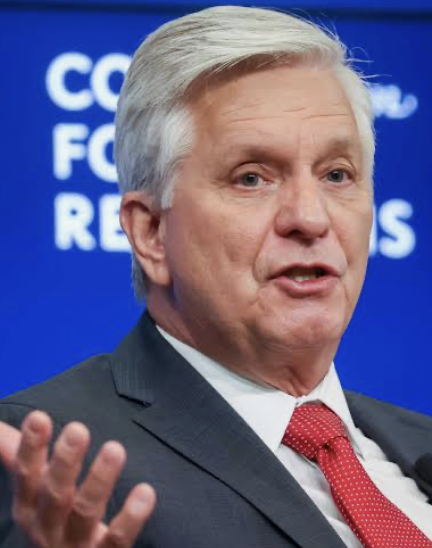
Waller, speaking in a live CNBC interview, said the Fed needs to “shock people” to demonstrate its determination to curb inflation. He is among several Federal Reserve policymakers who have recently suggested additional rate increases may be needed, although they differ over how quickly the central bank should act.
‘Headed in the Wrong Direction’
“I’m very, very concerned about inflation. It’s kind of headed in the wrong direction, and it’s spreading out,” Waller told CNBC’s Steve Liesman on “Squawk Box.” “If you really want to get it down, you’ve got to start taking more aggressive actions.”
Waller said a half-point increase at the Federal Open Market Committee’s Dec. 8-9 meeting would be appropriate unless policymakers instead raise rates by a quarter point and clearly signal another increase in January. Fed Chair Kevin Warsh has resisted such explicit guidance about future decisions, CNBC reported.
“If you’re not going to signal this very clearly to markets, you’re going in January, my view is then you have to go 50 [basis points] in December to put it in place and get it done,” Waller said.
Raised Rates in September
The Fed raised its benchmark rate in September for the first time in more than three years and held it steady in October. Those decisions followed three quarter-point rate cuts in 2025, when officials were concerned about labor market weakness and expected inflation to ease toward the central bank’s 2% target.
Instead, inflation has remained elevated, with energy prices rising after U.S. and Israeli strikes on Iran in February and the effects of tariffs continuing to push up costs, according to CNBC. Most inflation measures have remained above 3%.
Waller argued the Fed should first reverse last year’s three rate cuts and may have to go further. “If the policy rate last summer in 2025 wasn’t bringing inflation down, getting back to that isn’t going to bring it down,” he said.
Additional Support for Rate Increases
Other policymakers have also voiced support for tighter monetary policy. St. Louis Fed President Alberto Musalem suggested Tuesday that as many as four rate increases could be needed by spring 2027. Cleveland Fed President Beth Hammack and Dallas Fed President Lorie Logan have favored a more gradual approach, CNBC reported.
New York Fed President John Williams, however, cautioned against a dramatic response. “I don’t think the situation calls for dramatic action,” Williams said Tuesday in a conversation with Axios, according to CNBC.
Interest rate futures indicated traders were fully pricing in a quarter-point increase in December, with additional increases expected in January and later in 2027, according to CME Group’s FedWatch gauge cited by CNBC.
FOMC Minutes Released
Meanwhile, while the Federal Open Market Committee opted not to raise the target range for the federal funds rate at its October meeting, some participants viewed the decision to hold steady “as a close call,” according to minutes released from the meeting.
During the meeting, the FOMC voted to maintain the target range at 3.75% to 4%, although two members instead favored an increase of 25 basis points. The minutes show that even some participants who favored holding rates at their current levels acknowledged they teetered on whether or not to support an increase. Nearly all participants agreed the FOMC would need to raise rates in the future to achieve the Federal Reserve’s 2% inflation objective.
‘Could Warrant Consideration’
“A couple of participants noted that an increase of more than 25 basis points could warrant consideration at the next meeting if incoming inflation data were unfavorable,” according to the minutes. “A few participants observed that inflation could prove more persistent than anticipated, in which case a shift to a more restrictive policy stance could become necessary.”
The FOMC next meets Dec. 8-9.