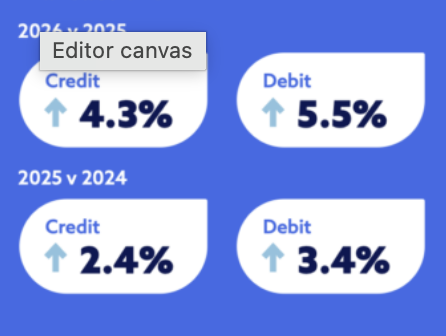
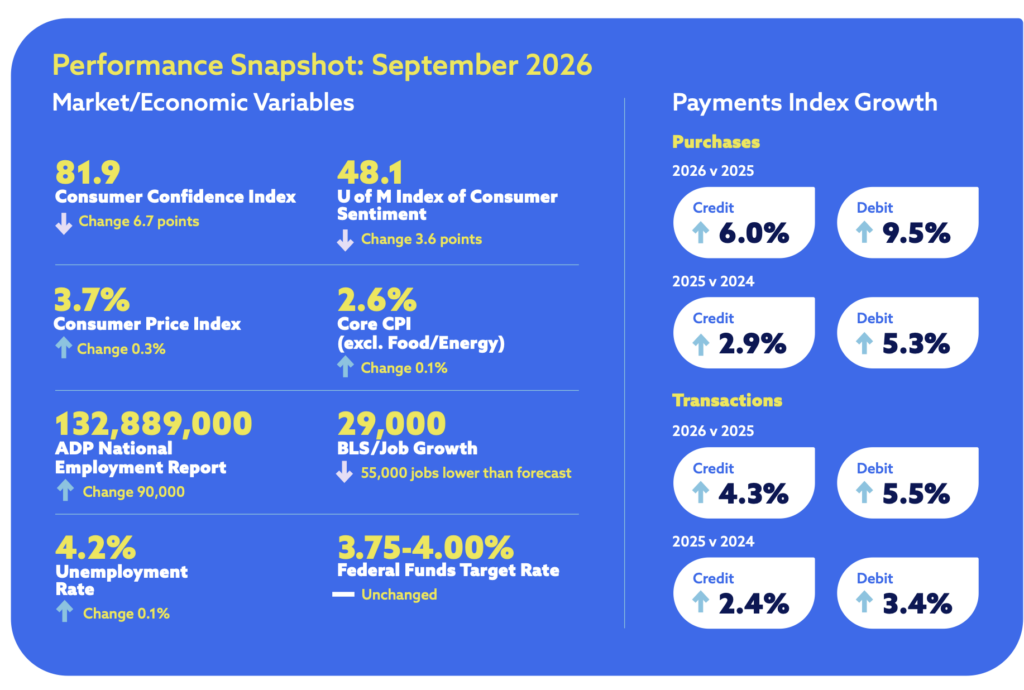
TAMPA, Fla.—Despite weakening consumer confidence, persistent inflation and growing concerns about affordability, consumers continued spending in September, with debit card purchases increasing 9.5% year over year and credit card purchases rising 6%, according to the latest Velera Payments Index.
The October 2026 report from the payments credit union service organization found that essential purchases continued to drive much of the growth, with nondiscretionary spending outpacing discretionary purchases on both credit and debit cards.
The report also highlighted the growing importance of digital wallets and card-not-present transactions, underscoring changing consumer payment preferences and opportunities for credit unions to strengthen cardholder relationships.
Card Spending: Where the Growth Is Occurring
Among the key findings from Velera’s analysis of September card activity:
- Debit card purchases: Increased 9.5% year over year, reflecting continued consumer spending despite economic pressures.
- Credit card purchases: Rose 6% year over year.
- Essential debit spending: Nondiscretionary purchases increased 9.6%, compared with 8.6% growth in discretionary purchases.
- Essential credit spending: Nondiscretionary purchases climbed 6.7%, significantly outpacing the 2.8% increase in discretionary purchases.
- Goods purchases: Were among the leading contributors to growth for both credit and debit transactions.
- Gasoline: Remained a significant contributor to spending growth as consumers faced elevated fuel prices.
The figures suggest consumers are continuing to use their cards but are directing more spending toward necessities rather than optional purchases.
Digital Payments Continue to Gain Importance
Velera said the October report also examined quarterly trends in credit card balances, delinquencies and digital wallet activity.
The company highlighted the growing role of digital wallets in everyday transactions and continued strength in card-not-present spending.
Those trends have implications for credit unions seeking to maintain their position as members’ preferred payment providers, particularly as consumers increasingly use digital payment channels.
“The disconnect between consumer sentiment and spending continues to widen,” said Norm Patrick, vice president of Payments & Deposits Consulting at Velera’s Advisors Plus. “We continue to see a shift in how and where consumers spend, with everyday essentials accounting for a larger share of growth, while digital payment methods are becoming even more ingrained in daily life.”
Consumer Confidence Falls Despite Spending Growth
The report found that consumer spending remained resilient even as several economic indicators pointed to growing financial pressures.
According to economic data cited by Velera:
- Consumer sentiment: The University of Michigan’s Index of Consumer Sentiment declined to 48.1 in September from 51.7 in August, its lowest level in four months.
- Consumer confidence: The Conference Board’s index dropped 6.7 points to 81.9, reaching its lowest level in more than a decade.
- Inflation: The Consumer Price Index increased 0.6% in September and 3.7% year over year, compared with a 3.4% annual increase in August.
- Unemployment: The unemployment rate increased to 4.2% from 4.1%.
- Wages: Average hourly earnings increased 3% year over year, the slowest annual pace since May 2021.
The report noted that wage growth was trailing inflation, adding pressure to household budgets.
What It Means for Interest Rates
Velera said the combination of moderating labor market conditions and persistent inflation could influence Federal Reserve policy during the remainder of 2026.
The report said the Fed was widely expected to leave its benchmark interest rate unchanged at 3.75% to 4% during its Oct. 27-28 meeting.
However, stronger-than-expected inflation readings could support another rate increase before year-end, potentially at the Fed’s Dec. 8-9 meeting, according to the report.
Implications for Credit Unions
Velera said the spending trends reinforce the importance of offering payment products that provide convenience, value and seamless access across physical and digital channels.
Patrick said credit unions have an opportunity to capitalize on changing consumer behavior.
“As consumers look for value and convenience, credit unions have an opportunity to strengthen relationships by making sure their cards remain the preferred choice wherever members choose to pay,” he said.
The new report can be found here.