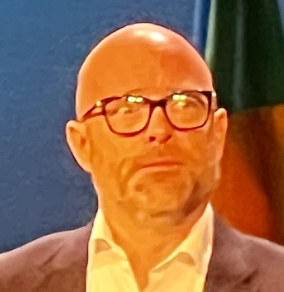
SYDNEY, Australia — Credit union leaders should recommit themselves to the cooperative movement’s founding mission of serving people before profit and invest in developing future leaders to ensure its long-term success, Worldwide Foundation for Credit Unions President Mike Reuter told attendees at the World Credit Union Conference.
Speaking during the conference, Reuter challenged attendees to reflect on why they chose to work in the cooperative financial movement, urging them to focus on the impact credit unions have on members and communities rather than on job titles or the financial services sector.
Why are You Here?
“Why did each of you choose this movement?” Reuter asked. “The one that puts people before profit. The one that says your community deserves a financial institution that actually belongs to you.”
Reuter said the Worldwide Foundation’s 2026 theme, “Tune In to Cooperative Finance,” is intended to encourage credit union professionals to reconnect with the purpose behind the global movement.
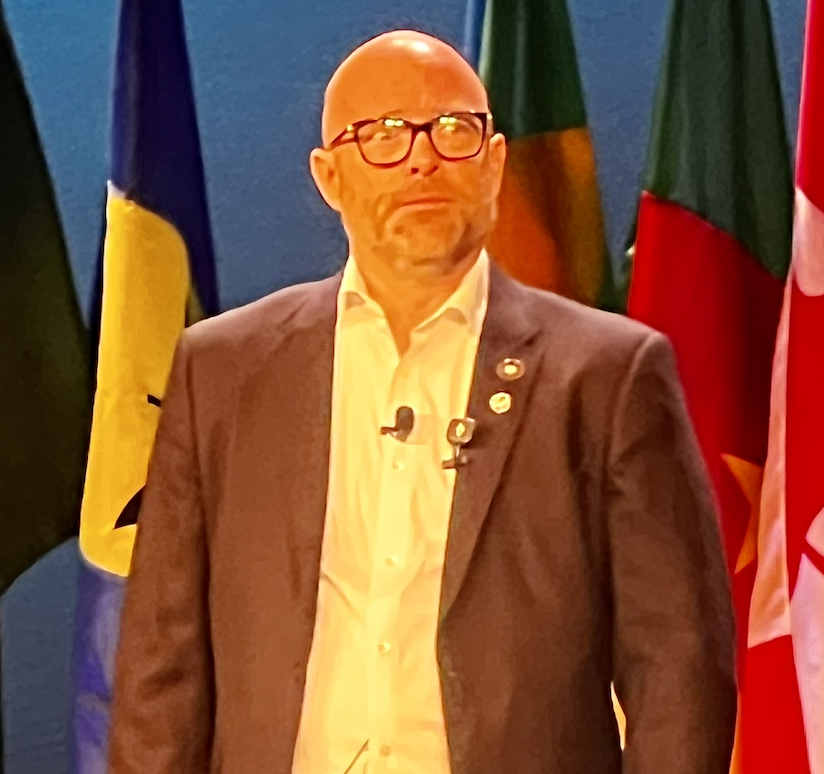
“Our mission at the foundation is simple: to create a world where more people belong to and benefit from cooperative finance and where philanthropy can change members’ lives,” he said. “It’s not a slogan. It’s our responsibility.”
Throughout his address, Reuter organized his remarks around three themes he said define the foundation’s work: belonging, possibility and legacy.
Pillar One: Belonging
Reuter said cooperative finance is built on inclusion, ownership and trust, arguing that belonging is more than a charitable effort or marketing campaign.
“Belonging is what happens when the financial system is designed to include people instead of excluding them,” he said.
He added that credit unions and financial cooperatives were created because consumers wanted financial institutions built on trust, access and ownership rather than transactions alone.
Reuter said global cooperative development should be viewed as a shared responsibility throughout the movement rather than the work of a select group of organizations.
The Role of GWLN
He also highlighted the role of the Global Women’s Leadership Network (GWLN), saying it has helped expand leadership opportunities for women around the world.
“GWLN exists because leadership has never solely been a male domain,” Reuter said. “It has been a female experience that was unevenly supported, under-mentored and under-recognized.”
According to Reuter, the network has amplified women’s voices across the international credit union movement while creating opportunities for women to serve in leadership positions.
Pillar Two: Developing Young Professionals
Reuter said the foundation’s second pillar, possibility, centers on developing young professionals through programs such as the World Young Credit Union Professionals (WYCUP) initiative, which is celebrating its 25th anniversary.
“This year’s WYCUP theme says it best: ‘From Solos to Symphonies,'” he said.
Reuter said alumni of the program now lead credit unions, influence public policy and mentor younger professionals around the world.
He announced the foundation is building a year-round global community platform for both WYCUP participants and GWLN members to strengthen international collaboration beyond the annual conference.
‘Something Shifts’
“When a young professional in Indonesia can work through challenges with peers in Ecuador, Ukraine, Brazil or the United States, something shifts,” Reuter said. “New harmonies emerge.”
Reuter said possibility also requires financial investment. He said the foundation focuses its philanthropic work in two primary areas: global financial stability and global cooperative leadership.
Those efforts include financial education and literacy grants, development projects, disaster response initiatives through Project Storm Break, leadership development for women and continued investment in emerging credit union professionals.
Reuter also recognized graduates of the Global Credit Union Development Educators (DE) program, saying DEs play a critical role in translating cooperative principles into practical action.
“These are the people who translate values into practice,” he said. “They ensure that the cooperative difference is not just spoken but lived.”
Pillar Three: Legacy
Reuter said the final pillar, legacy, requires the movement to think beyond annual fundraising and instead create a sustainable philanthropic model that will support future generations.
“Legacy is what keeps the movement honest because it shifts the question from ‘What do I get?’ to ‘What do I leave behind?'” he said.
He argued that annual fundraising alone is insufficient if the movement expects to expand access to cooperative finance over the long term.
“If we believe in this mission long term, we must build for the long term,” Reuter said. “The movement cannot outsource its legacy.”
He encouraged organizations and individuals to contribute through major gifts, sponsorships, mentoring, sharing their impact stories and supporting the foundation’s work.
The ‘Flywheel’
Reuter described what he called the foundation’s “flywheel,” in which ownership drives philanthropy, philanthropy creates impact, impact strengthens ownership and ownership expands belonging.
Concluding his remarks, Reuter urged delegates from around the world to embrace the conference theme by strengthening all three pillars.”Our invitation to each of you and your movements around the world is simple,” he said. “Tune into belonging. Help people see this movement is theirs. Tune into possibility. Invest in the people and programs that prove what is possible. And tune into legacy. Help build the philanthropic engine that carries this work forward.”