
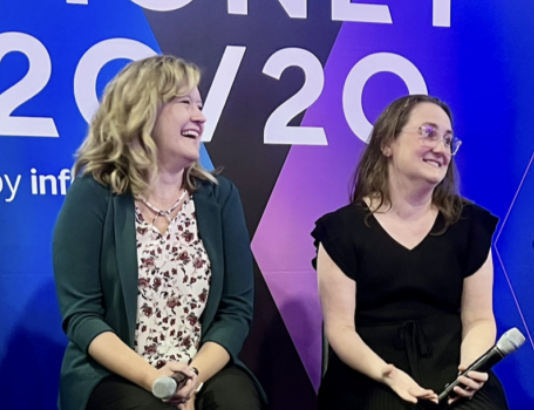
LAS VEGAS–Three credit union representatives here addressed questions around relationships with vendors, including ghost products, bad contract terms, managing vendors and what it’s critical that vendors understand.
The insights were shared during the Money 20/20 show here during a dedicated “Credit Union MeetUp” session titled “The Partnership That Changes the Credit Union.”
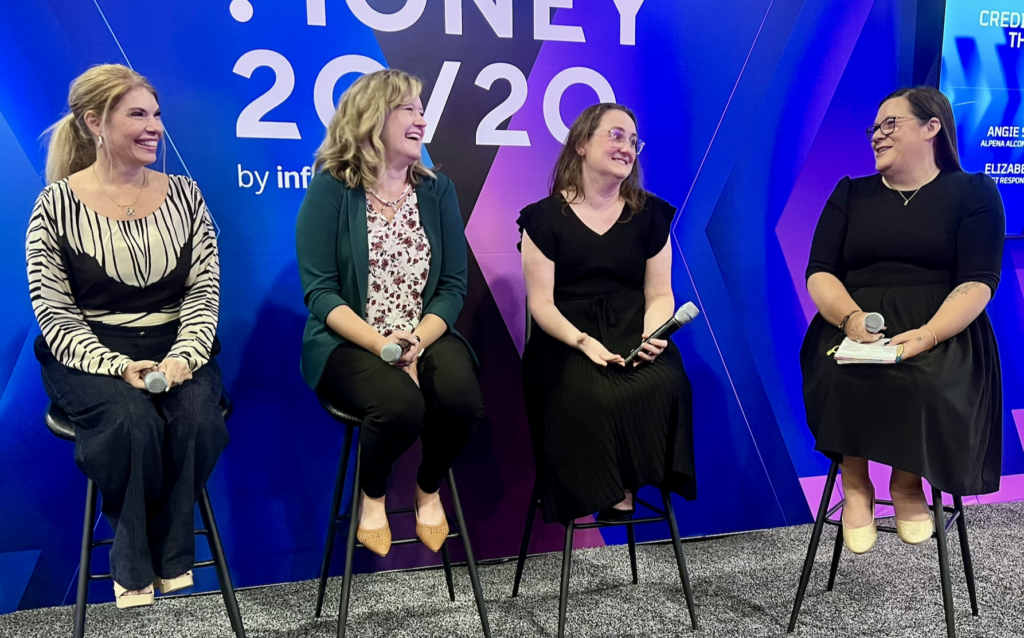
Participating in the panel were:
- Angie Szatkowski, Alpena Alcona Area CU
- Elizabeth Adcock, First Responders Credit Union
- Christie Kimbell, Filene Research Institute
Jennifer Speth of the World Council of Credit Unions acted as moderator. Below is a look at some of what was discussed:
Speth: Think of a fintech partnership that changed things for your members. What did you measure? And what moved?
Adcock: It was an online signup platform. It was about making sure we designed a system that made sense.
SzatkowskI: The most impactful relationship or partnership for us was one that allowed our members to better manage their financial health thorough our digital platform. We didn’t go into it thinking it was another tech component of our digital platform; we went into it thinking about how we can better the member experience and put more information into the members’ hands. Going in, we used the usual metrics, loan growth, deposit growth, etc., but we also enhanced our digital engagement, and we began looking at our overall member relationship, as well. We launched it to our entire membership because we’ve seen such growth.
Kimbell: Through (Filene’s) FiLab we launched with Casap a fraud dispute measurement. And we measured dispute steps before and after. One big ah-ha was one CU had 220 steps to do a fraud dispute, and they were able to recover dollars that previously would have written off because the new system was so much more efficient. All of the testers are moving forward with them as a solution.
Speth: Think of one company that you only added as a vendor and what did it take to manage it, and what signs did you miss?
Adcock: It takes a lot more time to manage someone that is just a fintech because you are constantly asking for their plans. Someone who is s true partner is more of a conversation. I spend more time managing vendors than I do partners.
SzatkowskI: The vendor who comes to mind brought benefit to us, but where we struggled was with the service element. We had the features and functionality, but we didn’t dive in deep enough on the service side around troubleshooting issues that existed. When you started looking at it from a frustration aspect, with everything we wanted to add in, we knew it wasn’t the right partner.
Kimbell: I think the timeline matters in understanding that members are really at the center. When people get so focused on a solution rather than the problem we’re trying to resolve, that leads to a disconnect.
Speth: How much staff time goes into managing a partnership and who manages the relationship?
Adcock: For us, it really depends on who the partner is. It tends to be when most successful when it’s a shared partnership. If it’s a partnership, maybe five to 10 hours a month. Maybe we’ve graduated to quarterly business reviews, maybe a check-in once a week if it’s a project that’s in implementation. Integration can take a little bit more of time.
SzatkowskI: It matters what partner it is when it comes to the amount of time you spend on it. A good partner could be 10-20 hours. It’s just a matter of the strategic value they bring to you and the relationship that you have. Do we need to be tuned into something from a compliance perspective or cybersecurity perspective? It’s owned by the unit that uses it.
Kimbell: Our head of incubation said the number of hours involved in running a test is 400 to 600 hours. It’s a commitment. Collaboration is definitely a commitment. Our goal is to find efficiencies, but to go through the vetting process is a lot of hours.
Speth: CUSO, shared service or going direct? How do you decide how to buy?
Adcock: It depends in many cases. Whenever possible, I try to go direct. I feel Ike when I have direct communication with that fintech, my voice is heard. It depends on what the partner is or what the integration is on whether or not it requires bringing a CUSO in.
SzatkowskI: My credit union wholeheartedly believes in the CUSO model. We have seen first-hand how that relationship can bring innovation. We have built seven CUSOs and invested in 11 of them. CUSO, shared services or direct, all have benefits. If the vendor can meet the innovation we need, meet the efficiency portion and they are a CUSO, we would typically go that route.
Kimbell: In the past we have seen credit unions liked to build more than they do now. Now, with how fast technology is moving, leveraging the CUSO model for when we really need scale is ideal.
Speth: Which contract clause would you tell every credit union to insist upon?
Adcock: For me it’s data ownership and protection, and who is responsible when something goes wrong and what does the escalation path look like. Intellectual property has been key.
SzatkowskI: I agree on data ownership. Vendors come and go, but your member data is your most valuable asset. If I change a partner, I need to be confident that data is coming with me and I need to know my strategies won’t be impacted because I don’t have access to that data. And without access to the data, I lose that member trust.
Kimbell: I agree, but the other thing I would say is contract terms, we shouldn’t be doing seven- and eight-year contracts. Credit unions need to move faster, and we can get shorter contacts if we do.
Speth: Your board asks, why this partnership and why now? Which data point do you take to them?
Adcock: What is the problem we’re trying to solve and what is the benefit we’re going to get out of it. What is this vendor bringing to the table to help us move forward, and why are they the right partner? What is their extra value?
SzatkowskI: I agree. I don’t know if you necessarily go in with one data point. You have multiple points and you tie it into your strategic objectives. It’s about presenting the full picture.
Kimbell: It’s important to know, what is your differentiation? Does this solution help expand that capability. If we’re not meeting the basic expectation in the market, that needs to be called out.
Speth: There are of partners to talk to at Money2020, what’s top of mind for you?
Adcock: Does the product really exist or is it a concept? Is it really out there in practice and can they give you references. Do they get credit unions? Is this someone you could see yourself having a relationship with for the next three to five years? Will they challenge you when needed? Will they listen?
SzatkowskI: For me, it’s about how do you improve my member value? If you can’t, it’s not a relationship I’m going to pursue. Don’t talk to me about the revenue you can generate; talk to me about how you can make the member’s life a little better, how you can make us more efficient. But it has to be tied into the credit union values.
Kimbell: I think first I would ask if they know what a credit union is. For us to get good solutions, they do need to understand the mission and what we’re trying to accomplish. It can shift how seriously they take us as an industry.