


WASHINGTON — Nearly nine in 10 college students now carry credit card debt, more than double the share reported three years ago, as students increasingly turn to cards to pay for food, housing, tuition and other expenses, according to a new U.S. News & World Report survey.
The survey found 89% of college students have credit card debt, compared with 42% in a similar U.S. News survey conducted in 2023.
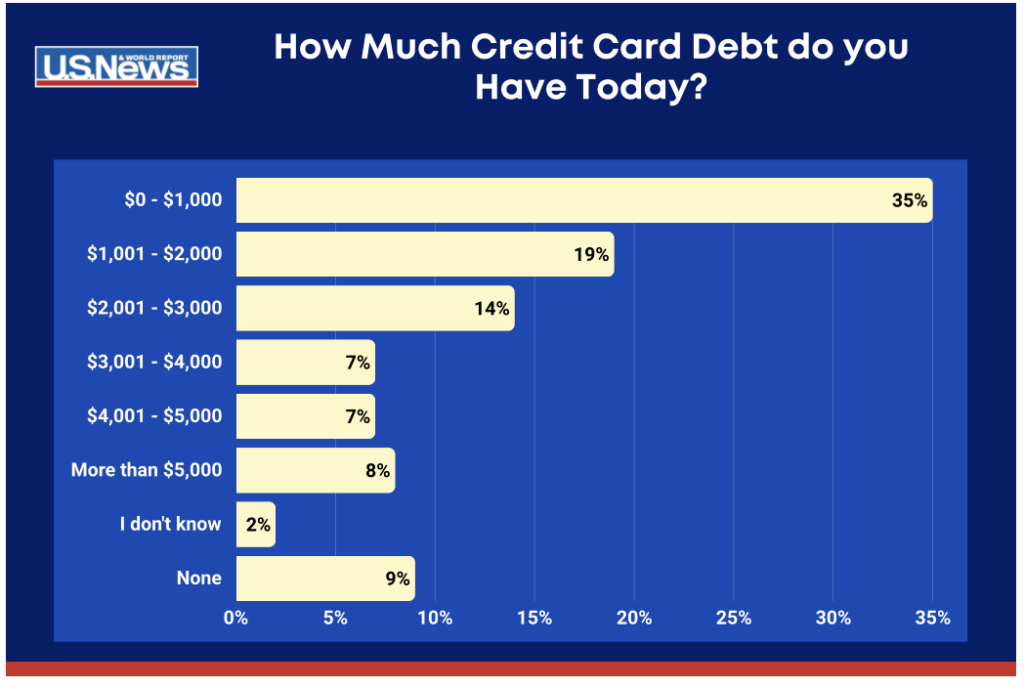
While 35% of students reported balances of $1,000 or less, the findings suggest credit cards have become an increasingly important financial tool for students struggling to cover both education costs and everyday living expenses.
U.S. News & World Report surveyed 1,200 college students nationwide through PureSpectrum from Aug. 21-25.
Cards Increasingly Used to Cover Expenses
Three-quarters of students said they had charged core college expenses, such as tuition or textbooks, to a credit card during the past year.
Even more — 85% — acknowledged using a credit card because they did not have enough money in checking or savings to pay for an expense.
Among upperclassmen, 54% said they used credit cards more this year than last year.
Students cited several reasons for using credit cards, including:
- 71% said they use cards to build credit.
- 54% cited emergencies.
- 43% said they use cards to cover expenses when they do not have enough cash.
Student credit cards were the most common type held, cited by 42% of respondents, followed by cash-back cards at 26%, secured cards at 20% and rewards cards at 12%.
Food, Unexpected Expenses Driving Debt
U.S. News found that much of the debt is being driven by necessities rather than discretionary purchases.
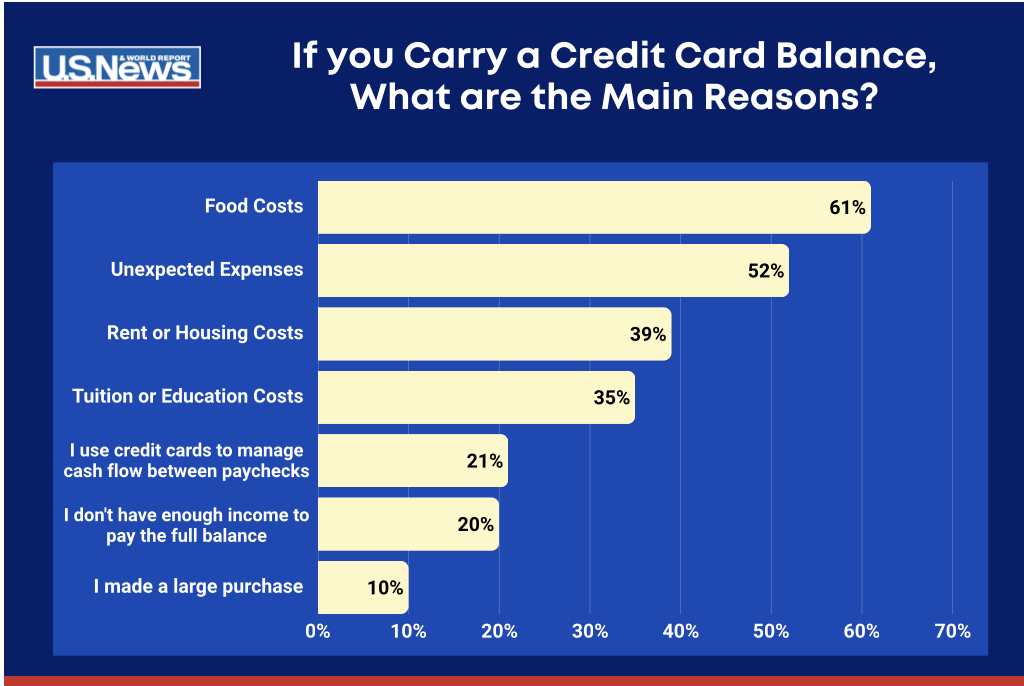
Among students carrying balances, 61% cited food costs as a reason for their debt, while 52% cited unexpected expenses and 39% cited rent or housing.
For students living with parents or guardians, the reasons were somewhat different: 58% cited food, 51% unexpected expenses and 39% tuition or education costs.
The findings come as students report difficulty keeping up with higher prices. Asked which expenses were hardest to afford, 63% identified food, followed by housing at 47% and utilities at 35%.
Students living at home also identified food as their biggest affordability challenge, at 58%, followed by education expenses at 42% and housing at 37%.
Pell Grant Recipients More Likely to Carry Debt
The survey found differences between students receiving federal Pell Grants, which generally are awarded to undergraduate students with significant financial need, and those who do not receive the grants.
Among Pell Grant recipients, 91% reported carrying credit card debt, compared with 85% of students who did not receive Pell Grants.
U.S. News also found differences in when students first gained access to credit.
About 25% of Pell Grant recipients obtained their first credit card at age 18, compared with 30% of students who did not receive Pell Grants.
Across all students surveyed, 27% said they applied for their first card at age 18, while 21% waited until age 22 or older.
The most common initial credit limit was relatively small. About 40% reported a limit of $201 to $500, while 30% received limits ranging from $501 to $1,000.
Most Students Apply Without Parents
Most students appear to begin establishing credit independently.
U.S. News found 87% applied for a credit card themselves rather than first gaining access through a parent or guardian who added them as an authorized user. Just 13% reported the latter route, which can potentially allow young consumers to begin establishing a credit history earlier.
Parents nevertheless continue to play an important role once students begin using cards.
Nearly half of students — 49% — said they receive some assistance from parents or guardians in paying their credit card bills. U.S. News found Pell Grant recipients were more likely than non-Pell recipients to receive that help.



