
AURORA, Colo.–New NCUA Chairman John Crews outlined for credit unions here what his priorities will be in leading the agency; revealed that new initiatives as part of the Deregulation Project are on their way; stated he is aware of the challenges to smaller CUs and for de novos, while also asking on several occasions for feedback from CU leaders on what they believe he and the agency should be doing.
Crews’ comments came in remarks to the GoWest Credit Union Association’s MAXX Conference here—which was followed by a Q&A with leadership from the GWCUA. He told conferencegoers he had come to the meeting just outside Denver because he is “committed to ongoing stakeholder engagement and I feel strongly that I need to come to you.”
For those unfamiliar with his resume, Crews outlined his roles prior to joining NCUA (see below), and noted that while he may be new to the agency, he is not new to financial regulation, saying he understands the importance of credit unions in the financial system.
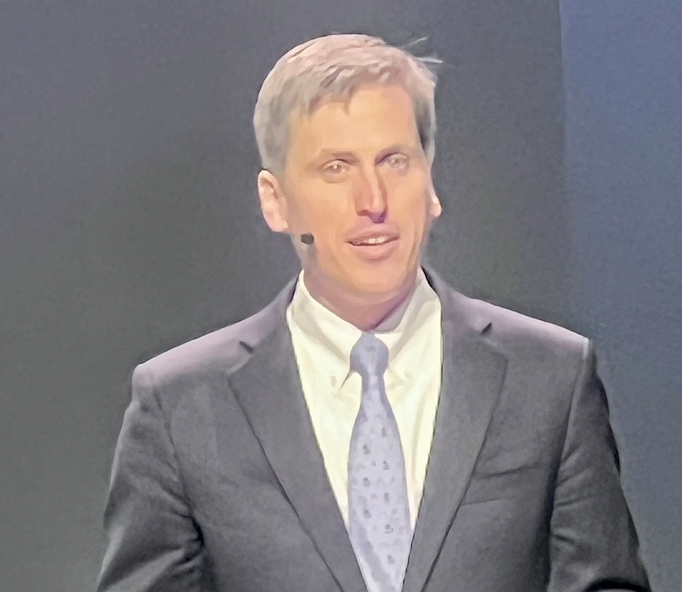
Crews repeated the priorities he outlined during his Senate testimony prior to being confirmed for the agency chairmanship, including expanding access to credit unions, strengthening risk-based supervision, preparing the agency and credit unions for technological change, and encouraging the formation of new credit unions.
“Throughout this work we will continue to support small credit unions and the challenges they face,” Crews said.
Continuity from Previous Chair
He said there will also be some continuity in his term from that of his predecessor, Kyle Hauptman. “The Deregulation Project will continue. I view this as extension of my priority to ensure NCUA is efficient and effective,” he said.
Crews said credit unions will see more activity related to phase one of the Deregulation Project, which has focused on duplicative and obsolete regulations.” While many of the phase one initiatives may be limited in scope, the cumulative impact will be more impactful and should result in regulations that are “clear and risk-based,” he added.
More impactful changes will come during phase two, according to Crews, who urged credit unions to “stay tuned.”
Preparing for Technology Shift
As his second priority, Crews said work at NCUA to ensure both the agency and credit unions are prepared for the innovations taking place will continue.
“We are prioritizing investments in ensuring credit unions at the forefront of this technological shift,” Crews said, citing regulations around stablecoins as a one example. “Whether digital assets or super-intelligence (AI), my objective is for NCUA to have the flexibility to provide the support you need.”
De Novo CUs
Crews said he is looking forward to working with credit unions to keep the industry resilient, and that includes the formation of new CUs, which have been relatively rare in recent years. He said agency staff is reviewing rules around CU start-ups and that he recognizes it is “too difficult” to charter a credit union and every bit as difficult to operate a new CU once it has opend up shop. Crews said he is “hopeful” several new CUs will be chartered in the next few months.
Overall, Crews said, certainty, durability and engagement will serve as his “compass” in leading the agency.
“Engagement, I believe, is so important. Your input it so important to NCUA in getting it right and developing policies that are durable,” he told MAXZX.
The Q&A
Following his prepared remarks, Crews participated in a Q&A with Troy Stang, president and CEO of the GoWest CU Association; and Jennifer Wagner, EVP, chief advocacy officer with GoWest.
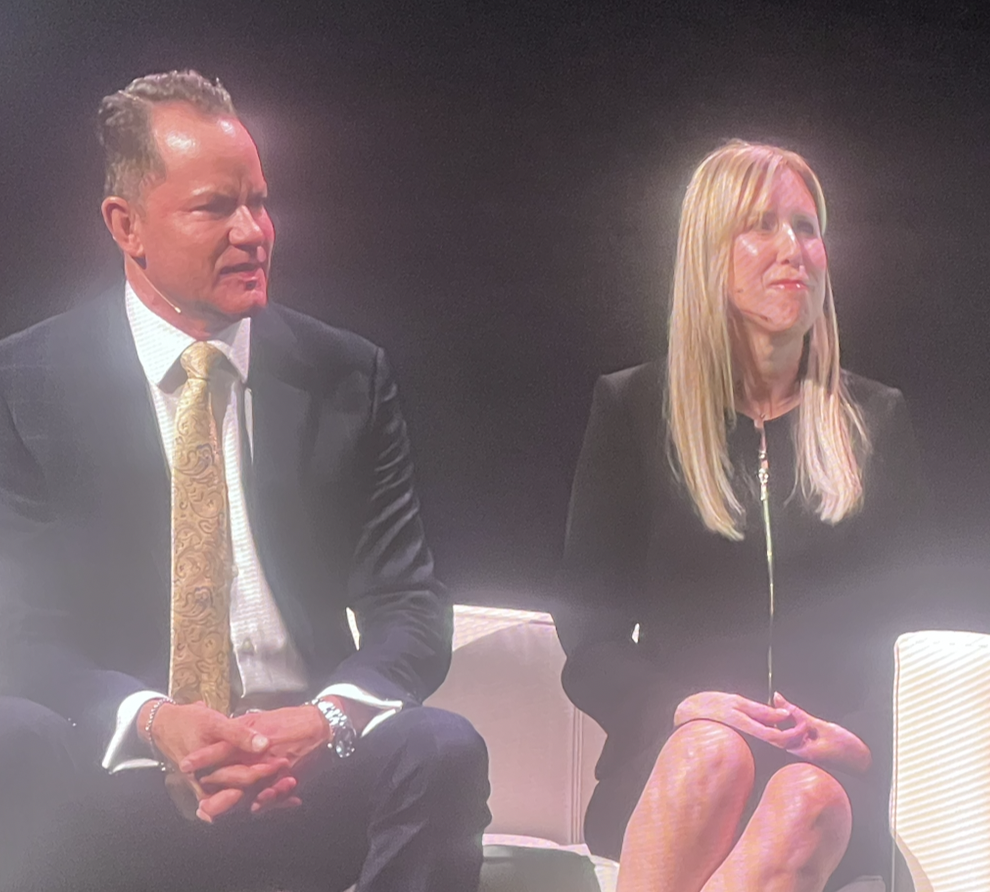
Stang: You have this extensive resume. As you draw on that experience, which stops on your road trip will have the most influence on your work as chairman?
Crews: I started my career in the Senate on the Senate Banking Committee for nine years, before jumping to the White House. One of my takeaways was how hard it is to get policy through Congress. The two big things we got done while I was in Congress was regulatory reform for credit unions and then the GENIUS Act. One reason I was so excited to go to the White House is there is an opportunity to implement policy more quickly. It’s one of the reasons I’m excited to be at NCUA, and that is the opportunity to put ideas into action.
The goal of implementing the Deregulation Project is the rulemaking is not the end. The end is building a stronger, more resilient credit union system. That really matters. In my time at the White House, it was during some of the bad times, getting through Covid. We sat down with Congress to draft the CARES Act. My responsibility was to work with the Small Business Committee to draft (the Payment Protection Program), which supported small businesses. I can tell you that after we got the CARES Act drafted, I lived at the SBA for maybe a month. What made it successful was the partnership had with a strong, resilient financial system, like credit unions.
Wagner: Smaller and more rural credit unions often express concern around disproportionate impacts on them from rules for larger CUs. How can you tailor those rules to smaller CUs?
Crews: The point is well taken. I can assure you it’s top of mind in the conversations I am having at NCUA as we work through regulatory reform. I think it’s incredibly right to get the tailoring right and to be principles-based. I come back to the engagement portion of my remarks–what can we be doing better?
Stang: Three years from now, what does the world look like at NCUA?
Crews: We’re going through some pretty significant changes at NCUA. One of my big priorities is getting the reorganization right. The voluntary separation program (which led to a 20% reduction in NCUA staff during 2025) creates a unique opportunity to really review where we are seeing stress at NCUA due to lack of manpower, and where we are succeeding. Beyond that, the Deregulation Project is a big one. And Congress gave us a big responsibility in getting the GENIUS Act done.
But, ultimately, it’s having a thriving credit union system and thriving members. That’s the real measure of success.
Stang: Talk to us about durability and how that shows up?
Crews: From my vantage point in Washington over the years, I’ve worked in both Republican and Democratic administrations and have seen the pendulum swing. I am very cognizant of that. To get durable reform, ultimately, the most important thing is to get the regulation right. We’re working very hard at NCUA, but we really need to be hearing from the credit union community. If we get the feedback and implement it properly, that is a huge priority of mine.
Wagner: What would be most helpful to hear from credit unions?
Crews: I want to hear all sorts of things. I want to hear what keeps you up at night. I want to hear about how the uniqueness of your credit union, and your members affects you and how we can better address that. And I would love to hear from you about what you think I ought to do. I recognize I’m early in my tenure and there are things I don’t know.
Wagner: What do you do in your free time?
Crews: I have an eight-year-old and a five-year-old, and I would say most of my free time is in the shuttle service business. I live in Virginia, was born in Richmond, so have already felt an affinity for Virginia. I like to get out and golf when I can. I would say family is first.