

WASHINGTON — Congress faces a growing risk of a partial federal government shutdown Dec. 11 as Democrats debate whether to use a government funding deadline to demand restrictions on President Donald Trump’s war in Iran, a new report indicates.
The Defense Credit Union Council has been particularly outspoken on the need for Congress to reach a funding deal, most recently in an op-ed here.
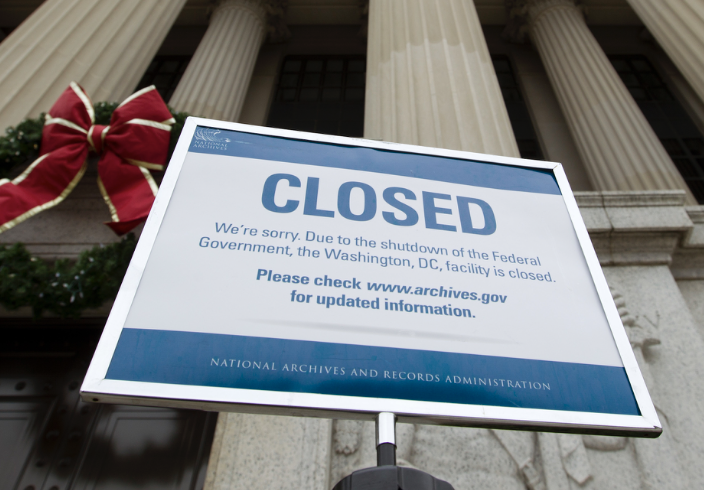
With lawmakers scheduled to leave Washington after this week for Thanksgiving and return Nov. 30, congressional leaders have little time to reach an agreement. Punchbowl reported that House and Senate Democrats are taking different approaches to the prospect of a shutdown, while opposition to the war is becoming a significant factor in a Senate Democratic leadership contest involving Minority Leader Chuck Schumer of New York and Sen. Chris Van Hollen of Maryland.
The Central Obstacle
The central obstacle is whether the four congressional leaders — House Speaker Mike Johnson, R-La.; Senate Majority Leader John Thune, R-S.D.; Schumer; and House Minority Leader Hakeem Jeffries, D-N.Y. — can agree on a funding measure. Punchbowl’s analysis suggests Republican leaders are unlikely to accept restrictions on Trump’s conduct of the war, while Democratic leaders face pressure to insist on them.
Another question is whether Johnson can pass a stopgap spending bill, known as a continuing resolution, without Democratic votes. Even if the House approves one, it would likely need 60 votes in the Senate, requiring support from several Democrats. Punchbowl questioned whether enough Democrats would back a measure that did not meaningfully limit the administration’s war powers.
‘Not a Realistic Ask’
Thune has described attaching restrictions on Iran war funding as “not a realistic ask” and warned that doing so would lead to a shutdown, according to Punchbowl.
Senate Democrats are divided over how far to press the issue. Some want to use the funding deadline to challenge what they regard as an unauthorized war, while others fear the consequences of closing federal agencies. Punchbowl reported that the disagreement dominated Senate Democrats’ Tuesday lunch meeting.
“It’s really essential that we not shut the government down,” Sen. Jack Reed, D-R.I., the top Democrat on the Senate Armed Services Committee, told Punchbowl. “But, at the same time, we have to find a way to channel the feeling in the public, which is strong opposition to the war.”

Punchbowl also pointed to retiring Democratic senators and incoming senators from Republican-leaning states as potential obstacles to a hard-line shutdown strategy.
‘In Active Conversation’
Jeffries said appropriators were “in active conversation” about either a full-year funding package or a continuing resolution. “We’ll see what happens. I don’t want to get out ahead of that process,” he said, according to Punchbowl. He added that the “reckless and costly war of choice in Iran needs to end.”
Rep. Rosa DeLauro of Connecticut, the ranking Democrat on the House Appropriations Committee, favors a short-term funding extension into February, when Democrats expect to control both chambers, according to the report. She argued that a prolonged shutdown could interfere with Democratic plans to address affordability through spending decisions on education, housing and energy.
“I want as short as possible timeframe,” DeLauro said Tuesday night, according to Punchbowl.
Punchbowl’s analysis cautioned that a shutdown could also give politically struggling Republicans an issue around which to rally. A further challenge for Democratic leaders, the outlet said, would be finding a way to reopen the government once a shutdown began.