PALM DESERT, Calif.–An overview of automobile-related market trends on EVs and auto markets, as well as forecast for what’s ahead for both the new and used car markets was shared with credit unions here.

Speaking to Origence’s Lending Tech Live meeting, Mike Buckingham, VP-auto finance solutions with J.D. Power, covered a broad range of auto and auto-lending related topics, observing that delinquencies and credit losses are a little elevated but the market is generally good and getting better, according to Buckingham.
Here is a look at some of the topics he covered:
New Vehicle Market & Data
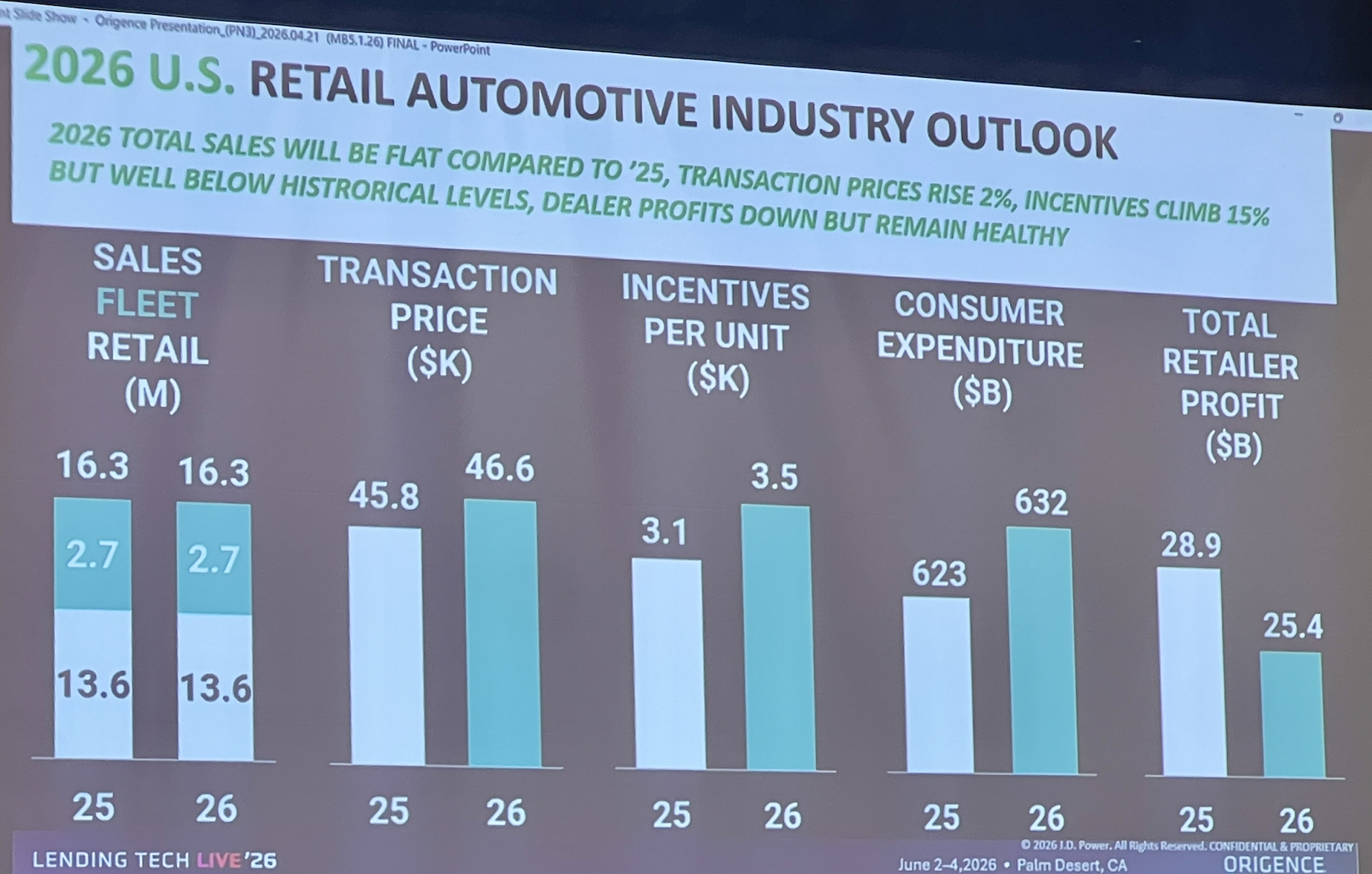
Through the first quarter, overall sales were off by 9% compared to 2026, Incentives per unit were up about 3%.
“The one point to talk about is the year over year comparisons. This is going to be a funny year,” Buckingham said. “There are two significant events that happened in 2025 that throw things off in comparisons to 2026. First is the pre-tariff rush, and second is the fall expiration of the $7,500 tax credit on EVs.”
Looking to data from Q1, he said data points worth noting include:
- Lost about 183,000 car sales in Q1 due to all the pull-aheads
- Other sales were lost to supply issues.
- On a normalized basis, Q1 off by about 2%.
- YoY sales are generally flat.
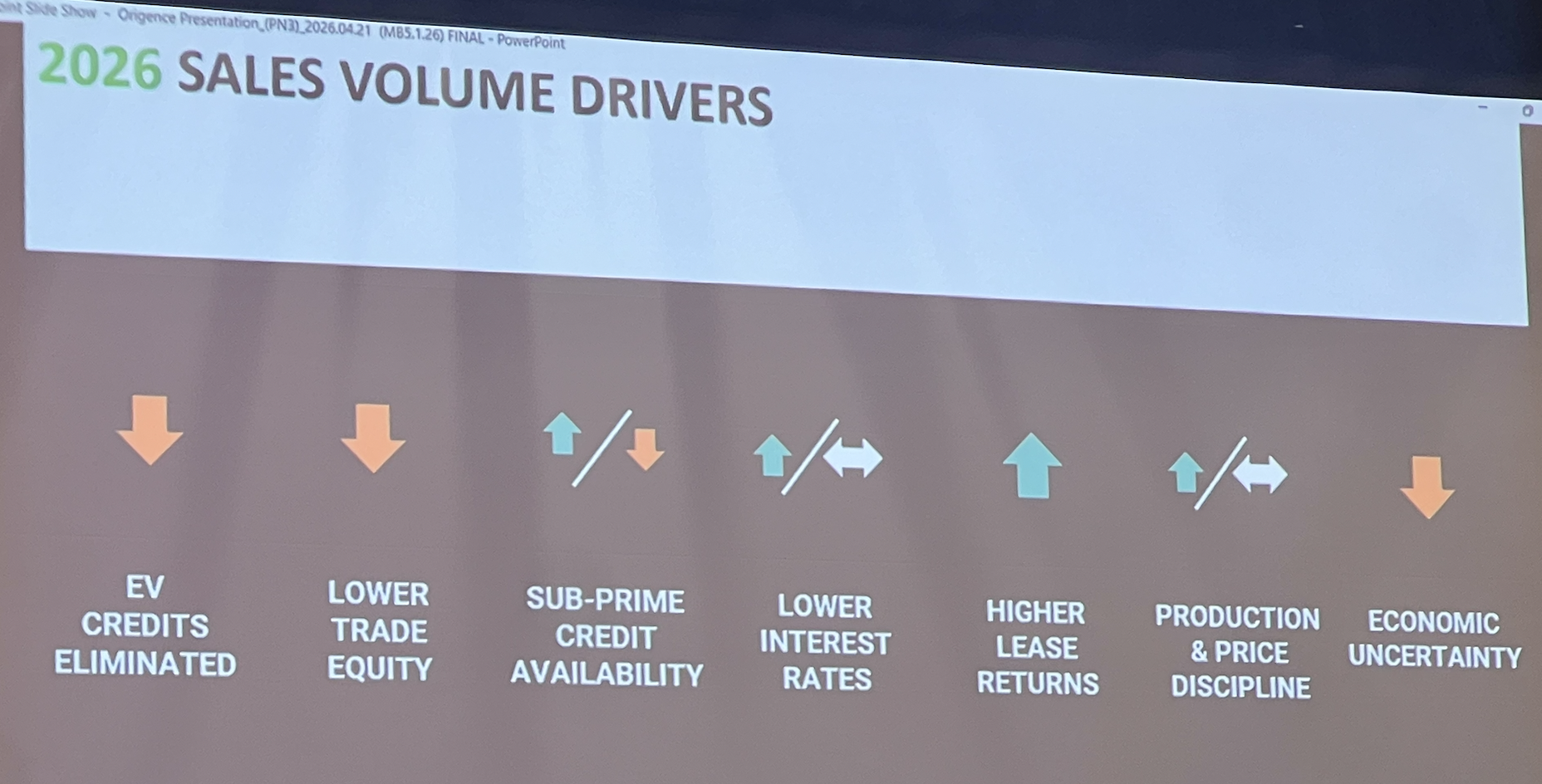
- The EV mix is going to fall about 8% for 2026. The natural peak of EVs is around10%, according to J.D. Power, Buckingham said.
He noted that the J.D. Power consumer surveys reveal that charging remains an issue, with about 30% of charging stations inoperable at any one time.
Prices
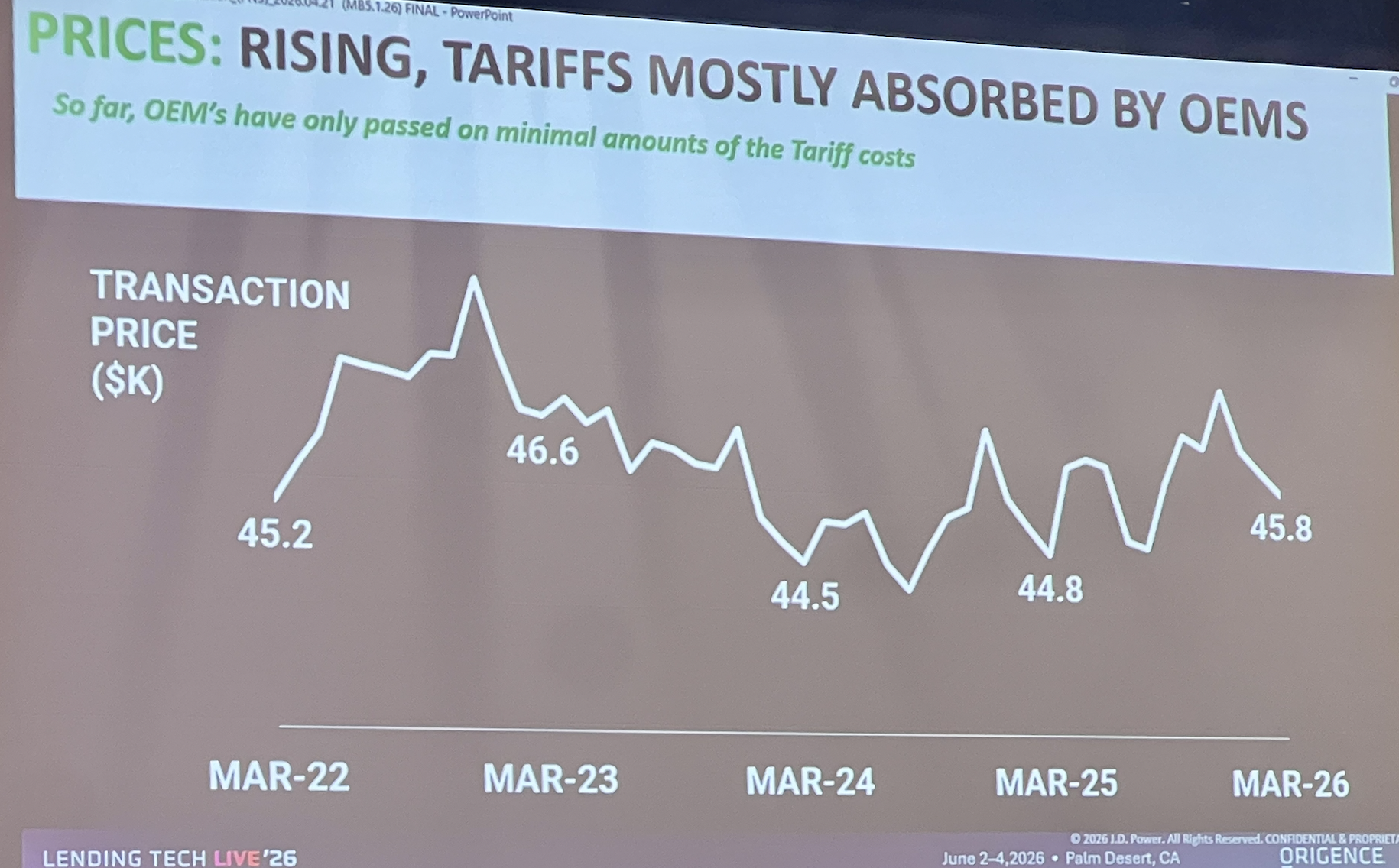
Buckingham shared this chart on the affect of rising prices and tariffs.
“This tariff impact has cost the manufacturer more bottom line than has been passed along to the consumer,” Buckingham told the meeting.
Incentives
Incentives are rising, but dollars are flowing to noni-EVs. But current new vehicle incentives are still below the historical 10% pre=COVID levels.
Affordability
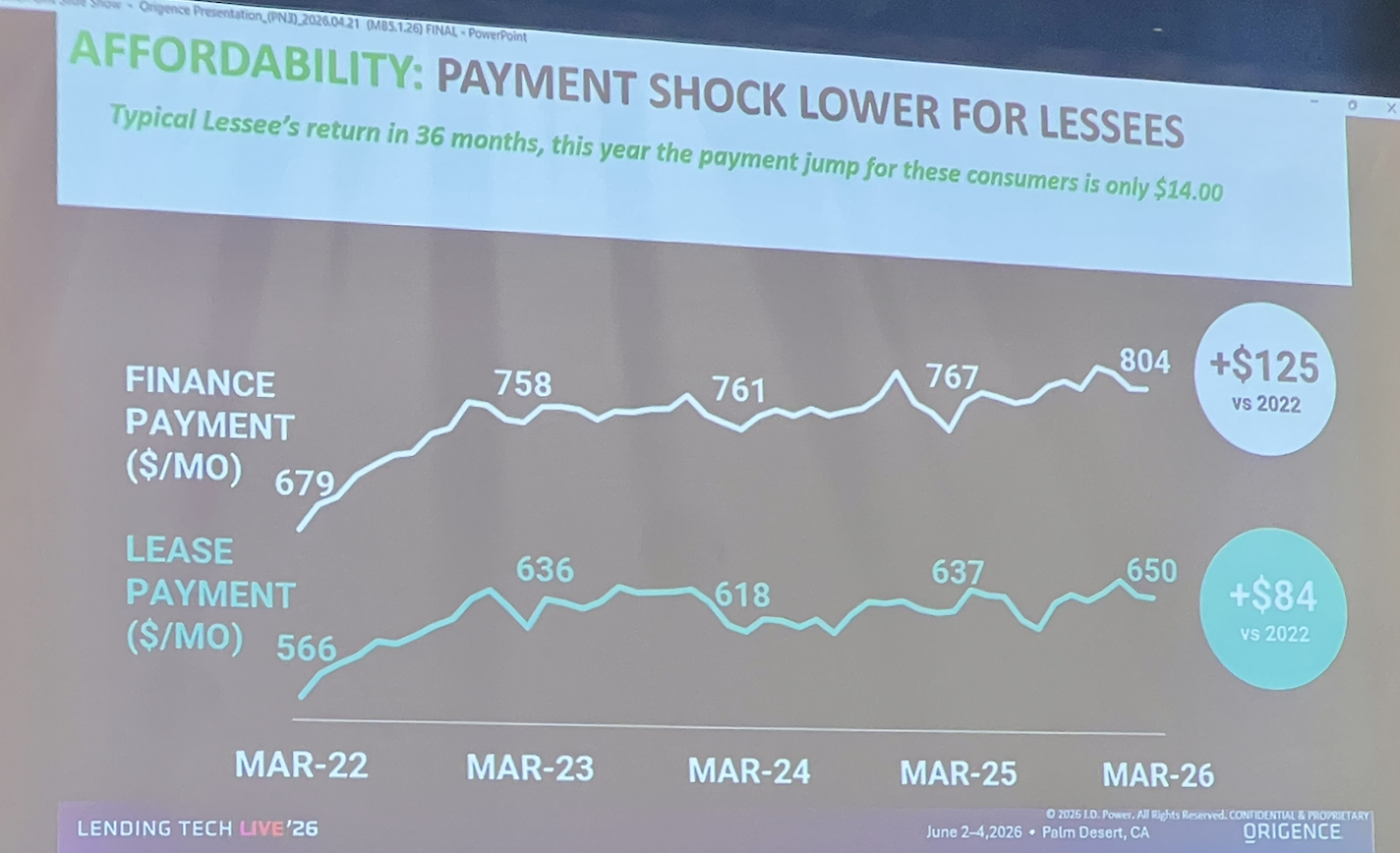
Payment shock is lower for lessees, Buckingham said. He shared this graphic below.
Leasing
J.D. Power is forecasting leasing volume at 27% for 2026 and a slow return to the standard rate of 30%. The country will see a big increase in lease returns in 2026 with 470,000 more lease returns this year.
Lease returns bottomed out in 2025, he said, which is affecting the used car market.
Loan Terms
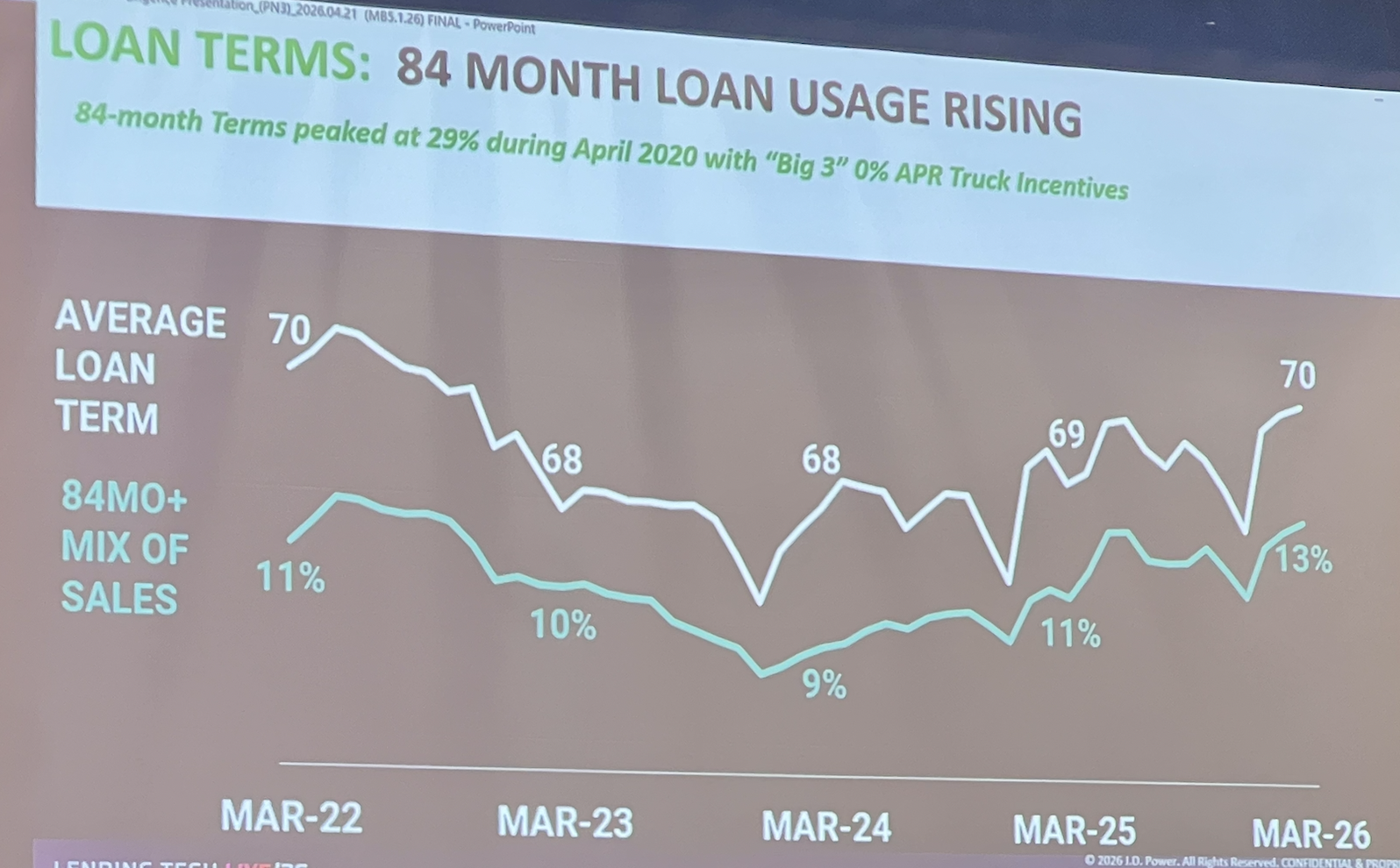
The extension of loan terms is no surprise to credit unions. Buckingham shared this data, below, on what’s happening with loan terms. He said the data show more 84-monmth terms n credit unions than other lenders.
Sub Prime & Trade-Ins
There has been a big jump in subprime in the mix of loans and leases, having risen to around 11%, the highest rate since 2016. When it comes to trade-ins, equity has been falling despite strong used values, with about 25% of consumers trading in with negative equity.
Effect of Fuel Prices
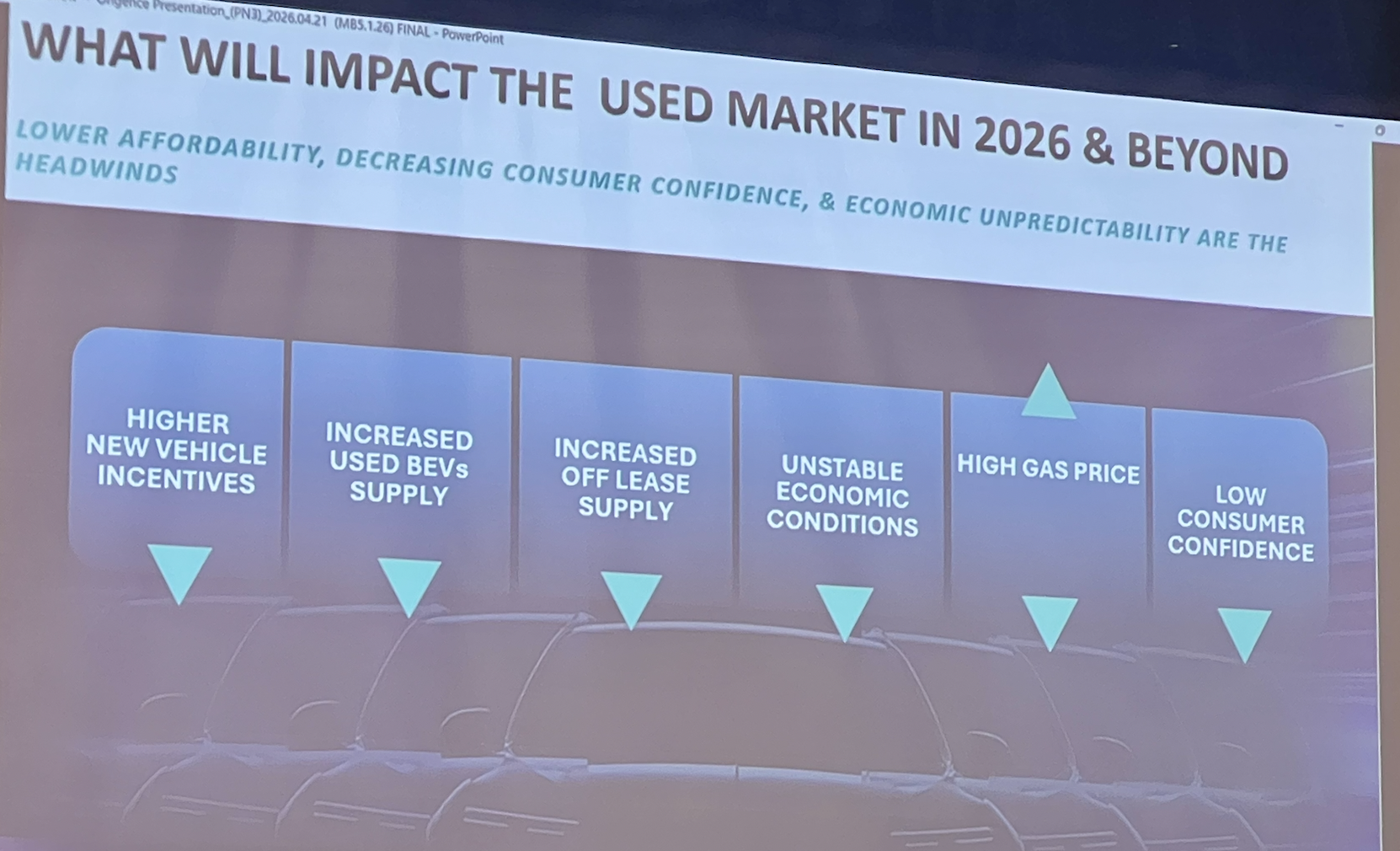
The rise in fuel prices is affecting the new car market, said Buckingham, but not significantly. Fuel costs as a percentage of median income has declined, he said, and is about 1.5% of new car buyers’ median income.
Looking forward, Buckingham shared these two charts, below.
Used Car Market
Buckingham said affordability is the obvious reason people are “flocking” to lower-cost cars, and that means used cars. Sales of used cars have also seen a shift to a richer mix of vehicles. Just 30%R of used cars sell for under $20,000, he noted.
Buckingham said the used car price floor has permanently moved higher, and prices have been pacing well above the rate of inflation.
“While used car prices are elevated, they are now more stable,” Buckingham said, adding that used EVs will be about 11% of the used supply by 2030.
Driving the used car market in 2025 will be these factors, below, according to Buckingham.