DURHAM, N.C. — Direct-to-consumer payday loan apps carry an average annual percentage rate of 232% and collect most of their fees from frequent borrowers, according to new research from the Center for Responsible Lending and its Julian Bond Institute.
The analysis, released Oct. 2, found that 96% of direct-to-consumer app loans carried fees, including charges described as “tips.” Borrowers who took out at least 25 loans a year accounted for 82% of fees, the center said.
The research, titled “The Cost of Payday Loan Apps in Your State,” examined anonymized bank account transactions for nearly 347,000 borrowers using apps often marketed as earned wage advances.
Across both employer-based and direct-to-consumer advances, borrowers took out an average of 33 loans annually, and 42% of loans were for less than $100, according to the analysis.
‘Dozens of Loans a Year’
“Our state-by-state data show that payday loan apps charge triple-digit interest rates and rely on people taking out dozens of loans a year to generate most of their fees,” said Christelle Bamona, a senior researcher at the center and co-author of the analysis.
“This business model should concern policymakers. To protect consumers, strong interest rate caps must be applied to these predatory loans.”
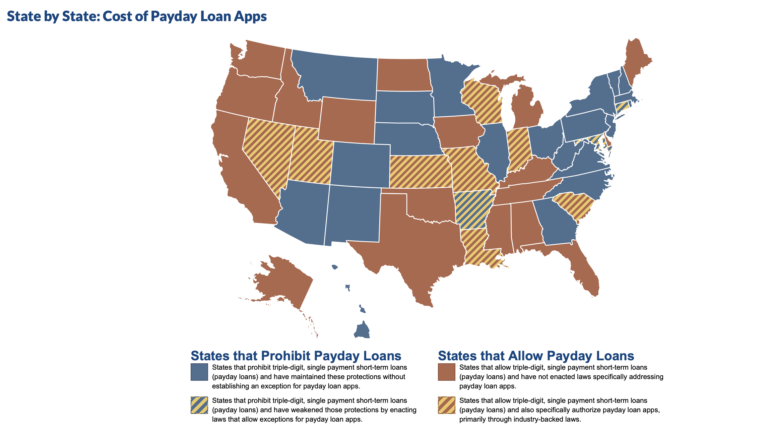
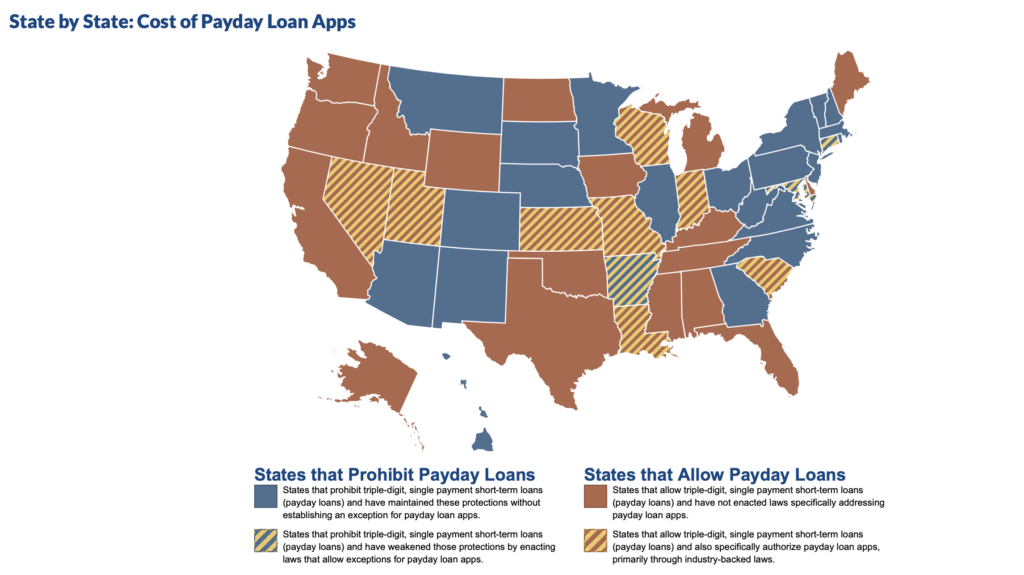
The center published an interactive map and fact sheets covering all 50 states, the District of Columbia and nationwide findings. The map also categorizes state payday lending laws.
According to the center, app-based lenders have charged triple-digit rates in states that prohibit lending at those rates. Some state and local governments have sued companies over alleged violations of usury laws, while some states have exempted payday loan apps from consumer protection requirements, the center said.
The center also said the House Financial Services Committee had advanced legislation to the full House that would exempt the companies from state and federal protections addressing usury, discrimination, cost disclosures and excessive charges to military service members.