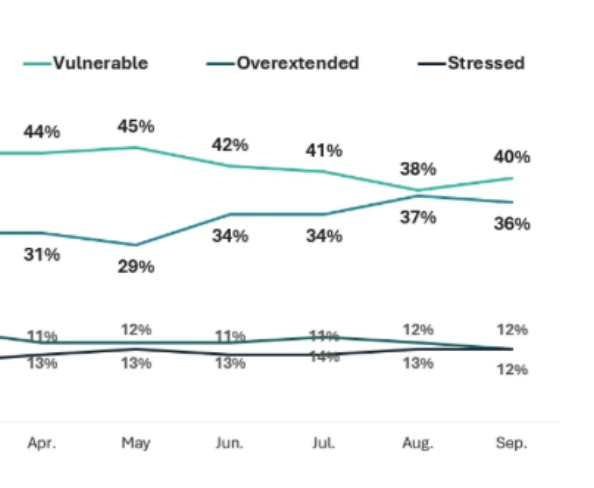
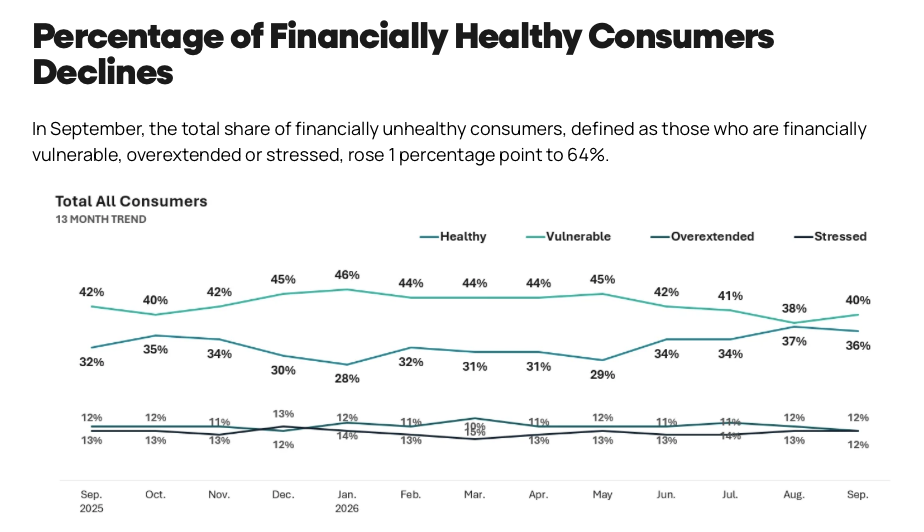
TROY, Mich. — The share of financially healthy U.S. consumers fell to 36% in September as nearly half reported worsening affordability, according to J.D. Power’s October 2026 Financial Health Report, which also found consumers want personal financial advice but remain highly sensitive to bank rates and fees.
The share of consumers classified as financially unhealthy — a category that includes those considered vulnerable, overextended or stressed — rose 1 percentage point to 64%, reversing three months of improvement, J.D. Power reported.
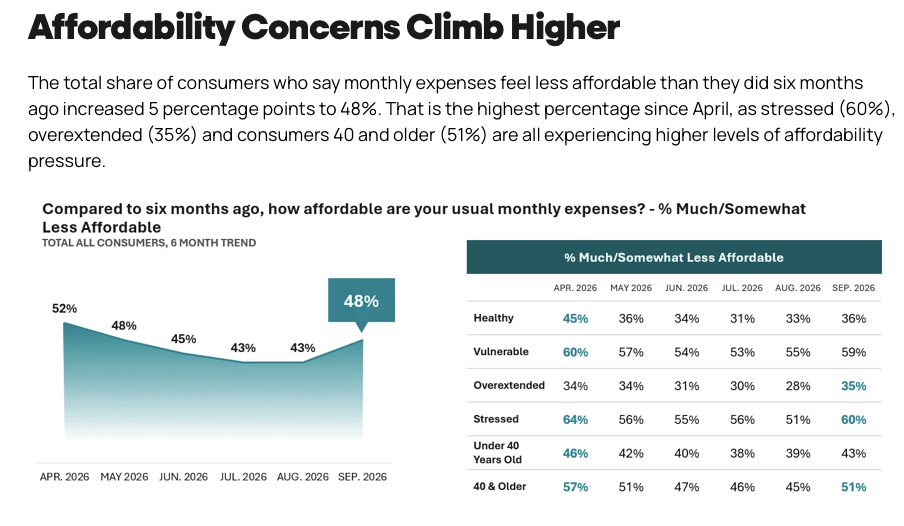
Meanwhile, 48% of consumers said their monthly expenses were less affordable than six months earlier, an increase of 5 percentage points and the highest reading since April.
Affordability Pressures Drive Spending Changes
The report found that 60% of financially stressed consumers, 35% of overextended consumers and 51% of consumers age 40 and older reported worsening affordability.
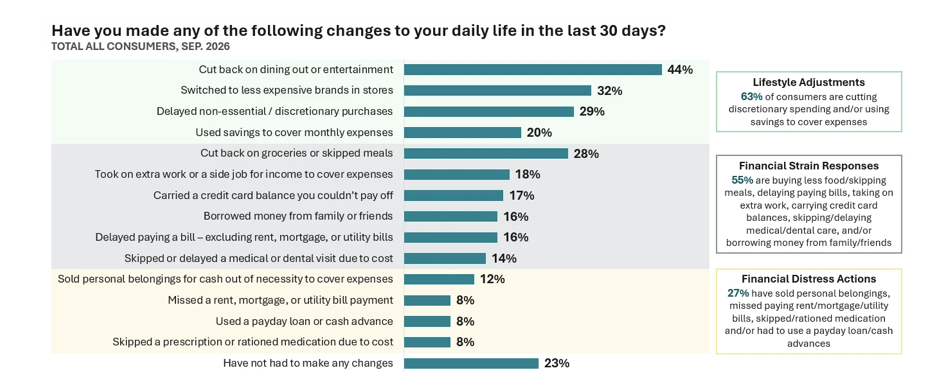
Overall, 77% of consumers said they changed their day-to-day spending in September, including 58% of those classified as financially healthy. Among all consumers surveyed:
- 44% cut back on dining out and entertainment.
- 32% switched to less expensive brands or stores.
- 29% delayed nonessential or discretionary purchases.
- 28% reduced grocery spending or skipped meals, up from 25% in August.
- 18% took on a side job or additional work to cover expenses, up from 16%.
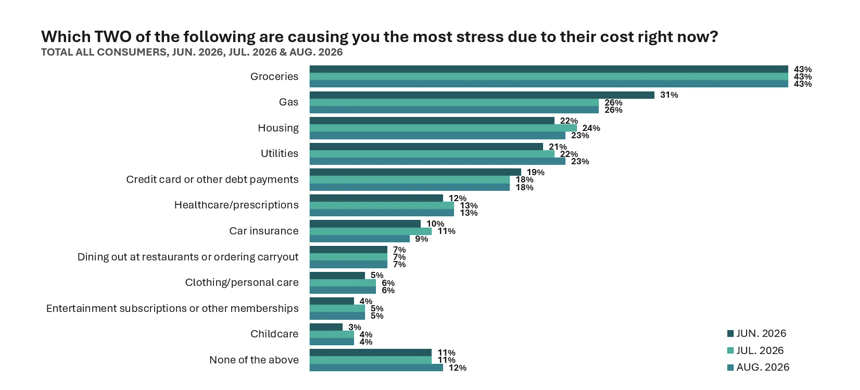
Although concerns about grocery and gasoline costs have leveled off, 23% of consumers cited utility costs as a source of stress, a concern that could intensify as the home heating season approaches, J.D. Power said.
Human Advice Preferred Over AI
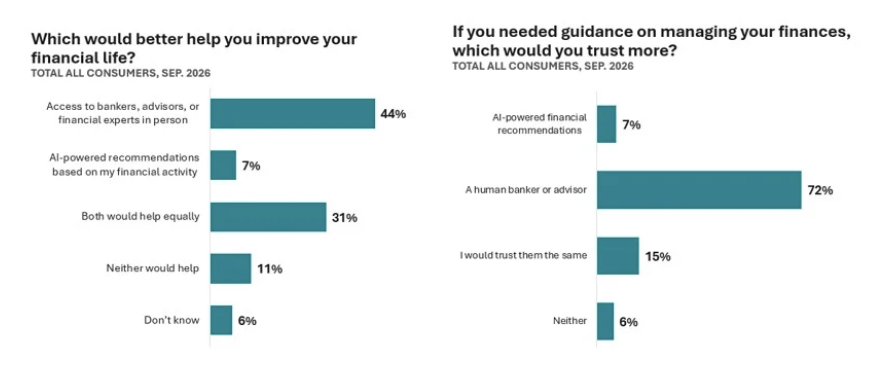
Consumers also expressed interest in more guidance from financial institutions. Forty-four percent said in-person access to bankers, advisers or other financial experts would do the most to improve their financial situation, while 31% preferred a combination of expert guidance and AI-powered recommendations based on their personal financial activity.
When asked which source they would trust more for financial guidance, 72% chose a human adviser over an AI-powered recommendation.
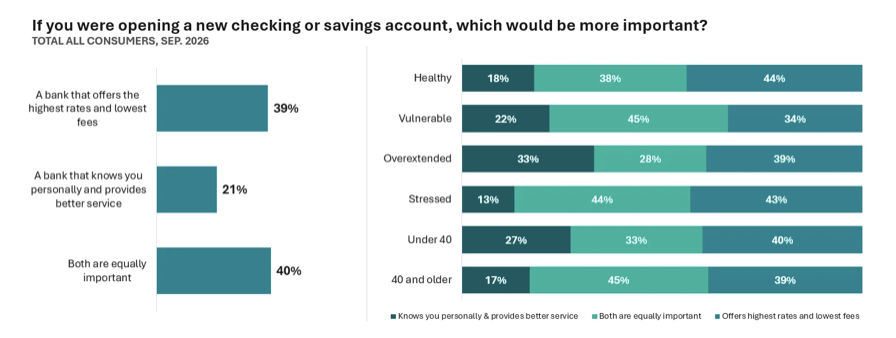
But personal service was not the leading consideration for consumers choosing a checking account. Thirty-nine percent said the highest interest rates and lowest fees mattered most, compared with 21% who prioritized a bank that knows its customers personally and provides better service.
More than half of consumers, 54%, said they would remain with their primary bank if it closed local branches, provided it offered better rates and lower fees than competitors.
Balancing Relationships and Value
The findings point to a challenge for banks seeking to strengthen customer relationships during a period of financial pressure: Consumers value face-to-face guidance and trust human advisers more than AI, but are unwilling to sacrifice competitive pricing for personal attention alone.
J.D. Power concluded that institutions combining personalized financial guidance with competitive rates and low fees would be better positioned to retain customer loyalty.