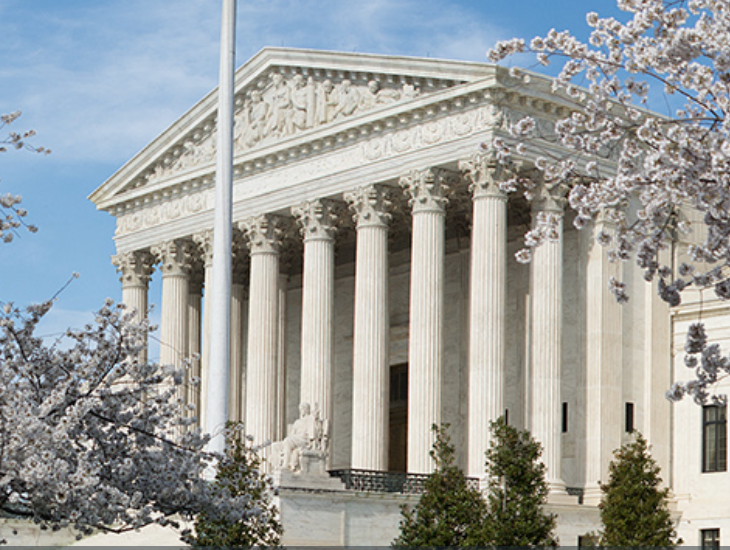
WASHINGTON — The U.S. Supreme Court has agreed to hear a dispute involving Goldman Sachs Bank USA that could affect whether credit unions and other lenders can require arbitration of lawsuits alleging unlawful debt collection after consumers file for bankruptcy.
The justices on Nov. 6 granted review in Goldman Sachs Bank USA v. Brown, a case testing how federal arbitration law applies to claims that creditors violated the automatic stay, a bankruptcy protection that generally halts collection activity. The court has not ruled on the merits.
The dispute stems from a proposed class-action lawsuit by Apple Card customers Rhea Ann Brown and Gregory Kevin Maze, who allege Goldman Sachs continued collection communications after they sought bankruptcy protection in 2023, according to Credit Union Times and Banking Exchange.
Goldman Sachs sought to move the claims out of bankruptcy court and into private arbitration, citing provisions in the customers’ credit card agreements. In March, a divided three-judge panel of the 4th U.S. Circuit Court of Appeals rejected that request.
Writing for the majority, Judge Paul Niemeyer concluded that arbitration would conflict with bankruptcy law’s objectives, including centralized proceedings, enforcement of the automatic stay and the specialized role of bankruptcy judges, Reuters reported.
The Dissent
Judge Robert King dissented, arguing that arbitrating the claims would not interfere with distributing assets to creditors. He also cited a conflicting 2006 decision from the 2nd U.S. Circuit Court of Appeals that permitted arbitration of an automatic-stay claim.
Goldman Sachs told the Supreme Court that the disagreement among appellate courts has created uncertainty about the relationship between the Federal Arbitration Act and the Bankruptcy Code. The borrowers argue that enforcing automatic stays and awarding damages for violations are central responsibilities of bankruptcy courts.
Potential impact on Credit Unions
The outcome could matter to credit unions that use arbitration clauses in credit card, loan or other consumer agreements. A ruling favoring Goldman Sachs could expand their ability to compel arbitration of certain bankruptcy-related claims; a ruling for the borrowers could leave more of those disputes before bankruptcy judges. Neither outcome would eliminate creditors’ obligation to comply with automatic stays.
The American Bankers Association filed a brief supporting Supreme Court review, warning that inconsistent rules create practical problems for creditor-borrower relationships, according to Banking Exchange and the Supreme Court docket.
Bloomberg Law reported that the justices will consider when, if ever, bankruptcy courts may decline to enforce otherwise valid arbitration agreements for claims seeking damages over automatic-stay violations. A decision is expected by the end of the court’s term in mid-2027.