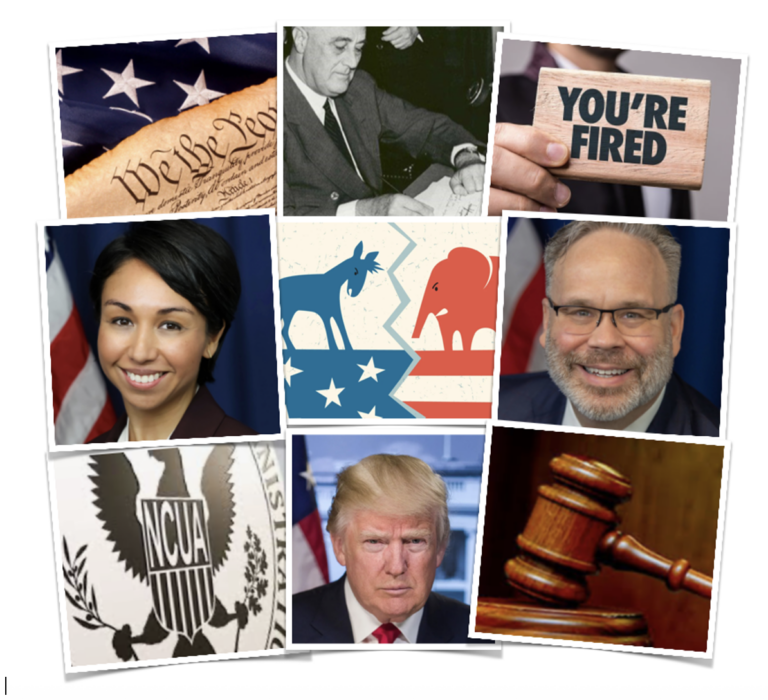
ALEXANDRIA, Va.—It’s been almost a year since a move involving the NCUA board took place that had previously been considered unimaginable—and, according to some—illegal: the firing of two of its members for political reasons. Now, credit unions and others are awaiting a pivotal decision from the Supreme Court that will have a bearing on whether regulatory focus may pivot and swing with every election, while one former (at least for now) NCUA board member said he is drawing strength from the words of a Methodist theologian in the time of Hitler.
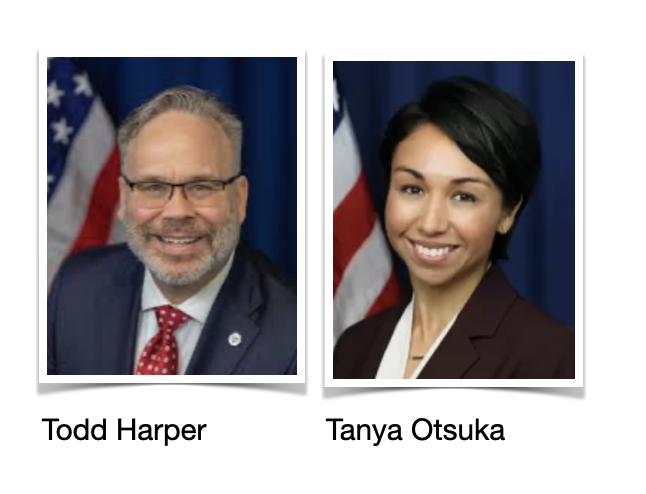
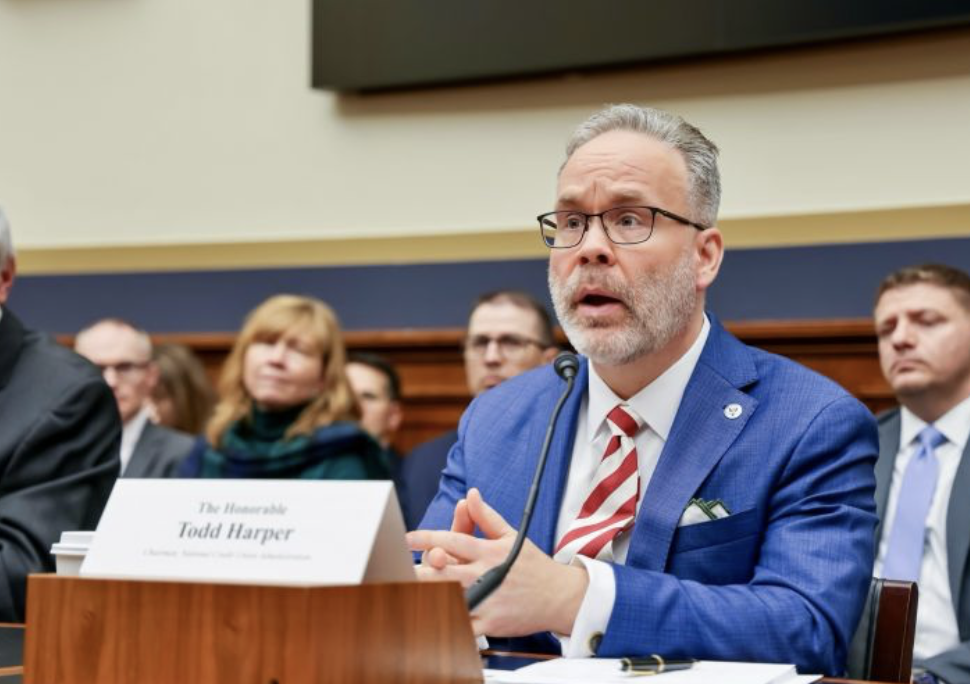
As the CU Daily was first to report in the industry, in April of 2025 the credit union community was shocked when the two Democrats on the NCUA board, Todd Harper and Tanya Otsuka, were terminated by the Trump administration. For the two board members, were the issue not so serious their removal would have been a comedy of errors, as they were terminated via a White House email sent to government accounts they had been locked out of.
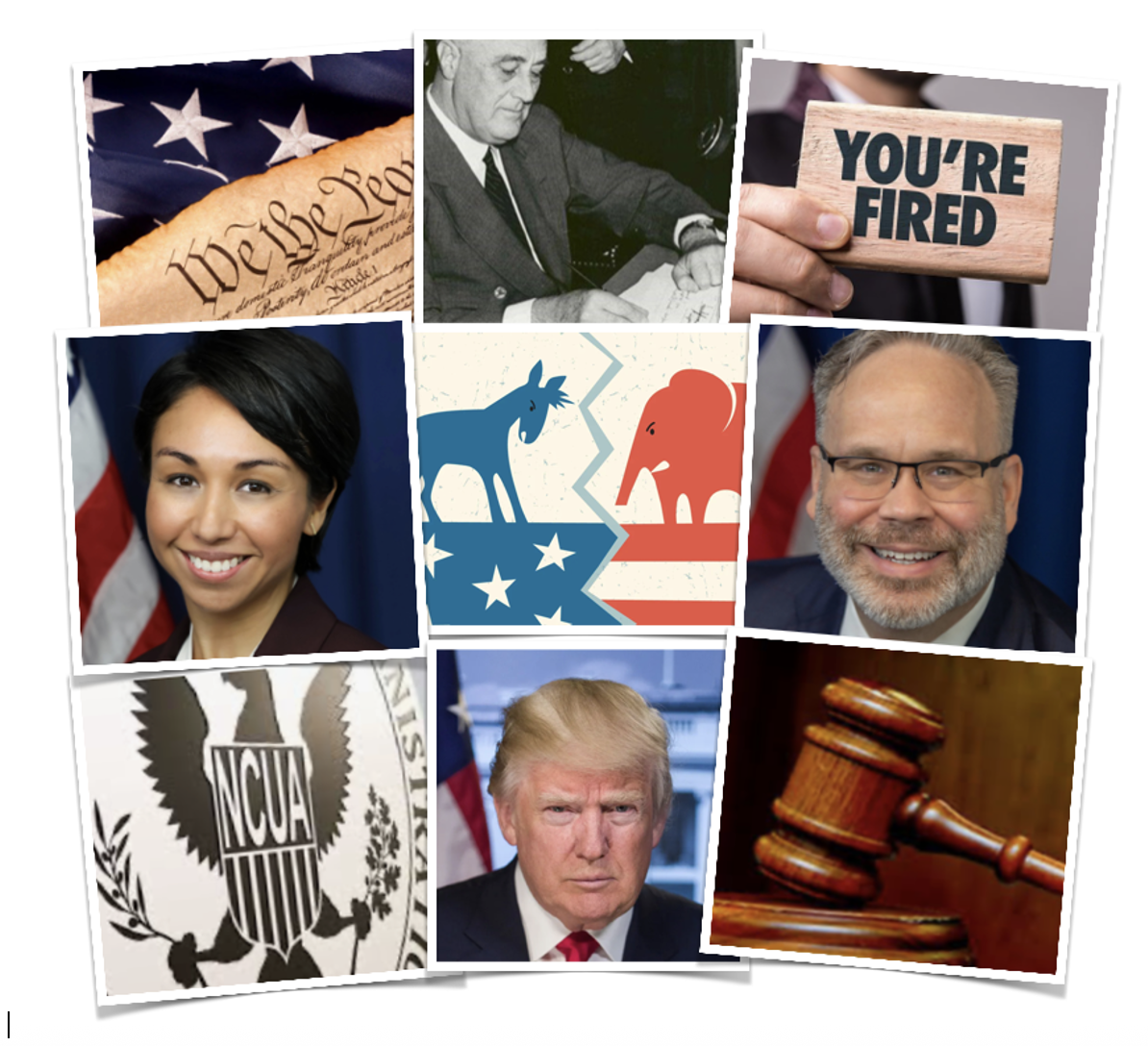
The firings left just one member on the panel, Republican and Chairman Kyle Hauptman, although later in the year, due to a court ruling, Harper and Otsuka would return for one board meeting, only to have another court uphold their dismissals.
Ironically, the firings came just ahead of an agency board meeting at which board meeting at which reductions being demanded by the Department of Government Efficiency (DOGE) were on the board agenda.
The removals of the Harper and Otsuka left just one member on the panel, Republican and Chairman Kyle Hauptman, although later in the year, due to a court ruling, Harper and Otsuka would return for one board meeting, only to have another court uphold their dismissals.
Ironically, the firings came just ahead of an agency board meeting at which board meeting at which reductions being demanded by the Department of Government Efficiency (DOGE) were on the board agenda.
In response to objections to the firings, White House press secretary Karoline Leavitt told Reuters, “President Trump is the chief executive of the executive branch and reserves the right to fire anyone he wants.”
‘Sad Day for our Country’
In the wake of the firings, Harper issued a statement in which he called the moves a “sad day for our country,” and added, “The decision of the White House to fire me before the completion of my term is wrong. It violates the bipartisan statutory framework adopted by Congress to protect credit union members and their deposits. The Trump Administration’s attack also undermines the independence, balance and important work of the NCUA. If a President can fire an NCUA Board member at any time, how will we maintain public trust in our nation’s financial services regulatory system?”
Within weeks of their removal, Harper and Otsuka filed suit in federal court against Treasury Secretary Scott Bessent and other administration officials, arguing the president violated federal law by dismissing them without cause, and their case is now intertwined with a closely watched Supreme Court case involving the Federal Trade Commission. The NCUA board members are being represented on a pro bono basis by Vincent Levy of Holwell Shuster & Goldberg LLP, New York.
The lawsuit is seeking reinstatement and to void actions taken by a one-member board. The two plaintiffs also argued the firings were “unprecedented” and undermined the agency’s independence.
Temporary Reinstatement
In July 2025, a federal district judge ruled in favor of Harper and Otsuka, finding their removals unlawful and ordering they be reinstated.
The court held that NCUA board members could not be removed before their terms expired except for cause, reinforcing protections similar to those historically applied to other independent agencies. The reinstatement allowed Harper—who did so virtually—and Otsuka—who did so in-person—to participate in the July board meeting.
That victory proved short-lived. As the CU Daily reported, an appeals court issued an emergency administrative stay, effectively pausing the reinstatement and removing Harper and Otsuka again while litigation continued.
The case has remained tied up in appellate proceedings, with the Justice Department arguing the president has broader constitutional authority to remove executive branch officials.
Parallel FTC Case Becomes Pivotal
Running parallel is the case involving FTC Commissioner Rebecca Slaughter, whose firing by Trump in 2025 triggered a similar legal challenge — and ultimately drew the attention of the Supreme Court.
- A federal judge initially ruled Slaughter’s removal illegal and ordered her reinstatement.
- An appeals court declined to block that reinstatement.
- The Supreme Court later allowed Trump to remove her temporarily and agreed to hear the case.
At issue is whether to overturn or limit the 1935 precedent Humphrey’s Executor v. United States, which restricts presidents from firing leaders of independent agencies without cause. The Trump v. Slaughter case drew heated argumentsbefore the Supreme Court in December, as nearly 90 years of protections for independent-agency officials are on the line—including at NCUA—and there is great potential for reshaping the balance of power between the presidency and Congress.
Legal analysts have told the CU Daily the outcome of Trump v. Slaughter could directly determine the fate of the NCUA case, because both hinge on the same constitutional question: how much control the president has over independent regulators.
Broader Implications
The disputes are part of a wider effort by Trump to assert control over independent agencies, including the FTC and other boards, raising concerns about the balance of power between the White House and regulatory bodies.

Analysts have said a ruling in Trump’s favor at the Supreme Court could:
- Expand presidential authority to remove agency officials at will
- Weaken or overturn long-standing protections for independent commissions
- Reshape governance of agencies including the NCUA, FTC and potentially the Federal Reserve
The NCUA case, Harper v. Bessent, remains on hold until the Supreme Court’s decision in the FTC case — expected later this year — is handed down. In November, the Supreme Court opted not to hear the NCUA board members’ case. As the CU Daily additionally reported, oral arguments in the case involving the NCUA board members—officially known as Harper v. Bessent–were originally scheduled for Nov. 21, but the D.C. Circuit Court of Appeals suspended them pending the Supreme Court review of Slaughter.
The huge question for credit unions and all bodies and industries regulated by so-called “independent” regulators is whether there will now be pendulum swings in the direction and focus of agencies every time a presidential administration and/or congressional control occurs, should the Supreme Court uphold the firings.
‘Could Fundamentally Change the Space’
“This decision could fundamentally change the administrative space and what we understand to be independent agencies, so that’s a new world that we’re stepping into that we have to understand and navigate,” Ann Petros, an attorney who is vice president of policy engagement and credit union operations with America’s Credit Unions, said in an earlier interview. “It’s really an issue we need to discuss more fully with our membership and decide what the best path forward is to establish that clarity and consistency and ensure the NCUA board is able to take action on behalf of the industry.”
Petros noted America’s Credit Unions has long supported an “independent” NCUA and clarified that what it means by independent is a “separate regulator for credit unions that’s not rolled into the FDIC or the banking regulators.”
The question of whether NCUA could potentially pivot in direction every two to four years was also explored in greater depth in the CU Daily here.
Carrie Hunt, an attorney who was chief advocacy officer with America’s Credit Unions before leaving to join Navy FCU, had said earlier that she expects the firings of the NCUA board members will ultimately be upheld.
Supreme Court Justice Poses Important Question
During a separate hearing before the Supreme Court over President Trump’s move to fire Federal Reserve Board Governor Lisa D. Cook, Justice Brett Kavanaugh, a Trump appointee, asked if the court found in Trump’s favor, it would mean the president could fire all independent agency officials “at-will” – ending the “for cause” legal requirement.
As the New York Times noted, Kavanaugh argued “the current president’s appointees would likely be removed for cause on Jan. 20, 2029, if there’s a Democrat president…then we’re really at-will removal.”
Kavanaugh: For present purposes, you accept the constitutionality of the for-cause removal provision for the Federal Reserve, and that is what protects the independence of the Federal Reserve. What, in your view, is the purpose of that independence?
Solicitor General D. John Sauer: It protects the governors. Exactly reflecting the plain text of the statute, it protects the governors from removal for policy disagreement or for no reason at all.
Kavanaugh: What is the broader purpose of that?
Sauer: To preserve the independence of the Federal Reserve.
Kavanaugh: Let’s talk about the real-world downstream effects of this. Because if this were set as a precedent, it seems to me, just thinking big picture, what goes around comes around. All of the current president’s appointees would likely be removed for cause on January 20, 2029, if there’s a Democratic president, or January 20, 2033. And then we’re really at at-will removal. So, what are we doing here? What is—you know, we started—that’s why I started with what’s the purpose of the independence and the for-cause removal. If we accept all these—no procedure, no judicial review, no remedy—you know, that’s what’s going to happen, I think. And then where are we? So, do you dispute that that is, you know, the real-world effect?
Sauer: I can’t predict what future presidents may or may not do, but the argument strikes me as a policy argument.
Kavanaugh: Well, history is a pretty good guide. Once these tools are unleashed, they are used by both sides, and usually more the second time around. And I think that’s what we have to make sure we’re—again, that can’t drive the decision necessarily. We have to be aware of what we’re doing and the consequences of your position for the structure of the government.
Harper Issues Updated Statement
In a post on LinkedIn over the weekend, Harper offered some updated reflections, noting that it was “one year ago while back in my beloved Indiana on Easter Sunday, I had just been electronically locked out of my Senate-confirmed role and purportedly fired without any cause, counter to statutory and legal precedent.
“As I contemplated how next to respond to Donald Trump’s action, the answer came to me in a Methodist minister’s timely sermon about Dietrich Bonhoeffer, my favorite Lutheran theologian,” Harper wrote. “The Methodist minister reminded us that Bonhoeffer gave a famous speech in 1933 — just days after Hitler began his murderous authoritarian reign — in which the theologian urged Germans to be careful with the use of the word Führer (or leader) as it can quickly twist into Verführer (or misleader and seducer) by creating idolatry of the political elite above God.
“In delivering that seminal speech, Bonhoeffer became a key fighter in the war against authoritarianism. Bonhoeffer ultimately gave his life for that cause, assassinated on political grounds just days before Hitler’s death.
‘Steadfast Courage’
“But, I have long admired Bonhoeffer’s steadfast courage in the face of great adversity. So, during the Hoosier Methodist minister’s persuasive sermon on the holiest of Sundays, I decided that I, too, had to gather the strength to stand up and fight back.
“About a week later, I sued the Administration to preserve the long-time independence of all financial regulators. What’s more, I won the first round of that important fight in court. And I remain just as determined today to see that legal battle through as I did Easter Sunday just one year ago.
“My family, friends, and Lutheran faith will continue to sustain me in this important fight to maintain the strength of our nation’s diverse and robust financial system. Thanks to all who continue to stand with me, including the fantastic legal team at Holwell Shuster & Goldberg LLP, Inclusiv, the African- American Credit Union Coalition, and Tanya Otsuka, my fellow board member.”