

PALM DESERT, Calif.–The tensions between large and small credit unions are no secret—but in some cases that fear is overblown and the leaders of smaller CUs need to take some responsibility for improving their situations even in the face of some predatory credit unions in the market, according to several CEOs.
The challenges created by the wide variance in asset size was addressed during a discussion at Mitchell Stankovic’s latest Underground meeting here, which was held in conjunction with the California and Nevada league’s REACH Conference here.
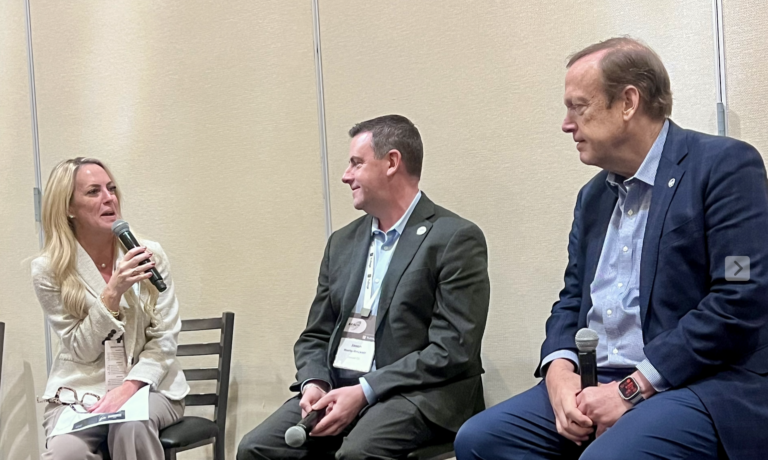
Participating in the discussion were:
- Kathryn Davis, president/CEO Valley First CU (who served as moderator)
- Bill Cheney, president/CEO of SchoolsFirst FCU
- Jason Mertz-Prickett, president/CEO of Upward Credit Union
Upward Credit Union has $100 million in assets and approximately 4,500 members. It just added two counties to its FOM and has become a CDFI. SchoolsFirst FCU has 1.6 million members and $37 billion in assets.
Below is some of what was discussed.
“I think to a certain degree we’ve lost our way a little bit,” said Davis in introductory remarks. “The magic is in cooperating, and in the headlines you see a lot of mergers and the question is are they doing the right thing.”
Here is a look at what else was discussed:
Mertz-Prickett: One problem we have in this industry is we put too much relevance on our asset size. It doesn’t matter what your asset size is, you can still do amazing things for your communities.
Cheney: The large vs. small thing is very important to me. I have seen this from the trade association side (Cheney is a former CEO of the California league and CUNA). As (America’s Credit Unions’ CEO) Scott Simpson says, ‘The only thing worse than silence is dissonance. ‘We have to stick together. Chase just passed $5 trillion in assets. That’s 5,000-billion dollars. We are 37 billion.
Davis: How can larger CUs support smaller credit unions?
Cheney: You think we have challenges in the U.S.? We’re a global movement. I think we need to continue what we are doing around the world to support small credit union development, but in the U.S., we should want every credit union to be successful. There are so many extremely viable and essential credit unions in this country. We can’t just let them fail. Credit union consolidation is no different than bank consolidation; it’s just that we don’t start a lot of new credit unions. I think consolidation is going to continue, but you shouldn’t have to do that.
Davis: How do you look at that asset size conversation?
Mertz-Prickett: I think it’s about getting creative in what we do and can do. As the small and midsize CUs look to each other, where can we partner. WE do the back office for credit union in California. It’s about getting creative in taking some of the mundane tasks off our plates: BSA, cybersecurity. Can we collaborate?
When one of us succeeds, we all succeed.
Davis: What conversations are we not having? What are we not doing?
Cheney: I think too many times this conversation happens in the meeting after the meeting. It’s frustrating when you don’t know who to call. We have a small credit union in Santa Ana that we sponsored and invested in with a CD. It serves a part of the community we can’t serve. We have a TIP charter to serve anyone who gets a paycheck from an accredited school, and their family members.
Reach out for help. I guarantee you there is a large or midsize or even another small credit union that is willing to help.
Mertz-Prickett: It’s about finding the right partner. One of the challenges is there are certain large credit unions that are on a merger spree. They see us as low-hanging fruit. Most of the Shapiro credit unions got a canned email about merging. How disrespectful. It’s about exposing your credit union to someone who isn’t going to try to merge you in at the end of the day.