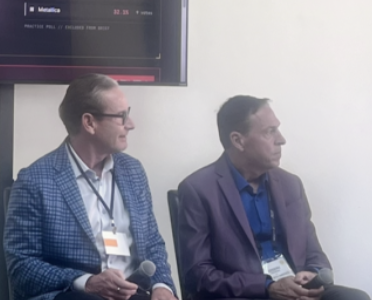
LAS VEGAS–An audience here had an opportunity to be a “fly on the wall” for what had been a closed-door session earlier in the day, where they learned that discussion had included the question of what keeps many leaders up at night, why the age-old issue of trust has become even more critical, how leadership dynamics are changing, and more.
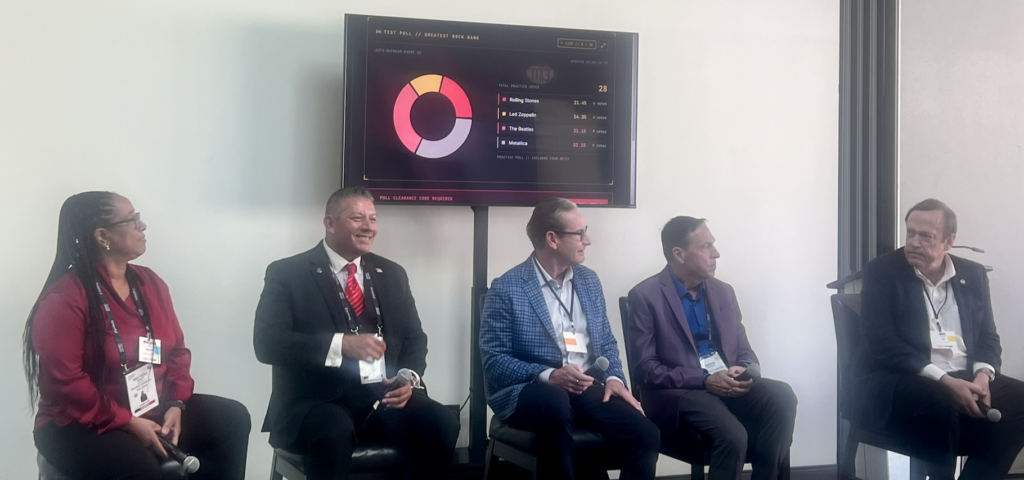
In this case, the session took place during the Money 20/20 conference, and it included a number of leaders from throughout credit unions who were panelists during a discussion that was invitation only. Later, some of those panelists shared what was discussed as part of a panel at Mitchell Stankovic’sUnderground: Reckoning event.
Sharing what they talked about were:
- Bill Cheney, CEO of SchoolsFirst FCU
- Joe Lockwood, president/CEO of Open Banking Solutions
- Tony Boutellle, president/CEO of Origence
- Melyssa Barrett, board member with Balance
- Louis Hernandez, Jr., president and CEO of Black Dragon Capital
The session, which was titled “Fly on the Wall,” was moderated by Brandi Stankovic, principal with Strategic Advisory Solutions. Here is some of what was discussed:
Stankovic: Share with us some takeaways from the earlier discussion:
Cheney: We were asked, ‘What keeps you up at night?’ and I said cybersecurity. We’re all under attack all the time. Louis (Hernandez) led us off, so that was very interesting, just talking about the future of digital and the future of service It kind of got into the risk management discussion really, as we are now living with personal service At SchoolsFirst, we know we have to be digital-enabled and our members want that. With 1.6 million members, we can’t serve all of our members with personal service; they need to be able to serve themselves. There’s a ton of risk associated with that, but there is also the risk in not doing it.
Boutelle: It was thought provoking. I think we all probably agree we have these opportunities now as we all get to live at this exact time of history in the world. It’s pretty amazing how everything is changing. I’m really excited about what’s going on right now, but I’m also terrified with the whole AI world. We all kind of waded into this AI world that we’re in today, and how fast it is moving is a little overwhelming
Barrett: When you think about trust and you think about financial institutions and fintechs and all of those things, trust becomes a real element that has to be reckoned with. So, I think whether it’s relevance we’re talking about, whether it’s trust, the speed of change is going to require us to keep up with that because people have to be able to trust something.
Hernandez: Earlier there was broad recognition of the changing dynamic of leadership. We have to deal with all those perspectives as we navigate forward.
The first thing I put down on my list (from the session) was AI governance, because there was a recognition that artificial intelligence…is going to play a central part in how we navigate and how we deploy in a regulated environment.
Second, I had identity (which is about) fraud and cybersecurity. The big issue as you digitize is you create risks for our community by trying to serve them through these tools.
Third, which is one is something we all talk about, and that is relevance. That was really around the product service delivery models and making sure we matter. I commented this morning that some of these surveys I read as a global investor is how well do people know credit unions versus banks or how recognizable is your brand? And I think that’s so misplaced, because many of the next generation that we deal with don’t even know what those things are and don’t care. They just use their phone and pay for something; they don’t know why it matters or why it should matter to them.
Trust is the biggest thing we lost in being digital. Trust has gone out the window. We don’t know which image to trust, which video to trust, if my voice is real. Trust for financial transactions is under pressure, and I believe it’s the key for us in regaining our central role in the community.
The last thing I wrote down was financial literacy, but it wasn’t because of the literacy. It was to educate institutions to facilitate commerce. That is important to your community, however it’s defined, whether it’s like-minded folks who care about geographic community or people who go to Amazon. People need to be educated about the role we play in ensuring commerce occurs a safe and sound way.
Stankovic: What other challenge do you see?
Hernandez: The common challenge for everyone is keeping up with the changing definition of delivery in your market in a way that is economically feasible for you. One of the biggest challenges for leaders now is this definition of service and the relationship they want in an economically viable way. The answer is you have to know who you are serving well enough and to know how quickly it is going to change.
Stankovic: Where do you see shared opportunity?
Boutelle: (Origence) is the definition of this from a CUSO perspective. We are really trying to be the platform for as many consumer lending channels as we can. We have been leaning into embedded finance. The channels don’t go away, they just multiply. As you look at how people are going to buy cars, the loans are going to go with the car at the time of the sale. We have now done a few loans with Amazon. We have Tesla. The dealers will always be there, but the model is evolving and it’s going to be a different world.
Stankovic: What are you seeing with consumers? Is technology the future? Human touch? Or a combo?
Barrett: Oh, definitely a combo. Technology has become such a powerful tool to help people. But at the end of the day, not everyone wants expertise (from AI). They want things fast but want to be serviced appropriately. You are still a person, and you want a level of trust. There are things that are appropriate and technology does them phenomenally, but I’m still a person.
Boutelle: One thing about collaboration and keeping credit unions relevant in this fast-changing world is we would not be doing the business with Amazon and Tesla if we did not have 1,200 credit unions behind us. It’s important for us to work together in some of these situations so that we can matter to the greater population.
Lockwood: Technology matters. It matters now more than ever. Do your partners have the technology? It’s a simple question. Most of you are on platforms that are 50-plus years old. If you’re on a platform that isn’t open banking ready, maybe it’s not the right platform. If it can’t do stablecoins, maybe it’s not the right platform.
Cheney: I agree it’s 100% more important than ever to have the right partners. But don’t forget about your team and the people who guard the best interests of your members. With our team it’s important for us to let them know we’re not using AI to replace people, we are using it to help people. Navy Federal calls it augmented intelligence for their team to help them serve members. I think we will be more efficient as we grow and will not hiring as many people, but we will be looking to upgrade our (team’s skills) to give members the level of service they expect.