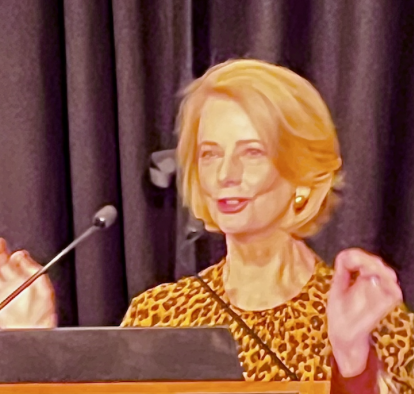
SYDNEY, Australia–Australia’s first and only female prime minister told a gathering of female credit union leaders gathered here that the “trend lines are not encouraging” when it comes to gender equality in leadership, and she urged everyone to maintain their sense of “determination.”
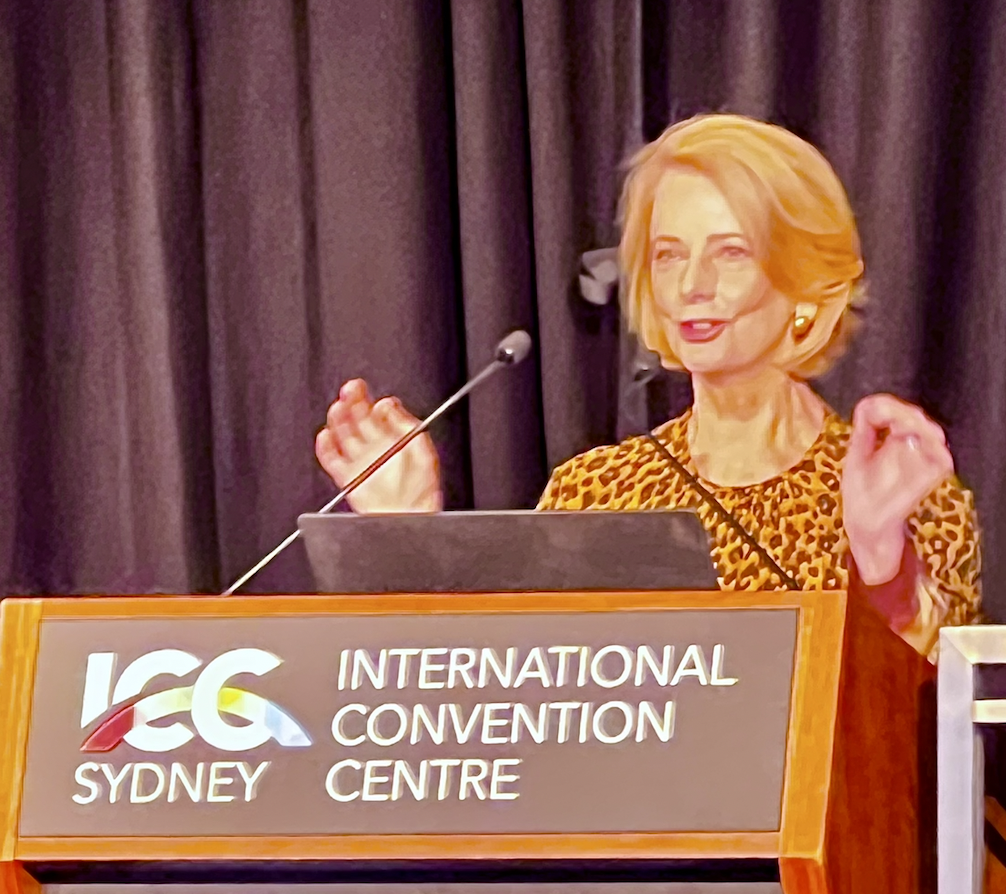
Julia Gillard, who served as Australia’s prime minister from 2010-13, offered her insights during a luncheon hosted by the Global Women’s Leadership Network (GWLN), which was held during the World Credit Union Conference in Sydney. It was noted in her introduction that there are 195 countries on earth and of those, 101 have never had a woman leading their nation.
Shining a ‘Spotlight’
“It’s terrific that you’re coming together and working constantly to shine a spotlight on gender equality in your industry,” said Gillard.
Gillard noted she is actively involved in an organization she founded that has a name similar to that of the Global Women’s Leadership Network: in this case, the Global Institute for Women’s Leadership.
“What we try to do is look globally and establish a benchmark for the enabling environment. We ask: What do communities think about gender equality? How receptive are they to making the changes needed?” she explained. “Unfortunately, the trend line on those measures is not encouraging. In particular, we’re seeing concerning trends among young men. That has prompted us to think about what we can do better to explain that gender equality is not, at the end of the day, simply about women or doing more for women. It’s actually about creating a better world for all of us—for both men and women.”
Not a ‘Zero-Sum Game’
Gillard said research has clearly shown that more gender-equal societies are societies with greater opportunity and greater shared prosperity. “When women rise, men and women rise together. This is not a zero-sum game,” Gillard told the luncheon meeting.
Gillard said her organization conducts a great deal of research into the modern workplace, inclusive leadership, and the best strategies for organizations that are trying to create gender-inclusive work environments. It also examines how leaders can foster a culture of gender inclusion. She encouraged her audience to explore that research, which can be found here.
“I hope we can come together with a shared sense of determination to keep working, keep driving change, and ensure that progress continues well into the future,” Gillard said.