

By Frank J. Diekmann

If you thought I was exaggerating a few weeks back when I wrote here about the dangers of an NCUA proposal that would make it easier for CUs to convert to mutual savings bank charters, perhaps this will get you off the fence (and anyone on the fence on this issue deserves to get knocked off to the other side—the non-credit union side).
Make no mistake: there are some (many?) salivating over the millions of dollars in consulting and legal fees, the tens of millions of more dollars to be had in stuffing their pockets with other people’s hard-earned capital, and the hundreds of millions (billions?) more to be had in IPOs. Indeed, one person is suggesting banks should consider acquiring credit unions to bolster retail deposits and compete with digital financial platforms, arguing the bar for doing so isn’t as high as many believe.
The proposal was made in a blog post by Jeff Marsico of Wolf & Company, who argued that 1) shifting consumer behavior—particularly among Millennials and Generation Z—has eroded traditional bank loyalty, as customers increasingly move funds to fintech platforms and higher-yield accounts, and 2) that yes, such an acquisition can be pulled off.
Marsico said banks need greater scale, particularly in retail deposits, which he described as the “foundation” of community bank funding. He contended that credit unions represent an “untapped reservoir” of such deposits, even as many face their own consolidation pressures.
It’s an untapped reservoir, alright. And it’s not about the deposits.
One of the ‘C’s’ Should Stand for Congratulations!
While some trade groups have failed to put their money where their mouths are when it comes to the NCUA proposal to make it easier for insiders to convert credit unions into banks, a hearty congratulations to the Cooperative Credit Union Association for having the courage to stand up for the credit union charter (how in the world could doing anything else even be up for discussion at any CU association?) in its comment letter to the agency.

The CCUA wrote: “The Association opposes this proposal and urges the Board not to finalize this rule. As proposed, NCUA’s regulations on credit union conversions to mutual savings banks would be amended to remove the requirement that notices to members regarding the credit union management’s plan to convert the credit union to a bank be “clear and conspicuous” as well as to remove the newspaper notice publication requirement, limit members’ ability to communicate with other members concerning the proposed conversion, and rescind guidance on how a fair conversion vote should be conducted.
“The Board adopted these provisions in 2006 to address then-occurring abuses in the credit-union-to-bank conversion process that one no longer hears about anymore. It would be a mistake to rescind these 2006 reforms that have successfully protected credit union members’ interests for twenty years.
‘In Name Only’
“Twenty years ago, there was a small industry of consultants urging credit union boards and managers to convert their credit union to a mutual savings bank so that insiders could grow rich at the expense of the credit union’s members. While members are legally the credit union’s equity owners and shareholders, see , e.g., 12 U.S.C. 1757(6) (“[T]o receive from its members… payments, representing equity, on shares…”), federal appeals courts have held that, at a mutual savings bank and most in name only. ” E.g., Ordower v. OTS , 999 F.2d 1183, 1188 (7th Cir. 1993) (Opinion of Easterbrook, J.).”
I’m quoting here only a portion of the CCUA’s letter, but the full letter (and it’s not long) deserves more than a read: it should be framed. You can find it here.
The Off-Balance Sheet Risk That May be Greatest of All
Speaking of articulate and eloquent, the CU Daily also recently published a thought-provoking piece by Sarah McNeil, CEO of United Trades FCU in Oregon under the headline, “Where Should Scale Live in the Credit Union Movement.”

Wrote McNeil, “Purpose Integrity Risk is the risk that, over time, a credit union’s operating model drifts so far from its cooperative purpose that its distinctiveness becomes performative rather than structural. The institution may remain financially sound while becoming functionally indistinguishable from the systems it was designed to differ from.”
That’s just one paragraph drawn from numerous insights that are equally persuasive and forceful. If you missed her column, you can (and should) find it here.
A Day That Shall Live in…Charter History
You never know what little piece of CU history you might learn.
In a recent press release, FORUM Credit Union in Indiana announced a year-long series of promotions and events around its 85thanniversary. As part of the announcement, the credit union, chartered as Hoosier FCU by employees of Indiana Bell Telephone Co., noted it had been founded on—Dec. 7, 1941. I’m pretty sure that’s not what FDR meant by saying it was a date that shall live never be forgotten.
Happy 85th birthday.
Board Training? I Don’t Need No Stinkin’ Board Training!
I share an actual overheard conversation during a meeting between a vendor and a gentleman who is on the Supervisory Committee of his credit union:
Vendor: So, did you have a background in finance?
Supervisory Committee Member: Umm, well, I had balanced a checkbook.
Korea Vs. France, And It’s Not the World Cup
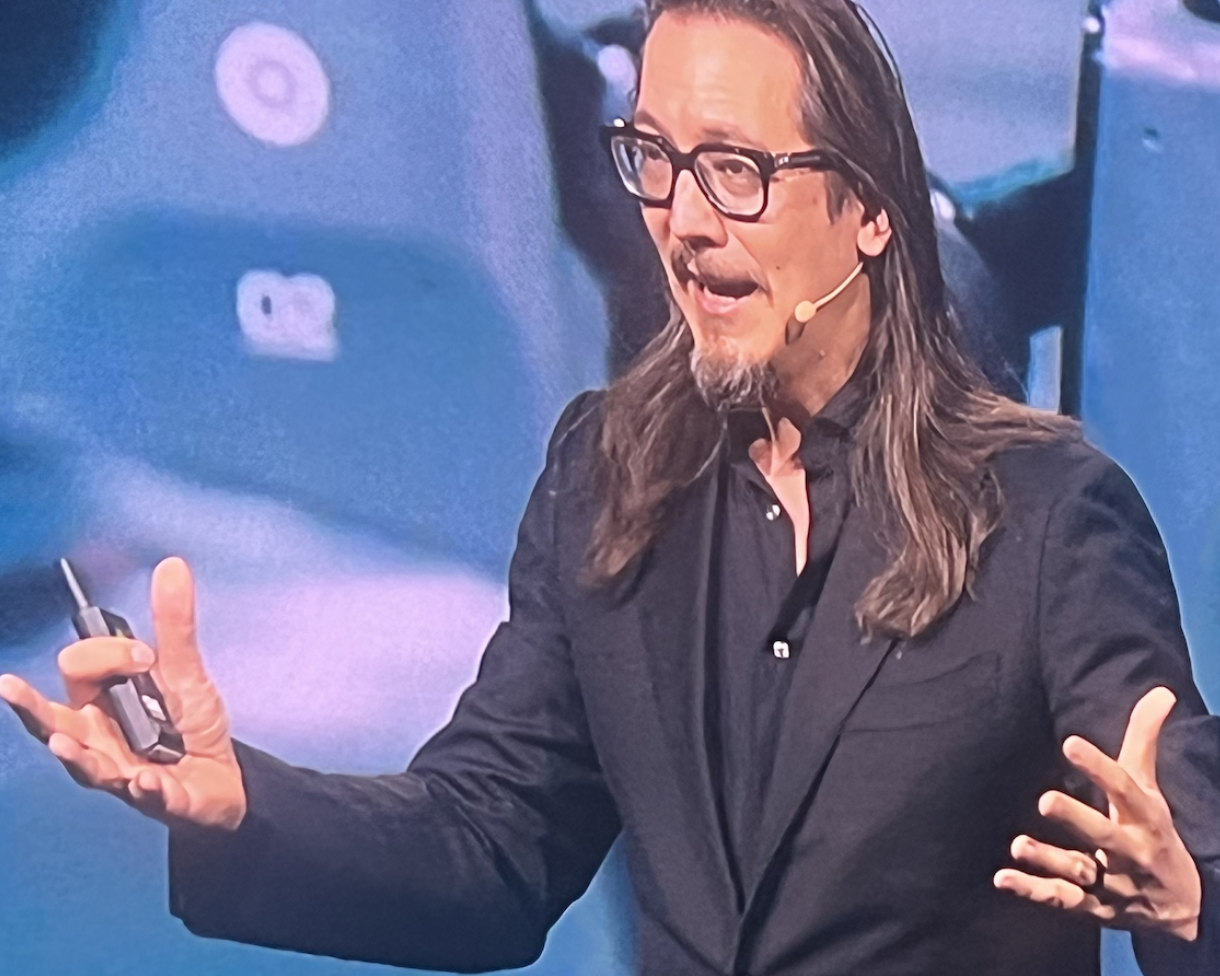
Futurist Mike Walsh shared any number of keen insights on AI during the recent VeleraLIVE event in Orlando, including his overarching observation that what CU leaders should really be giving attention to with AI is this: it isn’t the work artificial intelligence is doing at credit unions, but rather the way work must be redesigned in response. Walsh advised that moving forward, competitive advantage will hinge less on access to technology and more on how institutions structure human and machine collaboration.
As an aside, he also shared this: “One out of 10 workers in South Korea today is a robot. No one is complaining. That’s incredible. If this was France, they would be protesting. In South Korea, they are complaining about Chinese robots taking Korean robots’ jobs. The Chinese robots are very cheap and very effective.”
Views from CUES That Deserve to be News
OK, Ok, I’ve had these items sitting in the notebook for a wee bit of a while. But they deserve to be shared, so here are a few observations shared during the CUES Directors Conference in San Diego.
- One speaker pointed out that while the “fact” digital photography killed Kodak has become the stuff of urban corporate legend, the real murder weapon was digital photography in tandem with something else: Facebook. Yes, being able to take a digital pic is convenient, but it was having a place to upload it and share that—how else can you let others know much better your life is than theirs—really spelled the end for the once iconic American brand.
- CU directors were asked by one presenter to answer these questions: “What are you to other people? What is your value? The greatest challenge in front of you is how to live up to it. What people want isn’t necessarily our services; what people want are the things your services enable. People want benefits, they don’t want solutions.”
- Observed by another person, “The journey is not a microwave. It’s a crockpot.”
A Board Story You Won’t Be Bored Reading
If you want to read an fascinating story about how one credit union that was dying because it had “toxic” board before it was able to not just put the shouting matches behind it, but create a master class in excellent governance, I’d suggest going here to learn more about how Red Rocks Credit Union did it.
Just an FYI: As members of its board were sharing their experiences during the CUES meeting, it was mentioned that for a recent board opening it had 50 (yes, 50!) candidates, 17 of whom it found to be “truly qualified.” Those numbers drew some semi-astonished looks from audience members.
And by the way, RRCU’s board members are compensated, but that wasn’t mentioned in the recruitment, so none of the applicants were in it for the potential cash.
Frank J. Diekmann is Cooperator in Chief at the CU Daily and can be reached at [email protected].



