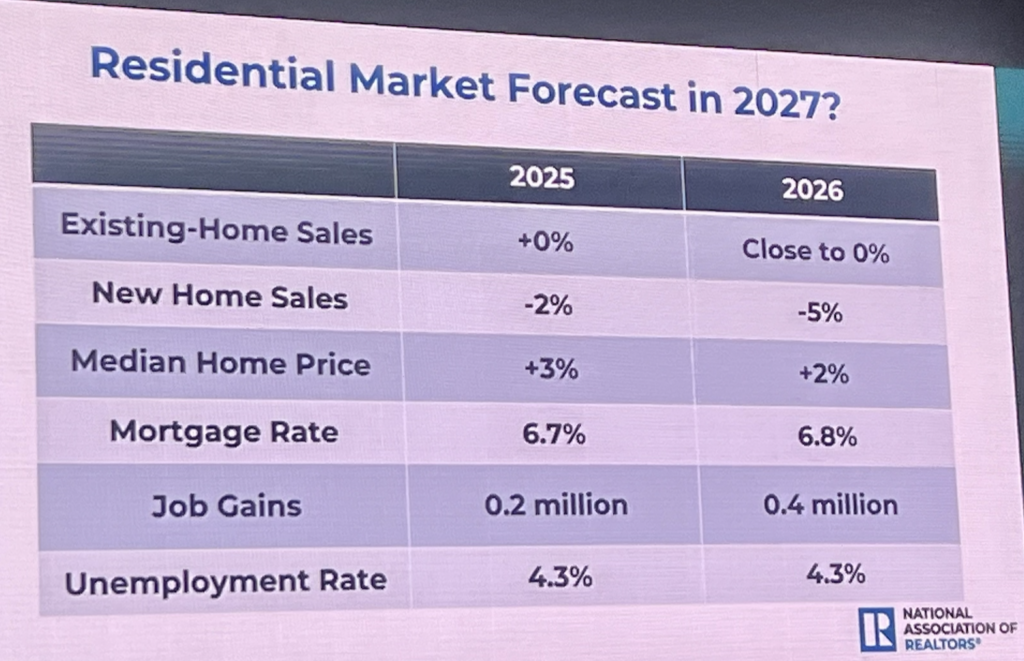
AURORA, Calif.–An economist with the National Association of Realtors who has been recognized the accuracy of his forecasts for mortgage rates and the economy is now looking ahead to what 2027 might hold and saying it “depends.”
Dr. Lawrence Yun told the GoWest Credit Union Association the “big challenge” in offering a forecast is fast-rising mortgage rates and the unpredictability of the factors contributing to those increases.

As the CU Daily just reported here, average rate on a 30-year fixed mortgage climbed to 7.49% last week, its highest level in nearly three years, as higher borrowing costs pushed homebuyers and homeowners seeking to refinance out of the market.
Although credit union leaders are well aware, while President Trump has criticized the Fed for not lowering rates and bringing down mortgages, Yun reminded that long-term interest rates are not determined by the Fed, but instead by longer-term U.S. government bonds. And with inflation rising, the federal government has boosted yields on long-term Treasuries in order to attract buyers.
The Changing Forecast
Yun said he expects inflation and longer-term rates to remain high as long as the United States war on Iran continues, leading to rising oil prices.
The forecast has now moved from expectations the Fed would cut interest rates twice this year to one rate increase so far, and another two to three expected he said.
“Oil prices are really wreaking havoc on the economy,” Yun told the meeting.
He shared historical data he said showed that the earlier COFIC stimulus was a “little overdone,” which led the Fed to drastically raise interest rates, sending the mortgage market “from frenzy to freezing.”
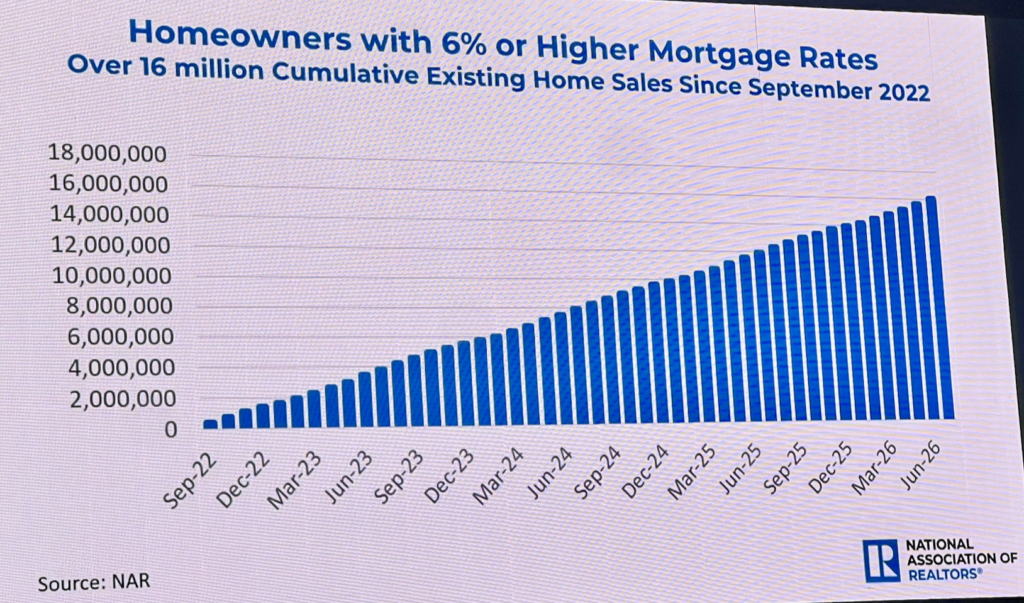
And many would-be sellers “love their 3% interest rates” from pre-COVID, which is only putting more pressure on prices, he said.
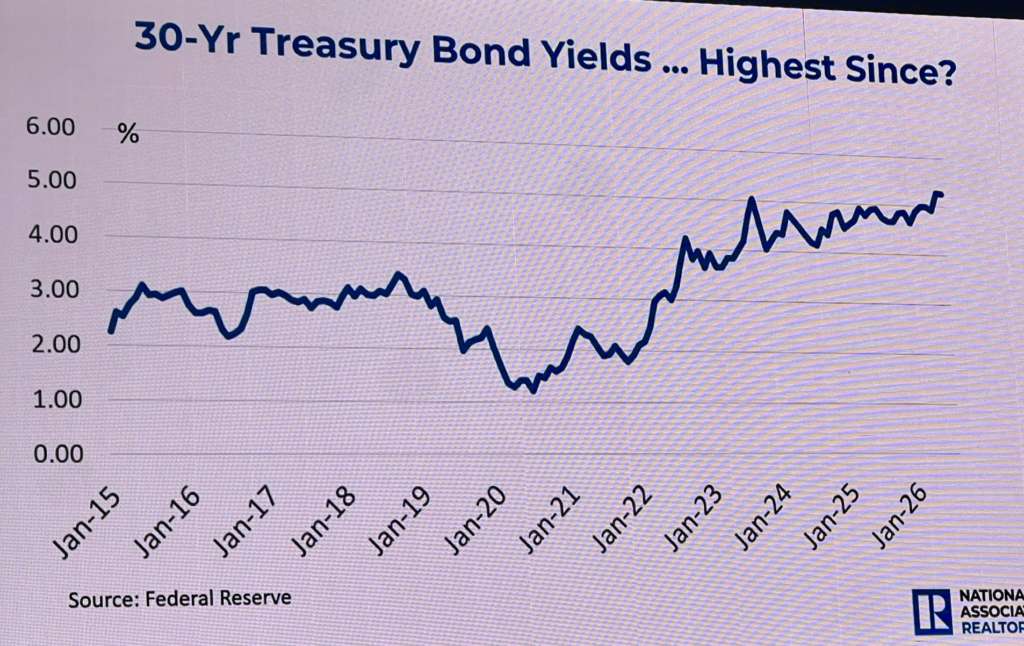
Other Contributors to Inflation
Lun noted other factors are helping to keep inflation high, including:
- Low Unemployment. The tight labor market means higher wages, and higher wages means higher prices.
- The Federal Debt. Yun pointed to the “massive” $40-trillion U.S. debt, which is now 100% of GDP. “The government is borrowing so much it is eating up private capital, taking money out of the private sector, including in CDs and mortgages,” Yun said. “As long as this continues, we are going to have a squeeze on private capital, including for mortgages.”
- AI and Data Centers. Yun outlined the massive increase—he called it “parabolic”—in data center spending, pointing out that AI companies had been using profits to fund the data centers, but now are turning to markets for funds as the investments have only become more massive.
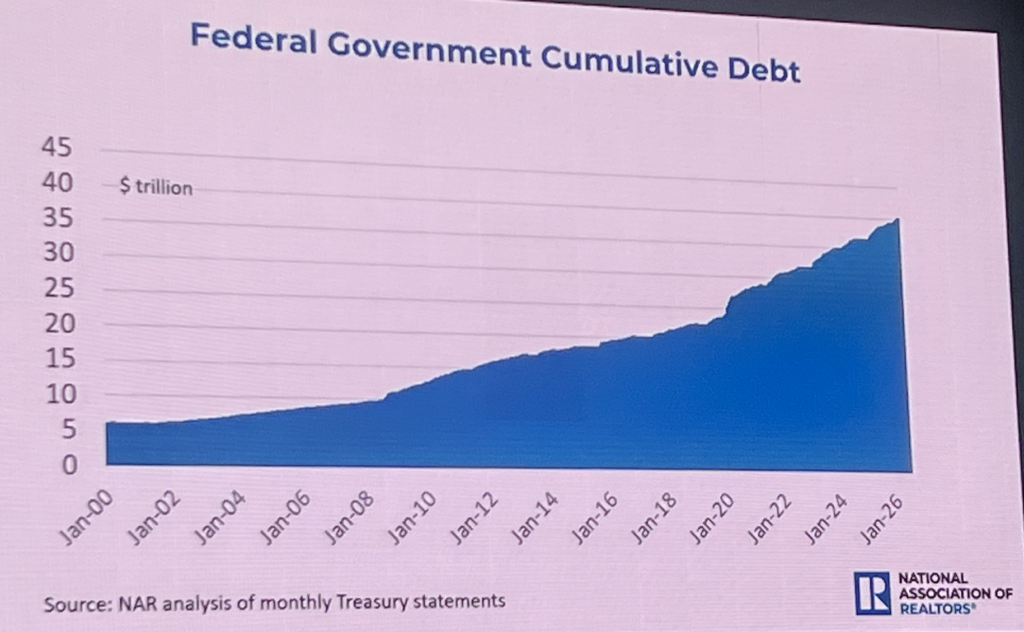
Yun said contrary to popular belief, data centers have not been shown to decrease home values in their vicinity, and, in fact, those areas have seen higher home price growth. “We are not seeing negative impacts from data centers on home values as of yet,” said Yun.
The Market Dichotomy
In reviewing the dynamics of the housing market, Yun noted there has been a home sales slump as at the same time a home price boom is occurring, with luxury home sales outperforming the market overall.
“Homeowners are feeling very, very comfortable, but for the renters who want to buy, it’s a difficult challenge,” Yun said.
Yun pointed to data showing the median monthly mortgage payment and how it has skyrocketed since 2022 as the Fed raised rates and mortgage rates also rose. “People’s incomes do not grow 20% or 30% in a one- or two -ear timespan,” Yun observed, adding the only way to improve affordability is for mortgage rates to come down or lower-priced, smaller homes to be built.
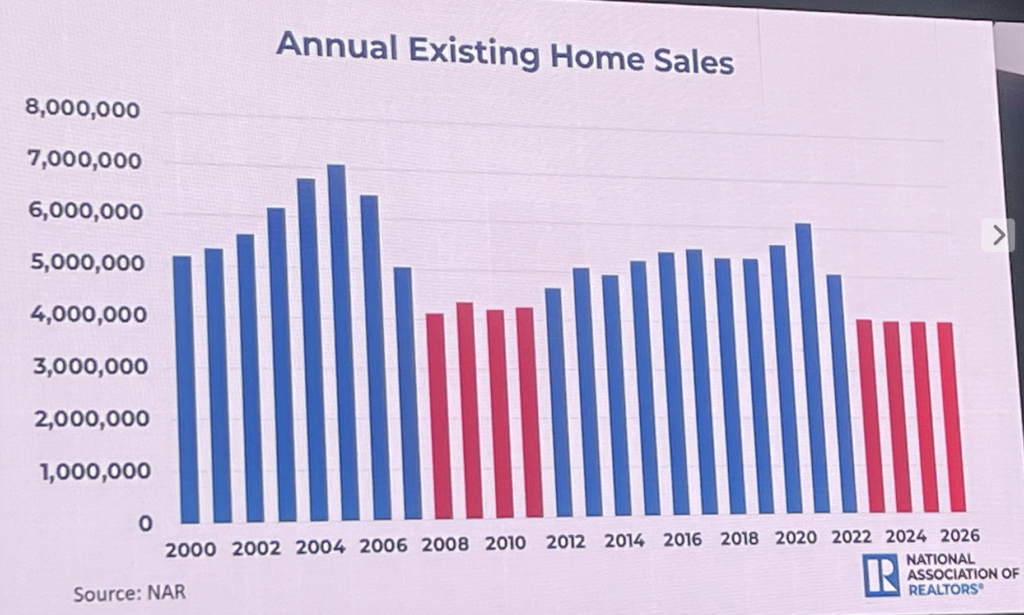
“Home sales, at least for the past five months or so, have not been declining, although it’s been in a bit of a slump,” Yun added.
Yun had predicted mortgage rates of 6% in 2026, which he said was a “good feeling that lasted for a day,” as rates have since risen to the 7.5% range on the 30-year
For those at the MAXX meeting who hailed from Idaho, he noted the state has led the way in home price appreciation at more than 70%, as the chart shows.
“Some homeowners are doing just fine,” Yun said.
According to Yun, a change that would help free up housing inventory would be a lifting of the capital gains tax on home sales. He said there are currently 13 million homeowners who would be hit with a sizeable capital gains tax were they to sell, which has left many long-time owners unwilling to put up a For Sale sign. The NAR is lobbying Congress to do away with the capital gains tax hit, at least temporarily.
Nevertheless, Yun said home inventories are rising but there are no signs of a home price crash, he said.
The Look Forward
Looking forward to the economy, home sales and mortgage rates, Yun admitted, “Where is it going to go? I don’t know. It’s really about geopolitical impacts from the Middle East and Ukraine/Russia.
“We also have to acknowledge the K-shaped economy, which is slumping for many. We are not in an economic recession, but it seems like half of Americans are saying the economy really stinks. Why are socialists being elected? (He said socialists are not the NAR’s cup of tea.) Voters are looking to shake things up because current economy not doing anything for them.”
Job Growth & The Rate Forecast
Job growth and an unpredictable market will be another big variable in 2027. Yun said the decline in immigration, which has actually gone negative, has led to a worker shortage in some industries
For those watching the Fed, he said the central bank will not change its stance on interest rates until oil prices begin to decline.