GARLAND, Texas–Toxic boards. AI. Muddy Hats. The important. The odd. The funny. The critical. The CU Daily’s Lead Story each day of 2025 has taken a deeper look at all of that and more. Here, in the first of a two-part series, are the highlights of some of that reporting, with links to take you to the stories you may have missed.
Three Years After ChatGPT’s Debut, Here’s How Consumer, CFOs & Others are Using the Technology

BOSTON— Three years after ChatGPT’s debut, conversational artificial intelligence has moved from novelty to mainstream business infrastructure, with rapid adoption reshaping everything from consumer shopping to corporate finance, according to new research from PYMNTS Intelligence.
The report found that half of all Black Friday shoppers — including two-thirds of Gen Z — used conversational AI tools to assist with purchases. ChatGPT itself has grown to more than 800 million weekly users and is projected to surpass 220 million paid users by 2030.
The story can be found here.
Changing Your Response to Change: The Mistakes Everyone Makes, 3 Psychological Needs & Advice from Ryan Reynolds
SAN DIEGO–Looking to drive improvements in your credit union, or even your own life? One person suggested you take some advice from the actor Ryan Reynolds, before offering some keen insights on the mistakes every leader makes, three basic psychological needs everyone shares, and more.
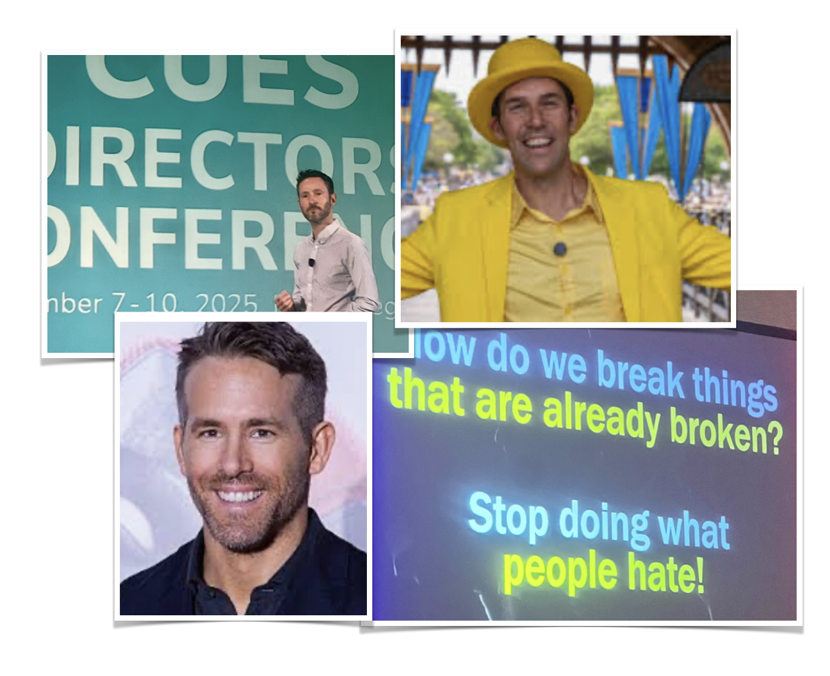
Beyond acting, Reynolds has built a portfolio of successful and diverse businesses, including an ad agency, and he has acquired and sold Aviation American Gin (sold to Diageo) and Mint Mobile (sold to T-Mobile).
Jason Feifer, editor in chief of Entrepreneur magazine and host of the podcast Problem Solvers, shared with the CUES Directors Conference Reynolds’ observation that, “You can’t be good at something unless you’re willing to be bad.”
Feifer said that with all the change facing credit unions as organizations—and CU leaders themselves—the common mistake made by so many is to tell themselves, “I must be good at this new thing at the very beginning.”
The story can be found here.
‘The Most Important Work You Do’: How 1 ‘Toxic’ CU Board Fixed What Was Ailing It

SAN DIEGO – The story of how a divided credit union board that at one point used to sit on opposite sides of the table and “shout” at one another as the CU was losing money, before it went through a “modernization” overhaul that was successful enough to recently attract more than 50 applicants to fill an open position, drew a strong turnout when that story with all its “pain points” and successes were shared with an audience here.
Monthly meetings that used to run three-plus hours and which were described as “toxic” now run no more than an hour and are more productive, thanks to a new culture built around clarity and caring that has led to “teamwork,” among board members, most of whom are now new, according to several board members and the CEO of Red Rocks Credit Union in Colorado.
The story can be found here.
‘Sooner or Later, CUs Will Need to Grapple with Straying from Roots’: CU Daily Readers Sound Off

LANHAM, Md–Some strong observations and opinions shared by the CEO of one small CU have been met by equally strong observations and opinions from CU Daily readers from throughout the credit union community on the current state of affairs in the industry, the leadership being provided by trade associations and other sensitive issues.
Joshua C. Urbick, the CEO who says he is “proudly a small CU CEO” and who leads the $29-million IBEW 26 FCU, in Lanham, Md., wrote in an op-ed on the CU Daily here that the voices of small CUs have been “growing louder,” with questions being raised as more CUs merge over how big is too big, what it’s like to lead a small CU when larger CUs define “cooperation” as merging them in, and whether small CUs’ only role is to “tug at the heart strings” when the tax exemption needs to be defended.
Here’s how many in credit unions responded.
With Unprecedented Wealth Transfer Underway, Role Women Will Play & What FIs Should Do Explored in New Report

PLANO, Texas– An unprecedented wealth transfer, now estimated at $124-trillion, is anticipated to change hands in the next 25 years, and the role women will play in managing their family’s finances as well as what financial institutions should consider to retain those banking relationships is the subject of a new report from Alkami.
The report, First Beneficiaries: How Financial Institutions Can Serve Women Through Inherited Wealth, builds upon the findings from the national research study conducted in partnership with Jason Dorsey and The Center for Generational Kinetics (CGK), according to Alkami.
Details on the wealth transfer and strategies for responding can be found here.
More Than Half of Members Say They Feel Less of a Connection With Their Credit Union

LOUISVILLE, Ky.– Two-thirds of consumers say they don’t feel they are really known by their FI, and more than half of members say they feel less of a connection with their credit unions, according to a new survey.
The survey found those sentiments have remained largely similar in recent years, despite advances in AI, digital banking, and marketing.
White Clay, a provider of relationship profitability and analytics software, said it conducted it conducted a survey online in conjunction with The Harris Poll and polled nearly 2,000 U.S. adults who use financial institutions were surveyed about their relationships with their primary bank or credit union.
Here’s what the survey uncovered.
Mergers, Members & Mud: A Lot of Dirt is Being Thrown at the CU White Hat

SAN JOSE, Calif.–Credit unions pride themselves on their reputation for excellent service and acting in the best interests of members, but the white hat the CU community has long taken pride in wearing has been getting a lot of mud splashed on it recently in posts on Facebook, on NCUA’s website and in other media in response to mergers.
The CU Daily team has offered recent updates on mergers (here, here, here and here) as part of its ongoing, industry-leading coverage of credit unions looking to combine, including more instances of management teams and, increasingly, boards, taking multi-million-dollar payouts for themselves as part of the deals, often with no distribution of the net worth to the member-owners.
That has led to some dirt being thrown at the credit union white hat by consumers and members, as reported here.
How Members are ‘Soft Switching’ to New Providers (And Their CUs Aren’t Noticing)

TROY, Mich.–Financial institutions are being hit by a new trend they likely aren’t even noticing: “soft switching,” according to a new J.D. Power report.
J.D. Power has published a report that has found large numbers of customers are quietly changing banks by opening second or third checking accounts at new financial institutions, and then, over time, gradually shifting their transactions and funds into the new account: thus, the soft switching.
“They find that they like the experience they’re having with the new account that they opened,” Miles Tullo, managing director for financial services at J.D. Power, said in a statement. “And before you know it, you have a customer who was banking with you for all of their banking needs and is now banking with someone else.”
Here’s what else J.D. Power had to say about “soft switching.”
A Maybe-Not-So-Surprising Prediction Around AI, What CUs Should be Planning For, & More
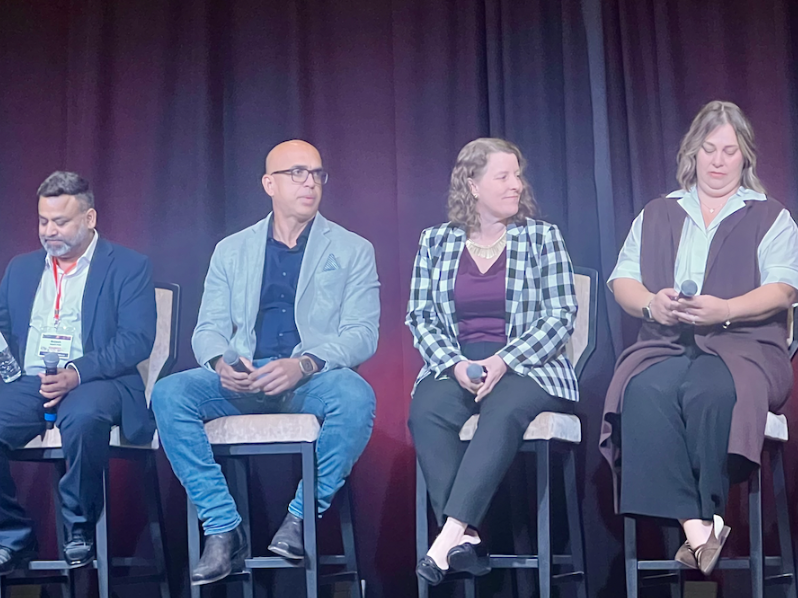
LAS VEGAS–In a marketplace where every product and service provider, including credit unions, is racing to embrace AI, will it have the inverse effect of creating an opportunity to appeal to consumers with “authentic” human experiences?
One person believes so. It was just one of the observations made during a panel discussion around the “unknown mystery” of what changes technology, especially AI, is causing in the world and in the marketplace.
Another prediction: AI will change the credit union organizational chart.
For more on what the panel had to say, go here.
Eating the Lunch’ of Interchange: How Stablecoins Could Prove to Be Anything But Stable for CUs That Don’t Get Moving

LOST PINES, Texas–With the GENIUS Act enacted and the countdown on for NCUA and regulators to get rules in place for stablecoins, credit unions were told it’s “go time” to begin preparing for a new technology that could “eat the lunch” of interchange.
The cautionary words came from Dr. Lamont Black, an associate professor at the Driehaus College of Business at DePaul University, where among other things he teaches a graduate course on cryptocurrency, and who is also a fellow in Filene’s Credit Union of the Future Center of Excellence, and who’s well-known to many in credit unions for his work and insights.
After several years of speaking to credit unions on crypto, he told Catalyst Corporate’s Strategic Summit meeting he has pivoted now due to the rapid change taking place, and in addition to talking about AI (see separate reporting in the CU Daily), he has a warning for CUs when it comes to another emerging technology.
Here’s what you need to know about stablecoins.
It Wasn’t About the Fish or the Monsters: What the CU Story is Really About & How to Tell People
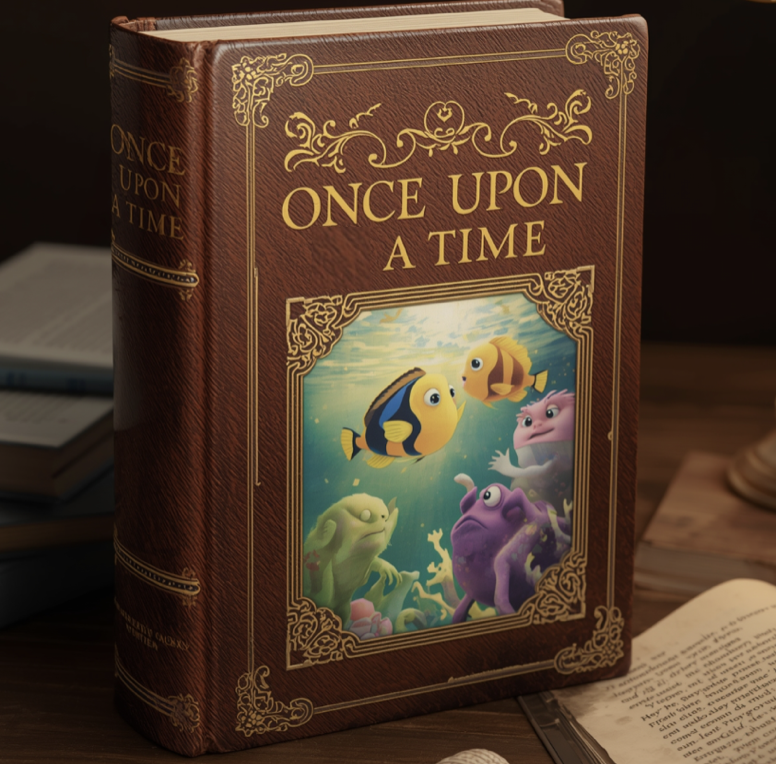
PORTLAND, Ore.–The Toy Story movies aren’t about toys, Finding Nemo isn’t about a fish, Monsters Inc. has nothing to do with what may be hiding in your closet—and credit unions aren’t really about money.
That was among the takeaways from remarks offered by Matthew Luhn, who calls himself a storyteller and “creative visionary” and who worked on many of Pixar’s best-known and classic movies and who was with Disney prior to that.
Luhn’s comments focused on how credit unions can better tell their story—a topic frequently discussed in the movement, often with little direction on how to do so.
If you want to know more about finding your own Nemo, fish here.
Why a Check-Casher Can Be a ‘Smart’ Move for Many, & What CUs Should Do About It
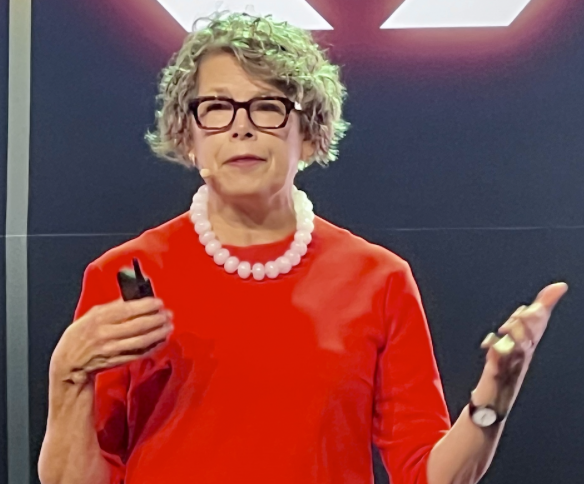
PORTLAND, Ore.–If alternative financial services such as payday lenders and check-cashers are so bad, why do so many people use them? It may surprise some CU leaders, but the reason is because their customers are actually making rational and intelligent decisions, according to one person.
Lisa Servon, presidential professor of the City and Regional Planning Department at the University of Pennsylvania, and who has spent time working inside check-cashing outlets as part of her research, told attendees at the GoWest CU Association’s MAXX meeting that the 25-million unbanked or underbanked households in the United States make the decisions they do for what are often good reasons, including that they don’t feel credit unions or banks are good options.
“Many people feel Main Street financial services are no longer serving them in the way they want to be served,” Servon said.
Here’s a look at more of her insights.
‘A Responsibility We Cannot Defer’: How Quantum Computing Threatens the Very Trust of Credit Unions
VIENNA, Va.–The threat from quantum computing is coming—and faster than many in credit unions realize–two people are warning, stressing that even the most deeply encrypted data today will be easily unencrypted in the coming years at great cost to credit unions and their members.
The caution came from two experts who are with PenFed Credit Union, including Ed Cody, who was previously part of a Defense Department cybersecurity teams.
The details on why your CU should be acting can be found here.
‘Til Debt Do Us Part’: Credit Cards Blamed for Ruining the Happily Ever After

FORT LAUDERDALE, Fla. -Credit unions may be playing a role in both helping ruin marriages—but also may have an opportunity to be helpful financial counselors in the wake of a new survey that has found credit card debt is increasingly being blamed for the breakdown of marriages.
Debt.com’s fourth-annual Debt and Divorce survey found 42% of divorced Americans said credit card debt and spending contributed to their split—a sharp rise from 34% last year and 29% in 2023.
You will not require a marriage counselor to read the story here.
Surprise! Here’s What Researchers Found When it Comes to Consumers, Fraud & Their Financial Institutions

SOUTH BEND, Ind.–A new study has uncovered both a not-so-surprising as well as a surprising finding about consumers when it comes to financial fraud and the institutions they do business with.
The study found that when a financial institution is unable to tell a customer/member about who perpetrated fraud against them—even though in many cases it’s nearly impossible to identify fraudsters—most customers/members end up leaving due to a lack of “trust”—but also uncovered a stronger relationship when the FI can identify the source of the fraud.
Details on the study’s findings were reported here.
What Life is Like in a War Zone Attempting to Distribute CU-Funded Aid
ZAPORIZHZHIA, Ukraine–Where does the money go after credit unions in the U.S. raise funds to help their counterparts in Ukraine? What is life like for those near the front lines of the war with Russia who are responsible for distributing that aid while also trying to stay alive? And what do Ukrainians themselves say about the war and how it might end?
The CU Daily spoke with three people in eastern Ukraine, near territory seized by Russia, who have been involved in distributing aid and support in the region, some of it provided by credit unions in the U.S. and Poland. They shared their experiences, the realities of their lives, what their communities and credit unions most need, and—their determination to settle for nothing less than a “just peace.”
The story from Ukraine can be found here.
What a Storyteller Saw at the World Credit Union Conference

LISBON, Portugal–Credit unions like to talk about their “story, but how does one story-telling expert who only recently came into contact with CUs view the tale that should be told? From their fresh-eyed perspective, they say CUs have something unique to offer to an uncertain world, and the story begins not with the marketing department, but loan officers.
Tara Todras-Whitehill, the founder of TW Storytelling Agency, is a former photojournalist who has had 20 photos appear on the front page of the New York Times. She also spent a decade running creative agencies and does training with social impact organizations. In July, she shared her perspective with attendees of the Global Women’s Leadership Network event in Stockholm, as the CU Daily reported here, and then later with attendees at the World Credit Union Conference.
More of Todras-Whitehill’s observations were shared here.
Is Now the ‘Time of Monsters’ in Credit Unions? Here’s What Readers Have to Say
SAN ANTONIO–How do you know when you’ve struck a monster of a chord or hit a nerve? When you share a viewpoint that sees more than 8,100 views in just the first two days it was published on The CU Daily.
Under the headline “For Credit Unions, Now is the Time of Monsters,” retired credit union CEO Ed Speed shared his thoughts on where credit unions in the United States stand in 2025. He quoted 1930s Italian political thinker Antonio Gramsci, who had been imprisoned by Mussolini for his opposition to fascism and who wrote from his cell about what was taking place around him by saying in part, “The old world is dying, and the new world struggles to be born. Now is the time of monsters.”
In his op-ed, Speed observed, “I believe the credit union movement is in its own version of that moment. The old moral and operational framework that once defined us is fading, while a coherent new vision has not yet taken hold.” He, too, challenged much of what is taking place in the world of credit unions.
Here’s what else he had to say.