

By Frank J. Diekmann
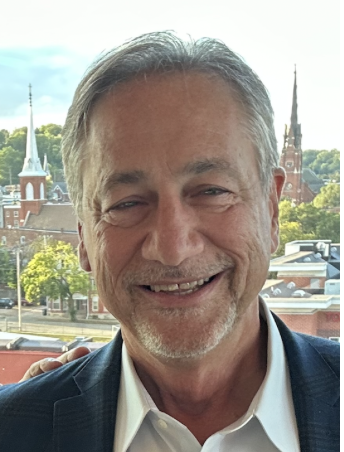
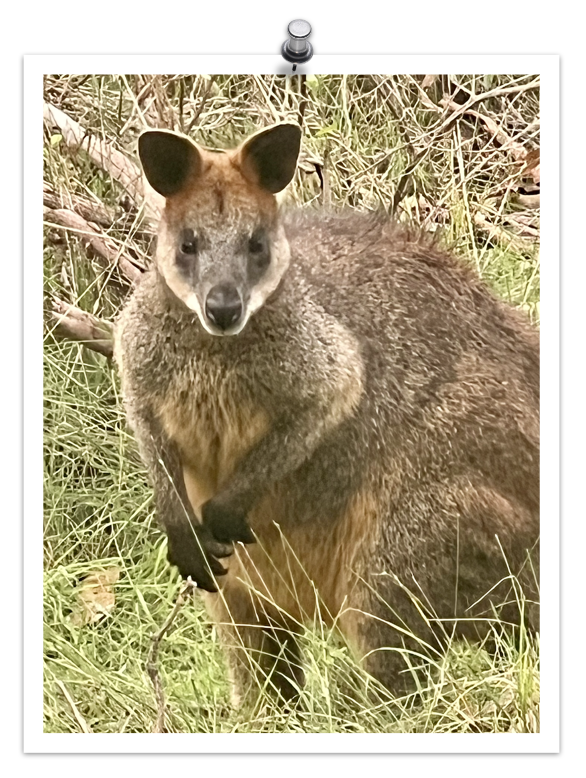
Didn’t have time to pack for a trip around the world? Or maybe you aren’t up for a flight that’s as long as two workdays, and that doesn’t count your connections? Or perhaps it’s just your rare but potent kangaroo allergy? Then it’s a g’day for you, because no wukka’s, grab a tinny and here are some notes from the World Credit Union Conference in Sydney.
Why So Many Bankers at a Credit Union Meeting?
When the world’s credit unions came together for the WCUC there were an unusually high number of bankers on hand at the International Convention Centre on Darling Harbour. That’s because most credit unions in Australia use the word “Bank” in their name, with others using “Mutual” and in a few cases, “Credit Union.” The country’s trade group is known as the “Customer-Owned Banking Association,” or COBA. Like Canada, market share is dominated by a limited number of big banks; in the case of Australia, there are four such players.
According to COBA, about 20% of Australia’s population is served by a credit union or customer-owned bank. Credit unions Down Under do not have a tax exemption–after willingly surrendering it years ago.
Overall, the World Council of Credit Unions said there were approximately 2,500 attendees at the meeting, representing nearly 40 countries. You can find a full compilation of the CU Daily’s reporting from the meeting here.
An Irritant That Transcends Borders
The very first message I received upon turning on my phone in Australia was a Spam text informing me I had been charged nearly $100 for making calls from Down Under. Fortunately, I was able to click on the link and provide all my payment information to get it resolved.
What We Remember, But What We Shouldn’t Forget
It’s become so easy in a world in which travel has become so commoditized to forget just how marvelous it really is, especially with so many so-called influencers and those who for whatever reason are influenced (“I’m not here to see or experience the local history and sights, just to grab a selfie to rub it in that my life is like, superior to yours”) overcrowding everything from sea to mountains and all points in-between.
World travel has become so commonplace that we now focus on the little things, let’s say, a 15-hour flight in which you have a good seat against the window in an exit section of the plane and perhaps a flight attendant comes along and tells the person in the middle of the three seats that he can have the full row to himself in the roomy bulkhead row just to his left. And that person declines, because who wouldn’t want the middle seat for what amounts to basically three cross-country U.S. trips? And let’s say the person in the row behind him knows a lottery ticket when he sees one and grabs it before a certain someone up against the window can do so himself. Not sayin’ something like that could happen, just sayin.’
I share that because those little travel irritations are what we tend to remember, instead of focusing on how extraordinary travel in 2026 really is. One day you can be on Bondi Beach on a cool winter day on the other side of the planet, and the next day mowing your grass on a humid summer afternoon. That’s still a marvel.
Guessing They Know the Members by Name
During the meeting I met with a representative of a credit union from Guyana–the only English-speaking country in South America–that has 75 members. And four employees. She said the credit union primarily does ag lending.
Where’s an AirTag When You Really, Really Need One?
I’ve been pretty lucky to have logged a few-million airline miles without losing my luggage, in part because I almost always have just a carry-on. That got turned upside down Down Under when delays on what was supposed to be a trip on Delta for all three legs to Sydney became one instead in which I was rebooked on American and then Qantas. As I would come to learn, when three airlines are in charge of your bags, no airline is in charge of your bags.
Anyone who’s ever had that hollow feeling that comes with the luggage carousel grinding to a halt and your bags aren’t on it will empathize with the ordeal that follows. You wait in line to meet with the agent in Lost Luggage who was nice enough—and what kind of meds are these people on, anyway; no one is ever happy to see them? –but who wasn’t really able to give me any information, other than my luggage was likely in either Atlanta, Dallas or maybe—but UNLIKELY—Sydney. So, we had narrowed it down to two hemispheres and three massive airports, which was a start.
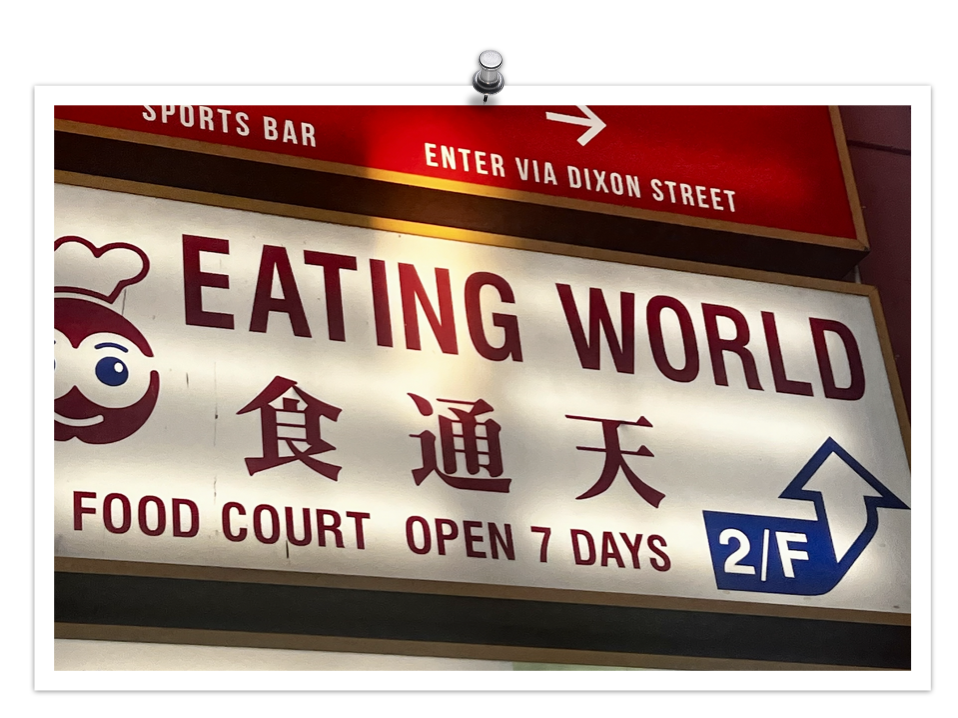
She gave me an Australian phone number to call as she looked around me to the next of the two-dozen other bagless, exasperated souls behind me and sent me out naked and afraid into the Australian bush. Or at least the wilds of Sydney.
Lost luggage does make two things easier: Going through customs and packing each day,
Customs: Do ya have anything to declare, mate?
Me: Just this toiletries kit with a toothbrush and deodorant that appear to have been taken from Barbie’s Dream Camper. (This was the second such kit I had been given, btw, as delays in the Delta flight had forced an unplanned night at one of those Atlanta airport-adjacent hotels that your credit card statement indicates you stayed at but you don’t really recall anything about it.)
I’ve lost count of all the speakers and consultants I’ve reported on who have shared their leadership nuggets around the “critical need to pivot” in response to “change,” but this was one of those “reimagine,” “rethink,” reassess” moments that are always in the titles of their books. I had plans to drive more than 1,500 miles over the next week or so across South Australia and left the Sydney Airport in my rental car (after the first car had a dead battery, so trip wasn’t off to great start) with two thoughts: Don’t forget to stay on the left-hand side of the road, and you need to find some clothes.
It’s All OK(mart)

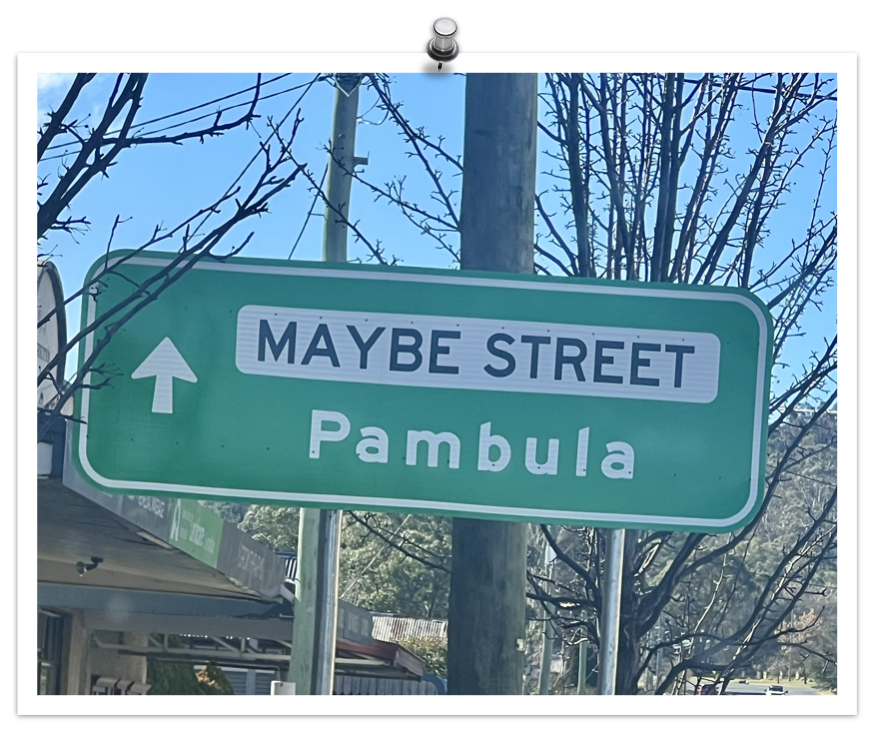
The good news: I found two retail mainstays that have disappeared in the U.S., but which remain thriving brands in Australia: K Mart and Woolworths. If with the former, you’re old enough to remember a place where the K stood for killed, as in “I may get killed by that person who is either homeless or works here,” think again. The stores are smaller, clean, full of just what Lost Luggage People need, and inexpensive. Woolworths (often referred to as Woolies) is a popular grocery chain that also has a sister chain, “The Big W,” that is similar to Target
One or the other of the stores could be found in most Australian towns. That was the good news,
The bad news was the morning ritual phone calls to Lost Luggage; made worse by the fact I had no idea which airline actually had my bags. First, I would be asked for my “file number,” and I would have to explain, “But that’s why I’m calling YOU!” These agents really, really like their file numbers. Second, you only need a few phone interactions before you’ve heard quite enough of the canned and scripted “We are sorry to hear of the difficulties” and the rote repetition of “We are disappointed your experience has not met your expectations.” You’re not sorry, and you’ll be delivering those lines you probably mumble in your sleep to the next poor schlub as soon as this call is over.
At one point I spoke with a Qantas call center agent who was in South Africa. If she had told me she had my bags, I don’t think I really would have been all that surprised at that point.
A Welcome Late-Night Call
Finally, four or five days in, I received a call at 3:30 in the morning Aussie time from an American Airlines employee wanting to know if I was looking for my bags. It required a lot of self-control to not respond with a sarcastic, “Well my luggage is in Texas and I’m in Australia, so what do you think?” But the wise man counsels against offending those who control your fate. Plus, it was early in the morning.
He said he had discovered my bags somewhere in the bowels of DFW and retrieved my contact information from a baggage tag. I asked if he had seen the “priority messages” Qantas promised me each day it was sending to American Airlines, and he responded that had no idea what I was talking about. But he pledged to put my bags on a flight to Sydney and, nine days after I had last seen them, they were waiting at the hotel I was staying at for the World CU Conference when I arrived.
That’s a 10,000-mile way of saying it might be a good time to check your own credit union’s problem-resolution processes. Somewhere, there’s likely a member—and probably more than one–with lost financial luggage problems of their own. And a good time to invest in an AirTag.
Oy, Veh!
Actual overheard conversation between two board members from a U.S. credit union:
Director One: Well, you know what a basis point is, right?
Director Two: No, not really.
Director 0ne: Well, it’s like a percent.

And that was coming out of a session on stablecoins and tokenization! If you don’t understand basis points, follow me out to the end of a limb here, but am guessing you won’t be giving a lecture to management on the digitization of money in the near future.
One Odd Throwback
I have had the pleasure of visiting Australia on numerous occasions since the 1980s when my parents lived in Sydney and was always struck by how advanced the country was in payments, way ahead of the U.S. in the use of cards and then contactless and then digital wallets. You almost never see cash and using phones to pay for things is ubiquitous.
But there is one odd exception: the gas pump.
Every American driver (except in New Jersey and Oregon) is familiar with tapping or inserting a card before the pump will come on and you can fuel up. In much of Australia, you fill up and then have to go into the station (don’t forget your pump number) to pay. At one station there was a loudspeaker message on autorepeat reminding it is illegal to drive off without paying. A crime that could be resolved, if only…
Or perhaps it’s a brilliant ploy by station-owners to force people to come into their stores.
Where’s the Shakedown?
If you’re an American reading this, you’re no doubt accustomed to—and fed up with—the out-of-control tipping demands/ransom expected with practically every transaction now, even self-service. So, it takes some getting used to in Australia that no tip is expected by service staff. There’s no awkward moment where you’re put on the spot as the person delivering the “service” attempts to shake you down. You just pay the price; that’s it.
It actually felt weird to not be adding a tip or reaching into my wallet for cash.
On two separate occasions I had Australians ask me why American companies don’t just pay their employees a reasonable wage, so they don’t have to live on tips. I told them I had the answer, but they’d need to scan a QR code on my phone and tip me first if they wanted to hear it.
Here’s What They Had to Say
Here are some of the notable quotes from the World Credit Union Conference:
‘They’re Not for You’
“When it comes to reaching out to younger members, I heard from someone who said they don’t get influencers. And I said that’s because they are not for you. We don’t meet people where they are. We see they are over there and we are over here and we say, ‘You need to come over here.’ Th problems credit unions solve today are not the problems we solved 100 or 50 years ago.”
– Jeff Guthrie, CEO of the Canadian Credit Union Association
Simple But Powerful
“We are part of a movement built on trust, built on shared knowledge and built on the simple but powerful idea that financial institutions belong to the people they serve.”
–Michael Lawrence, president of COBA, who will retire later this year.
‘The Strategic Direction is Quite Clear’
“For now, stablecoins are more of a future regulatory and innovation issue than an immediate priority. However, we believe the strategic direction is quite clear. We should not have to choose between global and national systems. We need infrastructure that connects people while protecting our members, their financial capabilities and their trust…Efficiency cannot come at the expense of financial stability, consumer protection, transparency or the ability of national authorities to monitor financial flows.”
–Fabíola da Silva Nader Motta, superintendent of OCB Brazil.

“In Canada, we came to the realization two years ago that cybersecurity was not simply a credit union sector problem. It was an institutional and countrywide problem. It did not matter whether we had the best cybersecurity defenses if the telecommunications companies were not involved or if the social media platforms were not involved. We therefore put together a coalition involving all of those parties. We included law enforcement, government regulators and all of the organizations that are part of the infrastructure in which cybercriminals look for vulnerabilities. We then extended the work all the way down to the individual citizen and made sure people understood the role they have to play. We all know cybersecurity is not a victimless crime. It may be a faceless crime, but it is not a victimless crime.”
– Jeff Guthrie, CEO of the Canadian Credit Union Association
“…I think there is an approaching inflection point that we are not talking about enough, and that is quantum computing. Quantum computing is on the verge of moving beyond the theoretical stage and becoming operational. When artificial intelligence and quantum computing come together, the entire cryptographic universe on which we have relied will face a new level of risk. I do not believe any government on Earth is devoting enough policy attention or financial resources to the issue. I think that risk could emerge within five years. We are not talking about it enough.”
–Scott Simpson, president and CEO, America’s Credit Unions
Avoiding a Painful Death Via the Pre-Mortem
Conduct a ‘pre-mortem.’ Unlike a postmortem, which examines what went wrong after a project has failed, a premortem takes place before the project begins. Team members imagine that the project has already died and ask why it failed to survive. The exercise produces a list of potential problems that could undermine the effort before the organization begins investing substantial time and resources. This is one of the most useful planning activities you can undertake.”
–Holly Ransom, Leadership Consultant
More of Ransom’s observations can be found here.
Rewriting the Lyrics
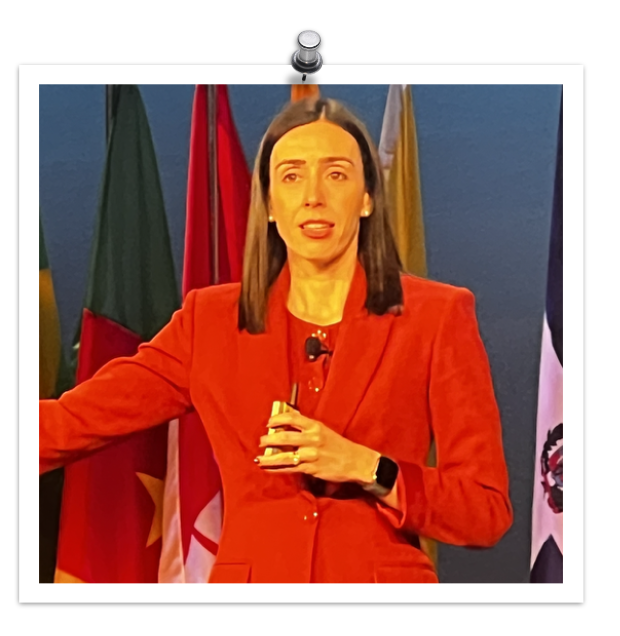
“When someone younger in your organization is stepping out and expressing their own melody, you can step back and support them. Every band needs a leader—but every leader needs a band. What harmony does is it collaborates.”
–Freddie Ravel, musician and songwriter
More of Ravel’s comments can be found here.
More Than a Token Observation
“You’ll hear the term “programmability” a lot today and after this conference because it’s central to what’s coming. If I had to pick the first part of banking that will change (with tokenization), it won’t be retail customer experience. It will begin with wholesale funding, liquidity and settlement. That’s where delays, reconciliation, trapped liquidity and operational friction have the greatest impact today.”
–Nathan Churchwood, head of product solutions and innovation, Cuscal Ltd.
More of what Churchwood and others had to say can be found here
Will You be Steamrolled?
“When new technology rolls over you, you can either become part of the steamroller or part of the road. Tokenization is coming. Regulators have made that very clear. It’s not a question of if, but when.”
–Stu Burns, CEO, Imperium Markets
More of Burns’ observations can be found here,
The Real Key With AI
“The key idea is that (AI) should not make this less human,” Barbosa said. “Instead, we need to be more present and closer to our members. AI is always going to be on our side, but it will almost never substitute for us if our members want to talk to us. What usually happens is we take AI and think about it from the outside in…Instead, we have to change our mindset. We should ask, ‘Why is this process still needed?’”
–Alexandre Barbosa, chief financial officer and economist with Brazil’s Sicredi
More of Barbosa’s remarks can be found here.
‘We are Focused on Listening’
“The work we do tends to be a little more incidental. What we’ve been quite focused on is listening very carefully to our customers about the challenges they experience in terms of access to their first homes and then making a difference where we can. We have capital we can bring to bear, we have credit assessment skills, and we consistently review those. In the last year we introduced an extended term mortgage. We will now lend out to 40 years and that has helped a number of customers. In Australia it takes 11 years on average to save up the 20% needed for a downpayment.”
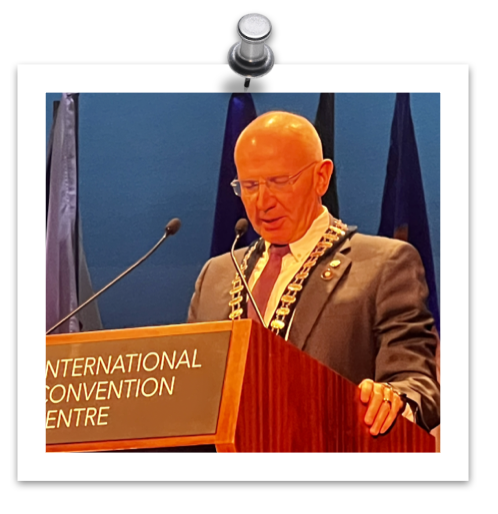
– Rolf Stomsoe, chief customer officer, Great Southern Bank (which is a credit union)
For more of what Stomsoe and others had to say about addressing housing issues, go
Amplifying the Voice
“Together, we have the opportunity to amplify our voice and ensure that it resonates in the corridors of power, shaping policies that encourage growth, stability, security and prosperity for all.”
–Joe Thomas, new WOCCU chairman and president and CEO of Apple FCU
For more of Thomas’ remarks, go here.
‘Creating a Better World for All of Us’
What we try to do is look globally and establish a benchmark for the enabling environment. We ask: What do communities think about gender equality? How receptive are they to making the changes needed?” she explained. “Unfortunately, the trend line on those measures is not encouraging. In particular, we’re seeing concerning trends among young men. That has prompted us to think about what we can do better to explain that gender equality is not, at the end of the day, simply about women or doing more for women. It’s actually about creating a better world for all of us—for both men and women.”
–Julia Gillard, former prime minister of Australia (and the first woman to hold the post)
For more of Gillard’s observations, go here.
Not Something to Celebrate
“There is a big data point from a recent World Economic Forum report: Women hold 24.6% of C-suite roles and 29.3% of board seats. We’re talking about not even 30%. I’ve been with GWLN almost nine years and I think we’ve been talking about almost 30% for all nine years now. I invite you all to look at your boards, your leadership teams, and your associations. Get involved, speak up, speak loudly. Give opportunity to the women and, for women, take the opportunity. I don’t think the 30% is something we should be celebrating. It should be our base for what we want to achieve. We have an obligation to ourselves and to future generations.”
–Eleni Giakoumopoulos, director of the Global Women’s Leadership Network
For more of what Giakoumopoulos had to say, go here.
Your Personal Brand is What?
“I hate to break it to you, but you all have a personal brand whether you like it or not. When you’re thinking about your personal brand, what would other people say about you? What is your reputation?”
–Bryn Conway, principal of BC Consulting and fractional chief marketing officer for Mid-Atlantic Federal Credit Union
For more of Conway’s comments, go here.
Proving Again and Again
“The challenge before us is not simply to preserve what we have built,” he said. “It is to adapt, strengthen and prove again why the cooperative financial model matters.”
–Paul Treinen, president and CEO, World Council
For more of Treinen’s remarks, go here.
See You in Ireland
The next World Credit Union Conference is scheduled for Ireland in July of 2027.





One Response
Great wrap-up, Frank.
Loved reading the notable quotes.
Hopefully see you next year at WOCCU, if not sooner.
Lou G.